

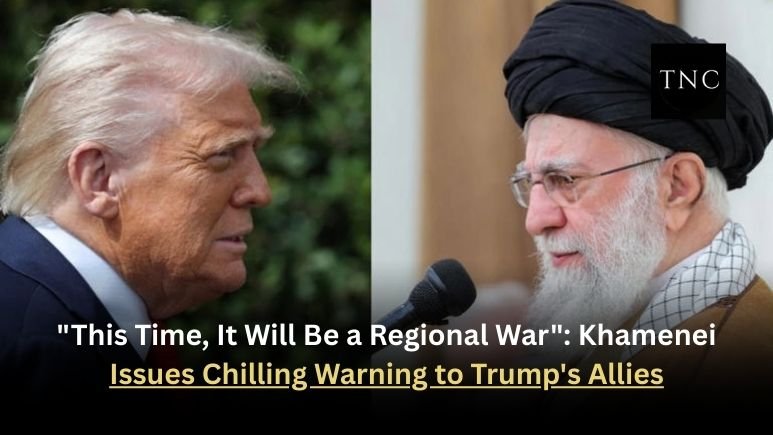

One aircraft carrier. Six destroyers. Three littoral combat ships. All within striking distance of Iran. And standing before a crowd in Tehran on the 47th anniversary of the Islamic Revolution, an 86-year-old Supreme Leader telling the world that if America attacks, it won’t be a contained conflict between two nations. It will be regional war, with every U.S. base from Bahrain to Qatar to the UAE becoming a legitimate target. The question isn’t whether Khamenei means it. The question is whether Trump believes him, and whether America’s Middle Eastern allies are willing to bet their cities on the answer.
TEHRAN — Ayatollah Ali Khamenei delivered his most direct threat yet on Sunday (February 1, 2026), warning the United States and its regional partners that they’re courting “total regional conflict” if they attack Iran. Speaking to massive crowds marking the anniversary of Ayatollah Khomeini’s return from exile in 1979, the Supreme Leader dismissed President Trump’s naval build-up as “theatrical threats” but made crystal clear that any breach of Iranian sovereignty would trigger retaliation that doesn’t stop at Iran’s borders.
This wasn’t the usual revolutionary rhetoric about American imperialism. This was a specific, calculated threat aimed directly at the countries hosting U.S. military bases across the Gulf.
The domestic crackdown reframed as foreign plot
Before addressing the external threat, Khamenei spent considerable time justifying the brutal suppression of protests that have killed over 3,000 people since late 2025, according to state figures (rights groups estimate much higher).
He characterized the nationwide demonstrations as “sedition similar to a coup” orchestrated by Washington and Tel Aviv, not as genuine domestic opposition to a failing economy, rampant corruption, and authoritarian rule. In Khamenei’s telling, the protesters weren’t Iranians fed up with their government. They were foreign agents attacking mosques and government centres.
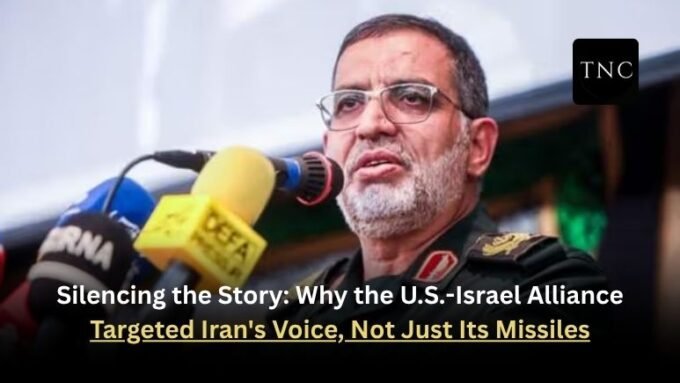
He praised the Islamic Revolutionary Guard Corps (IRGC) for “suppressing” the unrest. Rights groups use different language: massacres. Documented cases of security forces firing directly into crowds. Protesters beaten to death in custody. Mass arrests with people disappearing into prisons like the now-closed El Helicoide of Iran.
Khamenei also claimed the ultimate U.S. goal isn’t democracy but seizing Iran’s oil and mineral wealth, returning the country to “pre-1979 colonial control.” It’s a narrative designed to rally nationalist sentiment by framing resistance to the regime as treason that serves foreign powers.
The threat that changed calculations across the Gulf
With the USS Abraham Lincoln and its accompanying destroyers operating in the Arabian Sea just days from striking distance, Khamenei issued a warning that appears to have genuinely rattled America’s regional partners.
He specifically targeted U.S. Middle Eastern allies, making clear that bases in Qatar, Bahrain, UAE, and other countries would be considered legitimate targets if America launches strikes from their territory or with their support.
This isn’t an empty threat, and Gulf leaders know it. Here’s what makes it credible:
Saudi Arabia and UAE have already told Washington their territory and airspace cannot be used for offensive operations against Iran. Think about that. America’s closest Arab allies, countries that regularly condemn Iranian aggression and fund opposition to Iranian proxies, are refusing to participate in potential military action because they believe Khamenei’s threat of retaliation is real.
They’re doing the math: if American strikes come from bases in their territory, Iranian missiles will hit those bases and possibly their cities. The U.S. can absorb that exchange and claim victory. They cannot. Their populations, their economies, their infrastructure would bear costs that Washington never pays.
Iran has “doubled its missile production” since the June 2025 strikes and hidden mobile launchers in mountainous regions, according to recent Gulf intelligence assessments. This means Iran has second-strike capability. Even if Trump’s forces conduct successful initial attacks, Iran can retaliate, and the retaliation will hit American assets and American allies across the region.
Khamenei wants those allies to understand they’re not spectators in this confrontation. They’re potential targets. And that calculation is working.
Trump’s response: unchanged calculus
Speaking from Mar-a-Lago, President Trump signaled that Khamenei’s warning hasn’t altered his “Maximum Pressure 2.0” strategy.
| Trump’s Position | The Military Reality |
| Still hoping for a deal | “Hopefully we’ll make a deal. If not, then we’ll find out whether or not he was right,” Trump stated |
| The armada is real | 1 Aircraft Carrier (USS Abraham Lincoln), 6 Destroyers, 3 Littoral Combat Ships now operational in theater |
| Red lines remain | Military action stays on the table if Iran resumes enrichment or continues “killing its people” |
That last point is particularly interesting. Trump is explicitly citing Iran’s domestic repression as potential justification for military action, not just nuclear activity. It expands the criteria for strikes beyond the traditional non-proliferation framework.
The “War Department” (Secretary Pete Hegseth’s preferred terminology) remains in high readiness. But with key allies refusing to provide basing and overflight rights, the operational picture gets more complicated. Carrier-based strikes are possible, but they’re more limited in scope and duration than operations launched from land bases with full logistics support.
The diplomatic thread still exists (barely)
Despite the escalating threats, a narrow path to de-escalation remains. Turkey and Qatar are reportedly working to organize an emergency summit in Istanbul later this week, attempting to prevent what diplomats are calling a “catastrophic miscalculation.”
The problem is the positions remain fundamentally incompatible:
- Khamenei’s position: Iran will negotiate as equals, will not surrender its missile program or regional influence, and will not talk under military coercion. Any attack triggers regional war.
- Trump’s position: Iran must accept terms that eliminate nuclear capabilities, constrain missiles, and end regional proxy support. The naval armada stays until Iran agrees to talks on American terms.
Those aren’t positions that lead to productive negotiations. They’re positions that lead to someone miscalculating, misinterpreting, or deliberately choosing confrontation over compromise.
What “regional war” actually means
Khamenei’s threat isn’t abstract. Here’s what regional war could look like:
- Immediate missile strikes on U.S. bases in Bahrain, Qatar, UAE, and possibly Saudi Arabia
- Proxy activation with Hezbollah in Lebanon, militias in Iraq and Syria, Houthis in Yemen all conducting attacks simultaneously
- Strait of Hormuz closure or attacks on commercial shipping, disrupting 20% of global oil supply
- Cyber-attacks on Gulf states’ infrastructure, including desalination plants, power grids, financial systems
- Targeting of Saudi oil facilities, similar to the 2019 Abqaiq attacks but potentially more extensive
This isn’t two militaries fighting each other. This is region-wide chaos affecting global energy supplies, international shipping, financial markets, and millions of civilians who have no voice in decisions being made in Tehran and Washington.
The allies’ impossible choice
America’s Gulf partners face a brutal calculation. If they support U.S. military action, they become targets for Iranian retaliation. If they refuse support, they potentially damage relationships with Washington that guarantee their security.
Saudi Arabia and UAE choosing to tell Washington “no” on basing and overflight is unprecedented in recent decades. It suggests they believe the threat to their own security outweighs the benefits of supporting American objectives. They’ve concluded that Khamenei isn’t bluffing, and they’re not willing to gamble their populations on Trump’s ability to destroy Iran’s retaliatory capabilities in first strikes.
Smaller Gulf states like Bahrain and Qatar, which host major U.S. military installations, don’t have the luxury of saying no to Washington. But they’re acutely aware that their proximity to Iran makes them extremely vulnerable to missile attacks that could arrive with minutes of warning.
The window is closing
Multiple diplomatic sources suggest the next 72-96 hours are critical. If the Istanbul summit happens and both sides send serious negotiators with authority to actually discuss compromises, there’s a chance. If it doesn’t happen, or if it becomes just another venue for both sides to restate incompatible demands, the trajectory toward military confrontation continues.
Khamenei has stated Iran will “strike a strong blow” if attacked. Trump has made clear the armada isn’t just for show. Neither leader appears willing to back down publicly, though both might accept face-saving formulas that allow retreat without appearing weak.
The problem is that face-saving formulas require trust that neither side has, and time that’s rapidly running out.
What ordinary people face
Lost in the strategic calculations are the millions of people across the region who would pay the price for decisions made by leaders they didn’t elect and wars they don’t want.
Iranians already suffering under sanctions and repression would face bombing campaigns. Iraqis, Syrians, Lebanese, and Yemenis would see their countries become battlefields again. Gulf residents would face missile attacks on cities and infrastructure. Global consumers would face spiking energy prices.
None of them get a vote. None of them can stop it. They just have to hope the leaders playing this game of brinkmanship actually care about consequences beyond their own political calculations.
The carrier group keeps steaming closer. Khamenei keeps issuing warnings. Trump keeps setting deadlines. And across the Middle East, people who’ve already lived through too many wars watch the storm approaching and wonder if this time, the threats will actually turn into action.
Also Read / “They Do Want to Talk”: Trump Claims Iran is Ready for a Deal as Armada Nears Gulf.








Leave a comment