

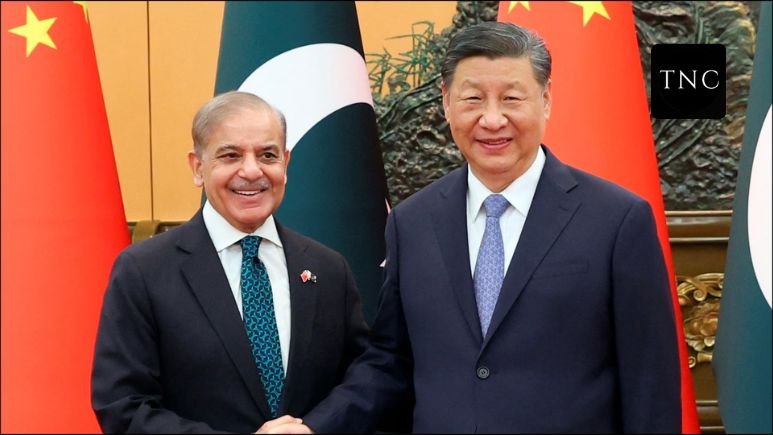

At a dimly lit conference room in Islamabad, a junior diplomat refreshed his phone for the fifth time in ten minutes. Oil prices were climbing again. Messages from Beijing had just arrived, another draft proposal, another attempt to halt a war thousands of kilometers away but already choking Pakistan’s fuel supplies.
Outside, traffic thinned early. Petrol pumps had begun rationing. Inside, the stakes were no longer abstract. If the Strait of Hormuz stayed unstable, Pakistan’s already fragile economy could tip further. And now, unexpectedly, China wanted Islamabad not just as a partner, but as a bridge to Washington.
China’s push for peace in the Iran conflict is not just diplomacy, it is strategy. As Beijing works alongside Pakistan to broker a ceasefire, it is reshaping regional alliances and quietly testing the limits of U.S. influence. The effort places Pakistan in a delicate position: a mediator between adversaries, but also a country whose growing closeness with China could strain its improving ties with Washington.
This is not just about ending a war. It is about who controls the narrative and the leverage when the war ends.
China is playing a careful, calculated game. Publicly, it calls for “peace talks” and restraint. Privately, it is securing its long-term interests: stable oil flows, regional influence, and a reputation as a global peacemaker.
The Iran war threatens all three. The Strait of Hormuz through which a large portion of global oil passes has become a choke point. Any prolonged disruption hits China’s energy security directly and ripples through its economy.
Enter Pakistan.
Once viewed with skepticism in Western capitals, Pakistan has re-emerged as a key intermediary. It has hosted back channel talks, coordinated with Beijing, and even gained renewed trust from Washington.
But that role comes with risk.
Pakistan’s alignment with China is deep economic, military, and strategic. Joint peace proposals from Beijing and Islamabad signal a coordinated front. Yet Pakistan is simultaneously rebuilding ties with the United States, even serving as a conduit for sensitive communications in the conflict.
This balancing act is precarious.
If China’s mediation succeeds, it strengthens Beijing’s image as a stabilizing force potentially at Washington’s expense. If it fails, Pakistan risks being caught between two powers that increasingly view each other as rivals, not partners.
Meanwhile, the broader geopolitical consequences are already unfolding. U.S. allies in Asia worry that Washington’s focus on Iran is weakening its presence elsewhere, giving China more room to maneuver.
This is the quiet shift beneath the headlines: the Iran conflict is no longer just a regional war. It is a proving ground for global influence.
China’s peace push is not just about ending a war it’s about shaping what comes after.
For Pakistan, the opportunity is historic: to be a power broker, not a bystander. But the cost of missteps is equally high. In a world tilting toward multipolar rivalry, playing both sides is no longer a strategy, it’s a gamble.
Also Read / The Walls Trembled and Pakistan’s Neutrality Went With Them.








Leave a comment