

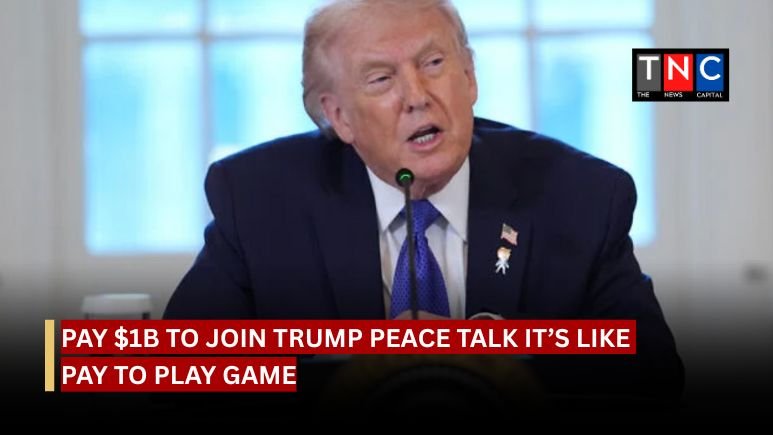

As President Donald Trump prepares for a high-stakes signing ceremony in Davos tomorrow, the full scale of his proposed “Board of Peace” has come into focus, revealing a hand-picked assembly of billionaires, former prime ministers, and a 60-nation invitation list that carries a staggering $1 billion price tag for permanent influence. In what is being described as the most radical shift in global diplomacy since the 1945 Yalta Conference, the White House has released the founding architecture of the Board of Peace ahead of a formal charter-signing ceremony scheduled for Thursday, January 22, 2026, on the sidelines of the World Economic Forum.
The Board of Peace is not merely a talk shop; it is designed as a Transitional Governing Administration for Gaza and a future hub for global conflict resolution, with power concentrated in a small executive core.
1. The Executive Board (The Deciders)
Chaired for life by Donald Trump, this seven-member core will manage “defined portfolios” including capital mobilization and reconstruction oversight, wielding ultimate authority over the board’s strategic direction.
- Donald Trump (Lifetime Chairman)
- Marco Rubio (U.S. Secretary of State)
- Tony Blair (Former UK Prime Minister)
- Jared Kushner (Trump’s son-in-law, Middle East policy architect)
- Ajay Banga (World Bank President)
- Steve Witkoff (Middle East Envoy)
- Marc Rowan (Apollo Global Management CEO)
- Robert Gabriel (Deputy National Security Adviser)
2. The Gaza Executive Board (The Implementers)
Led by Nickolay Mladenov as High Representative for Gaza, this tier handles on-the-ground stabilization, bridging international oversight and local implementation.
- Nickolay Mladenov (High Representative)
- Diplomats from Turkey, Qatar, Egypt, and the UAE
- Yakir Gabay (Israeli billionaire with real estate expertise)
- Sigrid Kaag (UN coordinator)
3. The NCAG (The Local Face)
The National Committee for the Administration of Gaza, led by Palestinian technocrat Dr. Ali Sha’ath, will manage day-to-day municipal services including utilities, education, and health systems under board supervision.
The 60-Nation Invitation: Who’s In, Who’s Out
While the White House reached out to 60 nations, the international community remains deeply divided over the board’s design and the $1 billion fee required to secure a permanent seat with indefinite influence.
| Status | Countries |
| Accepted | Hungary (Viktor Orbán), Vietnam (Tô Lâm), UAE, Paraguay, Kazakhstan, Armenia |
| Under Review | India (PM Modi), Pakistan (Shehbaz Sharif), Australia, Canada, Turkey, Egypt, Argentina, Brazil, Russia |
| Refused / Critical | France (Emmanuel Macron), Poland |
| Silent | China, UK, Germany, Japan, South Korea |
- Early Adopters: Hungary’s Viktor Orbán predictably accepted immediately, joined by Vietnam, UAE (as a regional stakeholder), and smaller nations like Paraguay, Kazakhstan, and Armenia seeking influence disproportionate to their size.
- Strategic Deliberators: Major powers like India, Pakistan, Australia, and Canada are “under review,” weighing the benefits of permanent influence against the $1 billion cost and legitimacy concerns.
- European Resistance: France and Poland have refused or expressed critical positions, with Macron leading opposition on grounds that the charter is “incompatible with international commitments.”
- Conspicuous Silence: Traditional powers like China, UK, Germany, and Japan have not publicly announced positions, possibly waiting to see if the initiative gains momentum or collapses.
The charter establishes a two-tiered membership system that explicitly commodifies international influence, creating a formal mechanism for wealthy nations to purchase permanent power.
- Standard Members: Three-year appointments with diplomatic cooperation but no permanent influence or financial requirement.
- Permanent Members: Indefinite seats requiring $1 billion contribution in the first year to “fund board activities” and Gaza reconstruction.
- Trump’s Justification: The President maintains these funds are necessary to rebuild Gaza into the “Riviera of the Middle East,” transforming a conflict zone into a Mediterranean resort destination.
- Precedent-Shattering: The explicit price tag for permanent influence represents an unprecedented formalization of pay-to-play diplomacy, moving beyond traditional aid relationships to direct purchase of governance authority.
The Board of Peace is explicitly designed to bypass traditional multilateral norms, with Trump on Tuesday suggesting the board “might” replace the UN entirely.
- “Nimble” Governance: The charter calls for a departure from “institutions that have too often failed,” positioning the board as agile and decisive where the UN is bureaucratic and paralyzed.
- Sovereignty Questions: By establishing its own international charter and legal standing outside UN frameworks, the board creates a parallel governance structure that could compete with or undermine traditional multilateral institutions.
- French Defiance: President Macron has led the opposition, stating the charter is “incompatible with international commitments” under existing UN frameworks and international law.
- Trump’s Retaliation: Trump responded to French criticism by threatening a 200% tariff on French wines and champagnes, demonstrating how economic coercion backs the diplomatic initiative.
The Board of Peace raises fundamental questions about international law, sovereignty, and the authority to govern territories without consent of their populations.
- Palestinian Agency: The structure gives Palestinians only third-tier representation through the NCAG, with strategic decisions made by the international Executive Board that includes Israeli billionaires.
- UN Charter Conflict: The board’s claim to govern Gaza conflicts with UN Security Council authority over international peace and security, potentially violating the UN Charter that all member states have ratified.
- Precedent Dangers: If the Board of Peace succeeds, it establishes a model for powerful nations to bypass multilateral institutions whenever convenient, potentially fragmenting the international system.
- Democratic Deficit: None of the Executive Board members except Trump faces elections, creating an unaccountable international governing body that populations affected by its decisions cannot influence.
All eyes are on the Davos signing ceremony at 10:30 AM on Thursday, which will serve as a “litmus test” for the new world order Trump is attempting to construct.
- Attendance Matters: Which leaders show up to sign will signal which nations are willing to embrace Trump’s parallel governance structure versus those committed to traditional multilateralism.
- Media Spectacle: The World Economic Forum provides maximum visibility for the signing ceremony, allowing Trump to project the board as a legitimate alternative to UN-led approaches.
- Pressure Tactics: Leaders attending Davos face direct pressure from Trump and his team to join, with implicit threats of tariffs or exclusion from other initiatives for those who refuse.
- Carney’s Dilemma: PM Mark Carney faces particular pressure after his “rupture” speech declaring the old order dead does he join Trump’s new order or pursue the independent “third path” he advocated?
The Billionaire Cabinet: Who Benefits
The Executive Board’s composition reveals clear winners from the Board of Peace structure, particularly business figures positioned to profit from Gaza reconstruction.
- Jared Kushner: Trump’s son-in-law gains formal authority over a territory where his real estate background and Middle East connections position him to influence lucrative development contracts.
- Marc Rowan: Apollo Global Management CEO brings private equity expertise and access to massive investment capital needed for reconstruction, potentially channeling deals toward firms he has relationships with.
- Yakir Gabay: The Israeli billionaire’s presence on the Gaza Executive Board raises conflict-of-interest questions about whether reconstruction serves Palestinian needs or Israeli business interests.
- Tony Blair: The former UK PM brings political legitimacy but also baggage from the Iraq War and subsequent consulting work for authoritarian regimes, raising questions about judgment and motivations.
India’s Calculation: Modi’s $1 Billion Question
For leaders like PM Modi, the decision involves balancing humanitarian goals in Gaza against the risk of endorsing a system that fundamentally challenges the sovereignty of the United Nations.
- Strategic Benefits: Permanent membership offers India a seat at the table for Middle Eastern reconstruction and influence over a strategic region where it has growing interests.
- Financial Burden: The $1 billion price tag represents significant resources that could alternatively fund domestic development priorities or be deployed through established multilateral channels.
- Legitimacy Concerns: Joining risks associating India with a governance structure that bypasses Palestinian self-determination and operates outside international legal frameworks.
- U.S. Relations: The invitation comes as India navigates complex trade tensions with Washington, making Board membership potentially serve as a “diplomatic reset” as observers noted.
The Board of Peace faces multiple potential outcomes depending on which nations join and whether it can deliver on ambitious reconstruction promises.
- Success Scenario: Sufficient major powers join to provide legitimacy and funding, Gaza reconstruction proceeds, and the board establishes itself as an alternative to UN-led peacekeeping and post-conflict governance.
- Failure Scenario: Too few nations join, the $1 billion membership fee proves prohibitive, reconstruction stalls, and the board becomes an embarrassing footnote to Trump’s presidency.
- Fragmentation Scenario: Some nations join while others refuse, creating competing governance models that paralyze Gaza reconstruction and deepen international divisions.
- Exploitation Risk: The board becomes a vehicle for extracting resources from conflict zones under the guise of reconstruction, benefiting connected business interests rather than affected populations.
Trump’s Board of Peace represents either a revolutionary reimagining of international governance or a dangerous commodification of influence that subordinates Palestinian self-determination to billionaire interests and great power competition depending entirely on perspective and which tier of the three-level structure one focuses on. The $1 billion permanent membership fee formalizes pay-to-play diplomacy in unprecedented fashion, creating a governance body where wealthy nations literally purchase authority over territories they don’t control and populations that have no voice in leadership selection. The Executive Board’s composition lifetime chairman Trump, his son-in-law Kushner, private equity CEO Rowan, and Israeli billionaire Gabay reveals whose interests the “Riviera of the Middle East” transformation will primarily serve. Thursday’s Davos signing ceremony becomes a moment of truth where national leaders must decide whether the old multilateral order is sufficiently broken to justify embracing Trump’s alternative, or whether the Board of Peace represents exactly the kind of unaccountable great power manipulation that the UN system, for all its flaws, was designed to prevent. For the 2.3 million Palestinians in Gaza, the board promises reconstruction but delivers governance by an international elite that includes representatives of the nation that blockaded them, businessmen positioned to profit from their suffering, and a chairman who has demonstrated little concern for their self-determination. Whether the board becomes the “nimble” conflict resolution mechanism Trump promises or a cautionary tale about what happens when billionaires and autocrats bypass democratic accountability to govern territories they view as real estate opportunities will depend on the decisions made in Davos tomorrow and whether enough nations are willing to pay $1 billion to find out.
Also Read / Gaza Reconstruction: Trump Invites India to Join ‘Most Consequential’ Board of Peace.






Leave a comment