

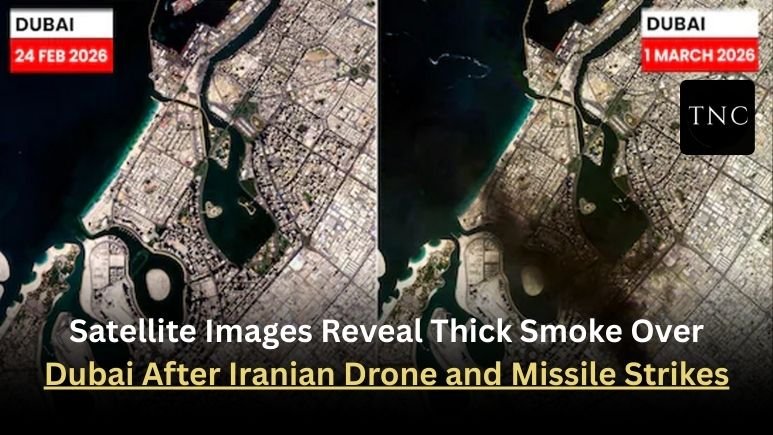

The satellite imagery released over the weekend has revealed plumes of black smoke rising over parts of Dubai, offering one of the clearest visual confirmations yet of the impact of Iran’s ongoing retaliatory strikes across the Gulf.
Fallout from the attacks has undermined the Emirates’ efforts to de-escalate tensions with Iran despite longtime suspicions of its neighbor across the Gulf. The UAE closed its airspace on Saturday (February 28, 2026), shuttered its embassy in Tehran on Sunday (Mardh 1, 2026), and withdrew its diplomats because of the attacks.
According to UAE authorities, hundreds of aerial threats were launched towards the country, most of which were intercepted by air defence systems. However, falling debris from intercepted projectiles triggered fires and caused damage at multiple locations in Dubai, including infrastructure linked to the port and nearby commercial districts.
Authorities confirmed that fires broke out at Jebel Ali port after debris from an aerial interception ignited facilities, while incidents were also reported in parts of Palm Jumeirah and near landmark hotels. Dubai Airport and other critical infrastructure experienced disruption as emergency responses were activated.
Louise Herrle, an American Tourist whose Flight home with her husband from Dubai was canceled, said it was her third attempt to visit the area. Previous trips were canceled by the COVID-19 pandemic and the Hamas attack on Israel in October 2023.
With their current Abu Dhabi and Dubai tour over, she is less likely to return to the emirates or the region.
“I would probably be inclined to avoid this part of the world when there’s increased tensions, it just explodes os quickly,” Herrle said
Also Read / Wing Commander Namansh Syal: Profile of the IAF Pilot Who Lost His Life in the Dubai Air Show Tejas Crash












Leave a comment