

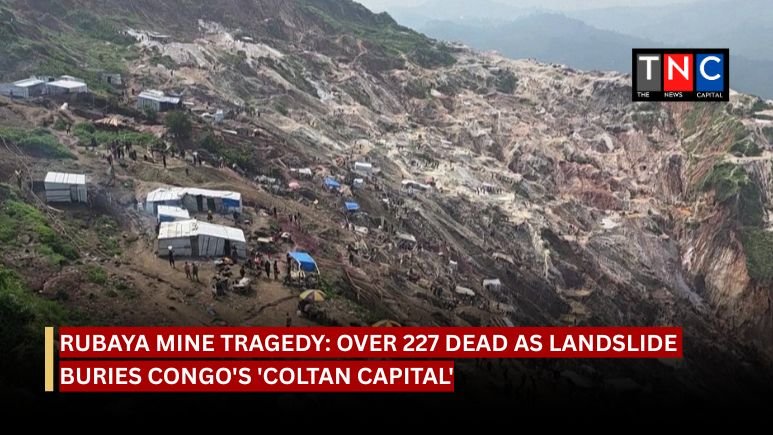

Two hundred twenty-seven bodies pulled from the mud so far. Hundreds more still buried in collapsed shafts. Days of torrential rain turning fragile volcanic soil into a death trap. And at the bottom of those pits, miners digging by hand for a few dollars a day, extracting the mineral that makes your smartphone work while rebel groups tax every ounce that comes out of the ground. This is what the global electronics supply chain actually looks like when you follow it to its source in the hills of eastern Congo.
GOMA, DRC The earth gave way on Wednesday (January 28, 2026) in Rubaya, a mining town in eastern Democratic Republic of Congo that supplies 15% of the world’s coltan. Entire hillsides collapsed after days of relentless rainfall, burying miners, children, and market women under tons of mud and debris. As of Saturday, the confirmed death toll stands at 227, but local authorities warn that many victims remain trapped deep in the unreinforced shafts of this rebel-controlled mining site.
Rescue workers continue pulling bodies from the earth. The work is slow, dangerous, and heartbreaking.
Witnesses describe a sudden roar, then the hillside above the D4 Gakombe quarry simply sliding into the pits where hundreds were working. No warning sirens, no evacuation procedures, no reinforced tunnels or safety equipment. Just the ground giving way and swallowing everyone below.
Lumumba Kambere Muyisa, spokesperson for the provincial administration, confirmed the victims weren’t just miners. Children were there. Market women who set up stalls near the pit entrances to sell food and supplies to workers were there. This wasn’t an industrial accident at a regulated facility. This was a community disaster at an artisanal mine where entire families depend on whatever fragments of coltan they can dig out of the earth.
“The ground is fragile,” Muyisa said, stating the obvious truth everyone knew but nobody could afford to act on. “It was the ground that gave way while the victims were in the hole.”
The rainy season had turned the region’s volcanic soil into slurry. The hillsides became unstable. And still people went down into those pits because the alternative to risking death in a mine collapse is watching your family starve.
Approximately 20 survivors are being treated at local health facilities in Rubaya with serious injuries. Heavy ambulances will transfer the most critical cases to Goma, about 50 kilometers away, once the roads damaged by the same storms that caused the collapse are cleared enough to pass.
But for every survivor pulled out alive, rescue workers are finding multiple bodies. And for every body recovered, there are others still buried in shafts that could collapse further at any moment, making rescue attempts potentially suicidal for the workers trying to help.
Many families will never recover their loved ones. The instability of the site means some sections simply can’t be excavated without triggering additional collapses.
Here’s where this gets complicated. The Rubaya mines aren’t just a geological hazard. They’re a geopolitical flashpoint that funds an ongoing conflict.
Since May 2024, the town has been under control of the AFC/M23 rebel group. The UN alleges M23 is backed by Rwanda, a claim Kigali continues to deny despite overwhelming evidence. According to UN reports, the rebels generate at least $800,000 per month by taxing the trade and transport of coltan from this specific site.
Think about that for a moment. The same armed group controlling the territory makes money from every bag of coltan that comes out of these deadly pits. They have a financial incentive to keep production going, safety be damned.
Because the mines operate without formal engineering or safety oversight, workers dig manually for just a few dollars a day in conditions that would be illegal anywhere with functioning labor laws. No structural reinforcements. No ventilation systems. No emergency exits. Just holes in the ground getting deeper and more unstable with every rainstorm.
The rebel-appointed “governor,” Eraston Bahati Musanga, has now ordered a temporary halt to all artisanal mining and the relocation of residents living near unstable slopes. But temporary halts don’t pay for food. And relocating requires resources these communities don’t have. How long before economic desperation drives people back into whatever pits haven’t collapsed?
Why the world cares about Rubaya (or should)
Rubaya produces approximately 15% of the world’s coltan supply. Coltan is the raw ore from which tantalum is extracted, and tantalum is what makes modern electronics possible.
| What Tantalum Does | Why It Matters |
| Smartphone & laptop capacitors | Stores high electrical charges in tiny spaces, making miniaturized electronics possible |
| Jet engine turbine blades | Extremely high melting point prevents engine failure at operational temperatures |
| Medical implants | Biocompatible and corrosion-resistant for pacemakers and surgical pins |
Every smartphone in your pocket, every laptop you work on, every commercial jet that flies overhead depends on tantalum. And a significant percentage of that tantalum comes from places like Rubaya, where people die in collapsing mines so tech companies can meet their production quotas.
The global electronics industry talks a lot about ethical sourcing and conflict-free minerals. But when 227 people die in a single collapse at a site that supplies 15% of a critical mineral, it exposes the gap between corporate sustainability reports and the actual human cost embedded in the hardware of modern life.
The Democratic Republic of Congo sits on extraordinary natural wealth. Coltan, cobalt, copper, diamonds, gold. The ground is literally filled with minerals the rest of the world desperately needs.
And yet the population lives in extreme poverty. The people doing the actual extraction, the ones taking the physical risks, the ones dying when hillsides collapse, they see almost none of that wealth. They dig for dollars a day while rebel groups tax the output, corrupt officials take their cut, international middlemen mark up the price, and tech companies pay whatever the market demands while maintaining plausible deniability about where it actually comes from.
The miners in Rubaya weren’t there because they loved mining. They were there because it was the only way to survive in a region where conflict has destroyed other economic opportunities, where government services barely exist, where the choice is often between dangerous work and no work at all.
Now 227 of them are dead, hundreds more injured, and countless others still buried under mud that’s too unstable to safely excavate.
The rebel-appointed governor has ordered a temporary mining halt. Rescue operations will continue until they become too dangerous or until hope of finding survivors disappears entirely. There will be statements of condolence from international organizations. Maybe some renewed calls for conflict mineral legislation.
And then, once the news cycle moves on, the economic pressure will reassert itself. People need to eat. Families need income. Rebels need revenue. Tech companies need tantalum. And the mines will reopen because nobody has presented a viable alternative.
The hills around Rubaya will continue to be fragile. The rainy seasons will continue to destabilize the soil. The pits will continue to lack proper engineering or safety equipment. And more people will die in future collapses because the fundamental equation hasn’t changed: the world needs what’s in the ground, and the people extracting it have no leverage to demand better conditions.
This tragedy is a reminder that there’s a direct line connecting the smartphone in your hand to a collapsed mine in eastern Congo. The technology that makes modern life convenient is built, quite literally, on the bodies of people dying in conditions the developed world would never tolerate for its own citizens.
The question is whether that reminder will actually change anything, or whether 227 dead in Rubaya will just become another statistic in the long history of extraction industries treating human lives as acceptable costs of doing business.
The rescue workers keep digging. The families keep waiting. And somewhere, a tech company’s supply chain manager is calculating whether this will impact their Q2 production schedule.
Should tech companies be held accountable for deaths in their supply chains? Share your thoughts below.
Also Read / New Zealand ‘War Zone’: Children Missing After Massive Landslide Hits Mount Maunganui Campsite.














Leave a comment