

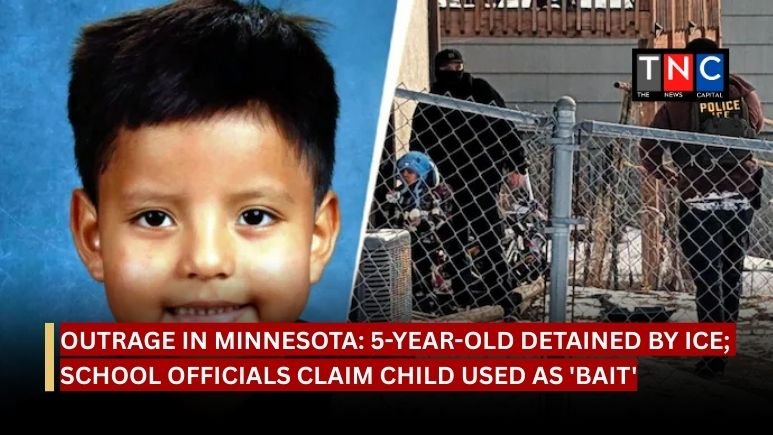

The detention of Liam Conejo Ramos has become an explosive flashpoint in the Trump administration’s massive immigration surge in the Twin Cities, with local leaders accusing federal agents of using a pre-schooler as “bait” while the White House defends the move as a necessary measure for the child’s safety. A five-year-old boy arriving home from preschool was apprehended by federal immigration agents in his own driveway on Tuesday, January 20, 2026, sparking a wave of protests across Minnesota as Liam and his father, Adrian Alexander Conejo Arias, were whisked away to a detention facility in Texas, making Liam the fourth student from the Columbia Heights Public Schools district to be detained in recent weeks.
The circumstances of the arrest have led to a bitter war of words between local school officials and the Department of Homeland Security, with fundamentally different accounts of what transpired.
- The School’s Version: Superintendent Zena Stenvik alleged that after agents took Liam out of his father’s running car, they “essentially used him as bait.” Witness accounts suggest agents led the boy to his front door and directed him to knock, hoping to lure other family members out of the house.
- Child’s Vulnerability: “You cannot tell me that this child is going to be classified as a violent criminal,” Stenvik said, emphasizing that a five-year-old pre-schooler posed no enforcement threat justifying such tactics.
- Federal Denial: DHS spokesperson Tricia McLaughlin denied the child was a target. She claimed the father “fled on foot abandoning his child” when approached, and an officer remained with Liam for his safety to prevent him from being left alone.
- Official Statement: “ICE did NOT target a child,” the department asserted, framing the detention as an unfortunate consequence of the father’s alleged flight rather than a deliberate strategy.
School officials and neighbours claim they offered alternatives to detaining a five-year-old child, but federal agents reportedly refused all options that would have separated Liam from the immigration enforcement process.
- Community Custody Offer: School officials and neighbours claim they offered to take custody of Liam at the scene to prevent his detention, providing immediate care while family or legal matters were resolved.
- Federal Refusal: Federal agents reportedly refused these offers, stating the child had to remain with his father regardless of the father’s custody status or the child’s welfare.
- Child Welfare Questions: The refusal to accept community custody raises questions about whether immigration enforcement priorities superseded child welfare considerations in the decision-making.
- Witness Accounts: Multiple witnesses corroborate the school district’s version of events, including the “bait” allegation and offers to take custody that were rejected.
The family’s lawyer, Marc Prokosch, highlighted the procedural “cruelty” of the detention, noting that the family is in the U.S. legally as asylum seekers with pending cases.
- Asylum Seekers: The family arrived from Ecuador in 2024 and has an active, pending asylum case. According to their legal team, they had not been ordered to leave the country and were following all required check-in protocols.
- Compliance Record: Legal representatives assert the family had attended all required immigration hearings and check-ins, maintaining compliance with asylum process requirements.
- Detention Location: Liam and his father are currently being held at a family detention centre in Dilley, Texas, nearly 1,300 miles away from their Minnesota home, separating them from community support and legal resources.
- Procedural Cruelty: Prokosch characterized the detention of a compliant asylum-seeking family as exemplifying the “cruelty” of current enforcement practices that make no distinction between fugitives and those following legal processes.
The detention occurred against the backdrop of an unprecedented federal crackdown in Minnesota, which has seen over 3,000 federal agents deployed to the region this month in what critics call a “federal invasion.”
- Massive Deployment: Over 3,000 federal immigration agents have been deployed to the Twin Cities region in January 2026, representing one of the largest enforcement operations in U.S. history.
- Climate of Fear: Attendance in local schools has plummeted, with some districts reporting a one-third drop in student presence as parents fear ICE agents may be “following buses” or “circling schools.”
- Four Students Detained: Liam is the fourth student from Columbia Heights Public Schools alone to be detained in recent weeks, devastating the small district’s student population and creating trauma among remaining students.
- Community Impact: The pervasive fear has disrupted normal life beyond schools, with immigrant communities avoiding medical care, grocery shopping, and other essential activities.
The operation takes place in the shadow of a fatal shooting that has already inflamed Minnesota-federal relations and triggered legal action.
- Fatal Incident: The surge follows the fatal shooting of Renee Good, an unarmed U.S. citizen and mother of three, by an ICE officer earlier in January during an enforcement operation.
- Civil Unrest: Good’s shooting ignited massive protests across Minnesota, with thousands taking to the streets to demand accountability and an end to aggressive immigration enforcement.
- Federal Invasion Lawsuit: Minnesota Attorney General Keith Ellison has filed a lawsuit characterizing the federal deployment as a “federal invasion” that violates state sovereignty and endangers residents.
- Compound Effect: Each controversial incident from Good’s shooting to Liam’s detention compounds public anger and reinforces perceptions of federal overreach.
Vice President JD Vance met with Minneapolis leaders on Thursday, January 22, and addressed the case, maintaining that federal agents were acting within the law and had no alternative.
“Well, what are they supposed to do? Are they supposed to let a five-year-old child freeze to death?” JD Vance, responding to reports that agents stayed with the boy after his father allegedly fled
- Necessity Argument: Vance framed the agents’ actions as necessary child protection rather than enforcement overreach, arguing they had no choice but to detain Liam after his father allegedly abandoned him.
- Local Blame: The Vice President blamed local officials for the chaos, arguing that their refusal to cooperate with federal “detainers” has forced ICE to conduct more aggressive street-level enforcement.
- Sanctuary Policy Critique: Vance’s comments reflect the administration’s position that sanctuary jurisdictions create enforcement challenges requiring aggressive tactics that would be unnecessary with local cooperation.
- Deflecting Criticism: The “freeze to death” framing attempts to recast agents as protecting rather than harming Liam, though critics note community members offered custody alternatives.
Columbia Heights Public Schools has become an unlikely battleground in the immigration enforcement debate, with administrators struggling to protect students while maintaining educational mission.
- Superintendent’s Stand: Superintendent Stenvik has been vocal in criticizing federal tactics, using her platform to advocate for detained students and their families.
- Student Welfare Priority: The district emphasizes that its primary concern is student welfare, not immigration status, creating tension with federal enforcement priorities.
- Trust Erosion: The detention of four students has devastated trust between immigrant families and the school system, with parents keeping children home rather than risk similar incidents.
- Educational Disruption: The one-third attendance drop represents massive educational disruption affecting not just immigrant students but entire classrooms and schools losing critical mass.
The Liam Conejo Ramos case raises profound questions about immigration enforcement priorities, child welfare, and the balance between security and humanity.
- Child as Target vs. Consequence: Whether agents deliberately used Liam as bait or he was an unfortunate consequence of his father’s alleged flight determines the ethical character of the enforcement action.
- Best Interests Standard: Child welfare law typically prioritizes the “best interests of the child” was detention 1,300 miles from home in Liam’s best interest, or would community custody have better served his welfare?
- Asylum Process Integrity: If the family was compliant with asylum processes and had no removal order, does their detention undermine the integrity of the legal immigration system and discourage others from following proper procedures?
- Proportionality: Does the enforcement of immigration law justify tactics that result in five-year-olds being detained far from home, or do such outcomes indicate disproportionate enforcement approaches?
While the incident occurred in Minnesota, its implications extend to immigrant communities nationwide watching how the administration handles cases involving children.
- Precedent Setting: How this case resolves may establish precedents for whether children can be detained alongside parents in asylum cases, and whether community custody alternatives must be considered.
- Deterrent Effect: The administration may view such high-profile detentions as deterring illegal immigration, while critics argue they traumatize children and communities while creating humanitarian crises.
- Political Polarization: The case has become a partisan flashpoint, with conservatives viewing it as necessary enforcement and progressives seeing it as child abuse enabled by immigration policy.
- International Scrutiny: The detention of a five-year-old asylum seeker invites international human rights scrutiny and comparisons to family separation policies previously condemned globally.
The detention of five-year-old Liam Conejo Ramos crystallizes the human cost of aggressive immigration enforcement, with a pre-schooler caught between federal agents who say they protected an abandoned child and local officials who say agents deliberately used him as bait regardless of which narrative is accurate, the outcome remains a kindergartner detained 1,300 miles from his Minnesota home in a Texas facility, his fourth-grade classmates staying home in fear, and a community traumatized by enforcement tactics that make no distinction between violent criminals and compliant asylum seekers following legal processes.
Also Read / Trump Defends ICE Agent in Fatal Minneapolis Shooting; Calls Victim’s Actions ‘Horrible’.














Leave a comment