

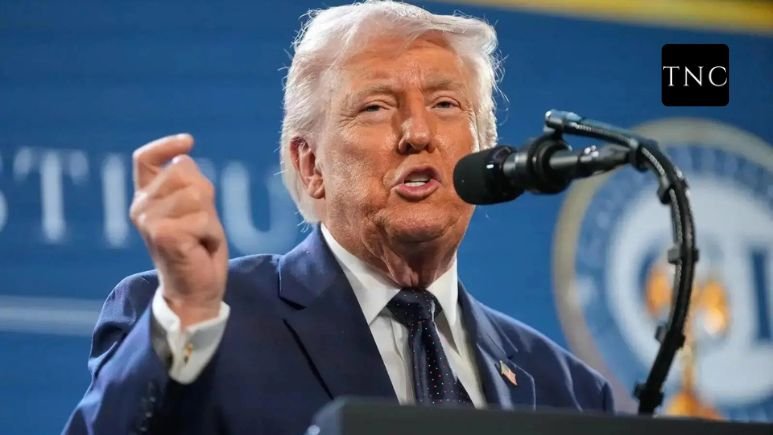

U.S. President Donald Trump has raised the prospect of seizing Iran’s Kharg Island, the Persian Gulf terminal through which the vast majority of the country’s oil exports passigniting fresh fears of escalation in a conflict that has already sent global energy markets into turmoil.
In a candid interview with the Financial Times published Sunday, Trump declared that his “favourite thing is to take the oil in Iran,” dismissing domestic critics of such a move as “stupid people.”He stopped short of announcing a firm decision, but left little ambiguity about his intentions. “Maybe we take Kharg Island, maybe we don’t. We have a lot of options,” Trump told the newspaper. “It would also mean we had to be there for a while.”
The remarks rattled energy markets almost immediately. Brent crude, the global oil benchmark, rose 3.5% to more than $116 a barrel on Monday extending a rally of over 50% since the start of the U.S.-Israeli war against Iran. The spike underscores how acutely dependent global supply chains remain on the Persian Gulf, where Iran has maintained a partial blockade of the Strait of Hormuz for weeks.
A Strategic Chokepoint
Kharg Island handles roughly 90% of Iran’s oil exports and has long been considered the jugular of Tehran’s economy. The U.S. military already struck the island on March 13.Any move to occupy it permanently, analysts warn, would mark an unprecedented escalation transforming an aerial campaign into a ground occupation of sovereign Iranian territory.
According to U.S. officials, Trump is drawn to the idea because it would constitute “an economic knockout of the regime” essentially defunding Tehran. Senator Lindsey Graham, a prominent Iran hawk, echoed that view forcefully. “Seldom in warfare does an enemy provide you with a single target like Kharg Island that could dramatically alter the outcome of the conflict,” he wrote. “He who controls Kharg Island, controls the destiny of this war.”
Troops on the Move
The rhetorical escalation is being matched by a significant military buildup. The U.S. has deployed around 3,500 troops to the region, including 2,200 Marines, with additional forces en route. The Pentagon has ordered a total of 10,000 troops trained for land seizure and occupation to the Middle East.
The Washington Post also reported that the Pentagon has drawn up plans for weeks of potential ground operations in Iran short of a full-scale invasion as senior White House figures signal a desire to bring the conflict to a close on American terms.
Iran Pushes Back; Talks Show Fragile Signs of Life
Tehran has responded with defiance. Iran warned it is ready and “waiting” for a ground invasion, even as Trump simultaneously talked up diplomatic progress, claiming the U.S. was negotiating “directly and indirectly” with Iran.
Iran’s Foreign Ministry flatly denied that characterisation. Spokesperson Esmaeil Baghaei told reporters that U.S. proposals were “largely excessive, unrealistic, and unreasonable,” and confirmed that no direct negotiations between Washington and Tehran had taken place, only messages relayed through intermediaries.
Still, there are tentative signals that a diplomatic off-ramp has not entirely closed. Trump set an April 6 deadline for Iran to accept a deal to end the conflict or face strikes on its energy sector, while also noting that indirect talks facilitated by Pakistani intermediaries are continuing.
The Venezuela Parallel
Trump’s framing of the Iran oil seizure echoed language he has used regarding Venezuela. He compared the strategy to the U.S. plan in Venezuela, where Washington aims to control the oil industry indefinitely following the capture of Nicolás Maduro. Critics of that comparison argue the two situations are vastly different in scale and geopolitical consequence Iran being a far larger producer with deeper ties to global supply networks and nuclear infrastructure.
Global Ripple Effects
Asia is the first region to feel the effects of depleting oil stocks, since shipments from the Middle East typically arrive there first. Africa and Europe are expected to be more significantly impacted by April, according to a JPMorgan report, which also warned that prolonged instability could knock the U.S. job market further off course.
With Brent crude at levels not seen since the early 2020s, and a shooting war entering its fifth week with no clear resolution, the prospect of U.S. boots on Kharg Island has moved from the realm of speculation to a scenario that markets, governments, and military planners are now taking very seriously.
Also Read / India’s Energy Gamble: Racing Against a Chokepoint Crisis.








Leave a comment