

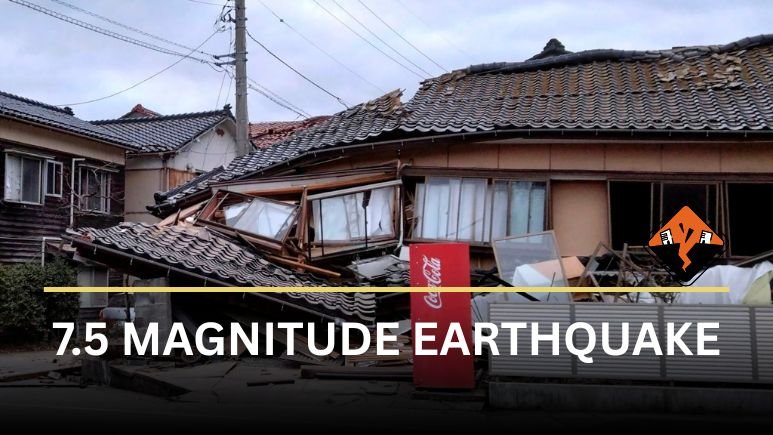

Officials have warned of a heightened risk of a catastrophic earthquake in the coming week after a strong jolt injured dozens and triggered tsunami waves along the northern coast.
Japan has issued a rare “megaquake” advisory for the first time in its history after a powerful magnitude 7.5 earthquake struck off the coast of Aomori prefecture late on Monday night. The warning, which covers 182 municipalities from Hokkaido to Chiba, urges residents to stay on high alert for a potential magnitude 8-class tremor in the next seven days.
The earthquake hit at 23:15 local time (14:15 GMT) on Monday, with its epicentre located about 80km (50 miles) offshore in the Pacific Ocean at a depth of 54km. It violently shook the northern Tohoku region, sending residents scrambling for safety in the freezing night and triggering tsunami advisories.
Waves of up to 70cm (2.3ft) were recorded at Kuji port in Iwate prefecture, while smaller tsunamis hit coastal areas in Aomori and Hokkaido. Although the tsunami warnings were lifted by early Tuesday morning, the tremors left visible scars: cracked roads, shattered windows, and power outages affecting thousands of homes.
At least 30 people have been reported injured, mostly from falling objects or falls during the evacuation. One man in Tohoku was hurt when his car plunged into a road cavity caused by the quake.
“We are putting people’s lives first and doing everything we can,” Prime Minister Sanae Takaichi said, announcing the formation of an emergency task force to assess the damage.
JMA official Satoshi Harada issued a stark warning to the public: “You need to prepare, assuming that a disaster like that [the 2011 earthquake] could happen again.”
This is the first time the Japan Meteorological Agency (JMA) has activated its “Subsequent Earthquake Advisory” system since it was introduced in 2022. The system was designed to prevent complacency after a large foreshock, a lesson learned from the devastating 2011 disaster when a magnitude 7.3 quake preceded the deadly magnitude 9.0 tsunami by two days.
The advisory does not mean a megaquake is inevitable; officials estimate the probability at roughly one in 100 but it signals a significantly elevated risk along the Japan Trench and Kuril Trench.
Residents in the affected regions have been advised to secure furniture, check evacuation routes, and keep emergency kits ready for the next week. While no evacuation orders are currently in place for the megaquake alert, authorities emphasize that the situation remains fluid and dangerous.
Also Read / Northern Afghanistan Rocked by 6.3 Magnitude Earthquake: Impact, Response, and Resilience.














Leave a comment