

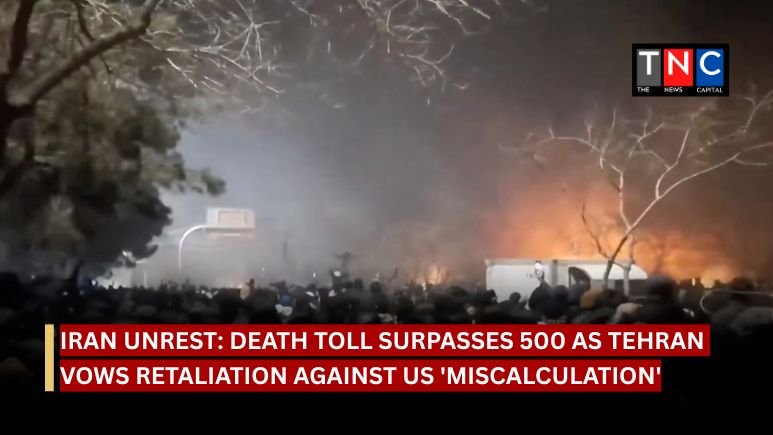

The video reached human rights monitors at 4:23 AM Monday. Filmed from a rooftop in northern Tehran, it showed security forces firing directly into a crowd of protesters trapped in a narrow alley. People scattered. Some fell. The camera shook as the person holding it ducked behind a ventilation unit. You could hear shouting, then three more gunshots, then silence. The clip was 41 seconds long. It was the 1,847th verified incident of lethal force documented since the Rial Rebellion began three weeks ago. By the time analysts cataloged it in their spreadsheet, the death toll had reached 538. By the time you read this, it will be higher.
Iran’s nationwide uprising has killed more than 500 people as the clerical regime deploys war-zone tactics against protesters driven to the streets by a currency collapse that destroyed their savings overnight. Tehran has called for massive counter-rallies today to project strength while warning that any U.S. military intervention will trigger immediate strikes on American bases and Israel. The crisis has moved beyond domestic unrest into a geopolitical powder keg where Trump’s “locked and loaded” threats meet a cornered regime willing to expand the conflict regionally rather than fall to its own people.
The death toll crossed 500 on Sunday, January 11, 2026, according to the U.S.-based Human Rights Activists News Agency and other monitoring groups. HRANA verified 490 protester deaths and 48 security personnel killed. Some activist networks place the total as high as 538. More than 10,600 people have been arrested across 180 cities in two weeks. That includes hundreds of university students and at least 166 minors. Reports persist of security forces raiding hospitals in western cities like Ilam and Kermanshah to seize wounded protesters and recover bodies of the deceased.
The unrest has become an international crisis. President Donald Trump has repeatedly warned the U.S. is “locked and loaded” to intervene if the killing continues. Tehran responded with its own ultimatum. Parliament Speaker Mohammad Bagher Qalibaf issued a televised warning Sunday stating any U.S. strike would trigger immediate retaliation. “The occupied territories (Israel) as well as all U.S. bases and ships will be our legitimate target,” Qalibaf declared amid chants of “Death to America.” Trump is reportedly meeting with national security officials Tuesday to discuss options including cyberattacks, direct military strikes, and satellite internet support for the opposition.
Faced with dwindling legitimacy, the Iranian presidency ordered nationwide counter-rallies for today, Monday, January 12. State television framed these marches as “spontaneous” displays of support for the Islamic Republic and rejection of “urban terrorist criminals.” The government declared three days of national mourning for “martyred” security forces killed by “rioters.” A total internet shutdown remains in place for much of the country, though protesters continue bypassing the blockade using Starlink transmitters to upload footage of nighttime clashes in northern Tehran and Mashhad.
The primary engine driving the rage remains the total collapse of the national currency. The rial traded briefly at 1,470,000 to the dollar on Sunday, effectively vaporizing middle-class savings. With the rial’s collapse, basic staples like bread and oil have increased 300% in some provinces, turning an economic protest into a battle for survival.
The UN Secretary-General expressed “shock” at the excessive use of force. The international community is watching today’s state-mandated rallies closely. If the government uses these marches as a pretext for a final, more lethal “cleansing” of the streets, the risk of regional war involving the U.S. and Israel moves from possibility to imminent reality.
Tehran is ordering counter-rallies today to prove it still controls the streets while warning Trump that intervention means war with Israel as collateral damage, but the 538 dead and 10,600 arrested suggest the regime has already lost control and is now choosing between collapsing quietly or taking the region down with it. The Rial Rebellion started as an economic protest over worthless currency. It’s ending as a test of whether a theocracy will accept defeat or expand the battlefield to survive. Trump meets his national security team Tuesday. The Iranian government stages its loyalty marches today. One of them will blink first, or neither will, and then the 41-second video from that Tehran rooftop becomes the prelude to something much worse.
Also Read / State of Siege: Six dead as Iran’s economic protests turn into anti-regime uprising.












Leave a comment