


At 6:30 a.m., the diesel pump outside a small logistics yard in Navi Mumbai hums to life. Drivers line up with their trucks, engines idling, coffee cups balanced on dashboards. Rajesh Pawar, who has hauled goods across Maharashtra for two decades, glances up at the electronic price board. Overnight, the rate has ticked higher again.
“Every rupee matters,” he mutters, tapping the calculator on his phone. The extra fuel cost will shave margins on today’s delivery of construction materials. If the trend continues, Rajesh will have to charge clients more. And when transport becomes expensive, everything from vegetables to cement gets costlier.
What Rajesh sees at the pump is the first ripple of a global storm thousands of kilometers away.
Economists warn that if the conflict in West Asia drags on, the ripple could turn into a wave for India’s economy. A prolonged war in the region, especially one that disrupts oil supply routes could push India’s inflation above 5 percent, a level that begins to worry policymakers and consumers alike.
India’s economy is tightly linked to energy markets in the Middle East. When geopolitical tensions push crude oil prices higher, the effect travels through fuel costs, transportation, manufacturing, and eventually the prices households pay for everyday goods.
The risk begins with oil.
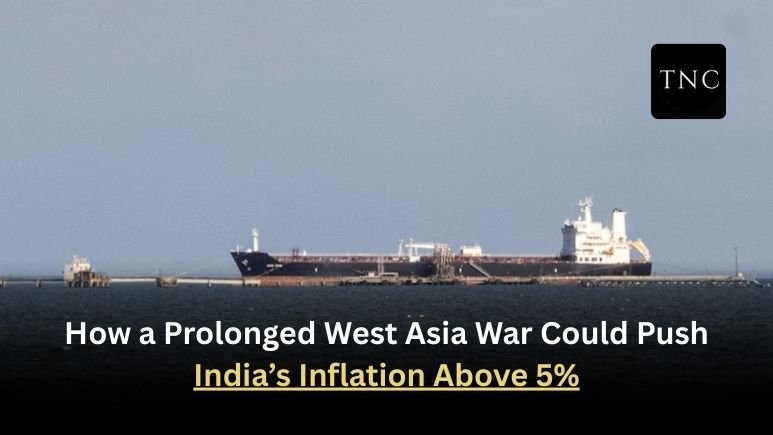
India imports roughly 85% of its crude oil, and a significant share comes from the Middle East. Any disruption whether missile attacks on infrastructure or shipping risks in the Strait of Hormuz immediately rattles global supply chains.
In recent weeks, escalating conflict involving Iran and other regional powers has already tightened energy markets. The International Energy Agency warns that the war has disrupted millions of barrels of oil supply per day, pushing prices toward $100 per barrel.
When crude rises, inflation follows.
Fuel is a foundational cost in the economy. Higher diesel prices raise transportation expenses for trucks, trains, and ships. That makes food distribution costlier. Factories pay more for energy. Airlines, chemical plants, and fertilizer manufacturers face margin pressure.
The result: a broad-based price increase across sectors.
Economists estimate that even a 10% rise in crude oil prices could lift India’s inflation by roughly 30 basis points.
If oil remains elevated for months, that impact multiplies.
There are secondary shocks, too.
The Indian rupee has already shown signs of stress as investors worry about energy costs and geopolitical instability. The currency recently slipped to a record low against the dollar amid fears of prolonged conflict.
A weaker rupee makes imports including oil more expensive. That feeds inflation again.
Meanwhile, industries that depend on Middle Eastern trade from petrochemicals to textiles are feeling supply disruptions and higher freight costs. Businesses warn that prolonged tensions could slow production and push prices higher across supply chains.
Put simply: energy shocks cascade through the entire economy.
For most Indians, the effects of a distant war won’t arrive as headlines about oil tankers or geopolitics.
They’ll appear quietly in the price of cooking gas, the cost of vegetables at the market, and the fuel bill for a delivery truck.
If the conflict in West Asia lingers, inflation in India may not spike overnight. But it will creep upward, one supply chain at a time until households across the country feel the squeeze.
Also Read / India’s Hormuz Dependence: The Narrow Strait That Powers a Giant Economy.














Leave a comment