

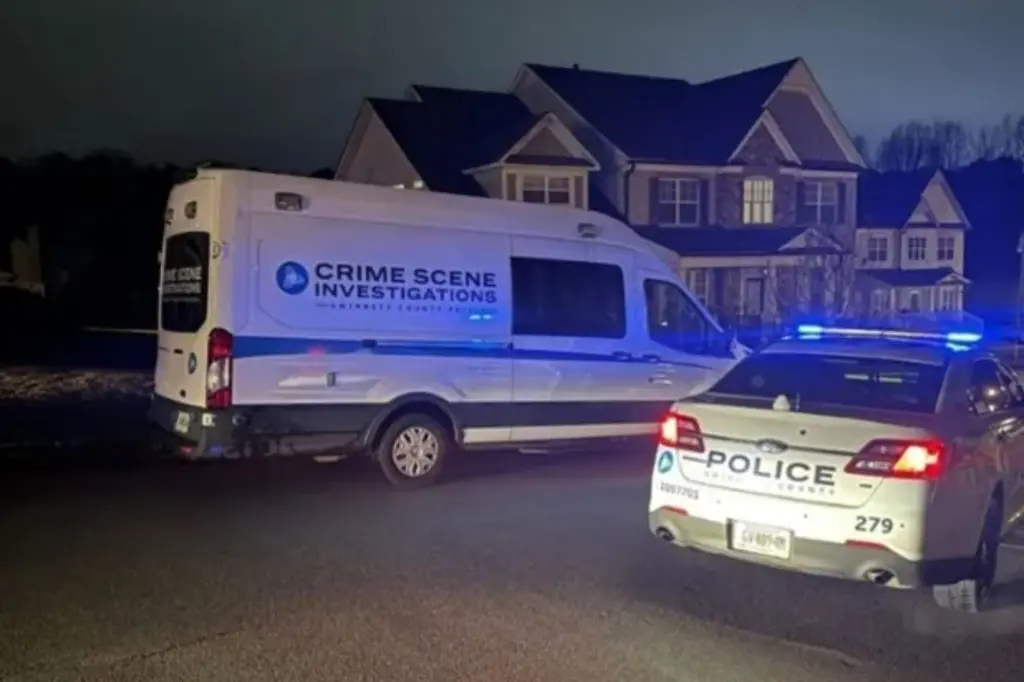

A suspected domestic dispute turned into a mass casualty event in a quiet Georgia suburb early Friday morning, with an Indian-origin man facing multiple murder charges as the local community reels from the bravery of three young children who managed to alert authorities while hiding from the gunman. A 51-year-old Atlanta man, identified as Vijay Kumar, is in custody after allegedly shooting his wife and three relatives dead at a home in Gwinnett County on Friday, January 23, 2026, with three children aged 7, 10, and 12 surviving the tragedy by hiding in a bedroom closet while the eldest child made a desperate 911 call that led police to the scene.
Investigators believe the violence began as a domestic argument miles away from the crime scene, with the dispute traveling from Atlanta to Lawrenceville before erupting into mass shooting.
- The Initial Argument: Police state that a dispute first erupted between Kumar and his wife, Meenu Dogra (43), at their home in Atlanta. For reasons still under investigation, the couple then traveled with their 12-year-old child to the Lawrenceville home of their relatives.
- The Fatal Escalation: Upon arrival at the Brook Ivy Court residence, the situation escalated into a shooting. Along with Dogra, the victims have been identified as Gourav Kumar (33), Nidhi Chander (37), and Harish Chander (38).
- Multiple Gunshot Wounds: All four victims were pronounced dead at the scene from multiple gunshot wounds, with preliminary forensic evidence suggesting execution-style shooting rather than struggle or self-defense scenarios.
- Domestic Violence Pattern: The progression from argument to travel to relatives’ home to mass shooting suggests escalating loss of control or premeditation, with investigators examining whether Kumar intended the violence or it erupted spontaneously.
After the shooting, Kumar attempted to flee but was apprehended through police tracking efforts utilizing specialized units.
- Vehicle Discovery: Kumar’s vehicle was found in the driveway of the crime scene, indicating he fled on foot rather than attempting to drive away from the area.
- K-9 Deployment: Gwinnett County police deployed a K-9 unit, which successfully tracked the suspect’s scent trail to a nearby woodline where he was attempting to hide or escape.
- Peaceful Apprehension: Kumar was taken into custody without further incident, surrendering to officers rather than resisting or attempting suicide suggesting possible shock or resignation after the violence.
- Timeline: The rapid apprehension within hours of the shooting prevented Kumar from reaching potential secondary targets or creating additional public safety threats.
The survival of the three children has been described by local authorities as nothing short of miraculous, with their quick thinking and bravery enabling police response that may have prevented additional casualties.
- The 911 Call: As the shooting unfolded, the children Kumar’s 12-year-old and two younger relatives aged 7 and 10 retreated to a closet where they remained hidden while the eldest child provided dispatchers with critical information.
- Dispatcher Communication: The 12-year-old managed to maintain composure during the call, allowing officers to reach the home within minutes with knowledge of the suspect’s identity, weapon type, and victims’ locations.
- Physical Safety: The children were physically unharmed despite being present during the massacre, suggesting either they successfully hid before Kumar could locate them or he deliberately avoided harming them.
- Psychological Trauma: While physically uninjured, the children witnessed or heard their family members being murdered, creating profound psychological trauma that will require extensive counselling and support.
The Criminal Charges: Maximum Severity
Kumar faces an extensive array of charges reflecting the severity of the crimes and the presence of children during the violence.
| Charge Type | Counts | Details |
| Malice Murder | 4 | Intentional killing with “express malice” toward victims |
| Felony Murder | 4 | Death occurring during the commission of a felony (aggravated assault) |
| Aggravated Assault | 4 | Use of a deadly weapon during the attack |
| Cruelty to Children (1st Degree) | 1 | Causing or permitting cruel/excessive physical or mental pain to child |
| Cruelty to Children (3rd Degree) | 2 | Mental trauma inflicted on minors present during assault |
- Malice Murder: The most serious charges carry potential life imprisonment or death penalty in Georgia, depending on aggravating factors and prosecution decisions.
- Felony Murder: Even without proving premeditated intent, the felony murder charges provide alternative conviction pathways if malice cannot be established.
- Child Cruelty Charges: The inclusion of multiple cruelty to children charges acknowledges the psychological harm inflicted on the three surviving children who witnessed or hid during the massacre.
- Legal Strategy: The sheer number and variety of charges ensure that even if some don’t result in conviction, Kumar faces maximum possible sentences on the totality of his conduct.
While details about the victims remain limited as families process the tragedy, preliminary information suggests close family relationships that made the violence especially devastating.
- Meenu Dogra (43): Kumar’s wife and apparent initial target of the domestic dispute that escalated into mass murder.
- Gourav Kumar (33): Relationship to the suspect unclear but surname suggests possible sibling or cousin connection.
- Nidhi Chander (37) and Harish Chander (38): Married couple hosting the family at their Brook Ivy Court home when the violence erupted.
- Extended Family Impact: The massacre has devastated multiple family units Kumar’s children lost their mother, the younger children lost their parents, and extended family lost multiple members simultaneously.
The Consulate General of India in Atlanta released a statement on Saturday expressing deep grief over the incident and confirming Indian national victims.
- Official Statement: The mission confirmed that at least one of the victims was an Indian national, triggering consular assistance protocols for citizen protection abroad.
- Consular Assistance: The consulate is extending support to the bereaved family, including assistance with funeral arrangements, documentation, and coordination with local law enforcement.
- Repatriation Questions: If family members wish to return victims’ remains to India, the consulate will facilitate the complex documentation and transportation processes required.
- Community Liaison: The consulate serves as liaison between the Indian-American community in Georgia and local authorities, ensuring cultural sensitivities are observed during investigation and proceedings.
The massacre occurred in what residents describe as a quiet, family-oriented neighbourhood in Lawrenceville, Gwinnett County, creating shock and fear in a community unaccustomed to such violence.
- Local Reaction: “It’s definitely a tragic situation four people dying at the same time, especially with children in the home,” said Gwinnett County Police Corporal Angela Carter, capturing the community’s horror.
- Safety Concerns: Neighbours are grappling with the realization that such extreme violence occurred in their residential area, raising questions about recognizing warning signs of domestic violence escalation.
- Indian-American Community: The tragedy has particularly impacted the significant Indian-American population in the Atlanta metro area, with community organizations mobilizing support for affected families.
- Domestic Violence Awareness: Local advocates are using the tragedy to highlight the lethal dangers of domestic violence and the importance of intervention before disputes escalate to homicide.
The incident marks the latest in a series of tragedies involving Indian-origin families in the United States, raising questions about domestic violence dynamics and support systems.
- Recent Precedent: The case occurs “just weeks after a separate tragedy involving an Indian woman in Maryland,” suggesting a concerning pattern requiring community and law enforcement attention.
- Cultural Barriers: Immigrant communities sometimes face unique barriers to seeking domestic violence help, including language difficulties, unfamiliarity with legal systems, immigration status concerns, and cultural stigma around family problems.
- Isolation Factors: Families separated from extended support networks in their countries of origin may lack the intervention mechanisms that traditional family structures provide when disputes escalate.
- Service Accessibility: Questions arise about whether culturally-appropriate domestic violence services and early intervention programs are adequately accessible to immigrant communities.
As Kumar faces prosecution for one of Georgia’s deadliest domestic violence incidents, multiple parallel processes will unfold.
- Criminal Proceedings: Kumar will face arraignment, potential grand jury indictment, and eventual trial on the extensive charges, with possible death penalty considerations given the multiple victims.
- Child Custody: The three surviving children, having lost their mother and witnessed the massacre, will require permanent placement with relatives and extensive trauma counseling.
- Civil Litigation: Victims’ estates may pursue wrongful death claims, though Kumar’s likely imprisonment and limited assets may make financial recovery difficult.
- Community Healing: Lawrenceville and the broader Indian-American community in Atlanta will require time and resources to process the tragedy and support affected families.
The Lawrenceville massacre transformed a domestic argument into a quadruple homicide that left three children orphaned and traumatized, their survival dependent on a 12-year-old’s courage in calling 911 from a closet while hiding from a family member turned killer Vijay Kumar now faces four malice murder charges and multiple other counts that could result in life imprisonment or death penalty, while the Indian Consulate provides support to families devastated by violence that highlights the lethal dangers of domestic disputes and the particular vulnerabilities facing immigrant communities separated from traditional support systems.
Also Read / Adelaide Tragedy: Vikrant Thakur Admits to Killing Wife, Pleads Guilty to Manslaughter.













Leave a comment