

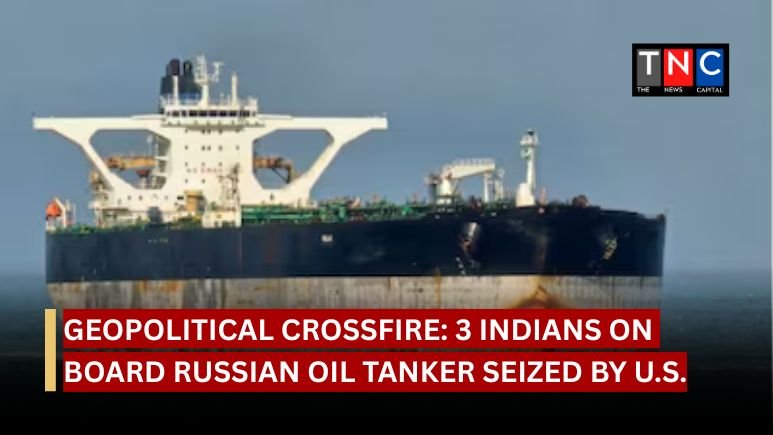

The helicopter came in low over the tanker’s stern just after dawn. Coast Guard operators fast-roped onto the deck of the Marinera while the ship’s engines still churned through gray North Atlantic swells. Below decks, a 28-year-old marine engineer from Kerala named in crew manifests only as “Rajesh K.” was drinking tea in the galley when armed Americans in tactical gear appeared in the doorway. He and 27 other crew members, including two other Indians, were ordered topside with hands visible. None of them had fired a shot. None of them had committed violence. But all of them were now prisoners in a geopolitical standoff between Washington and Moscow that started with Venezuelan oil, escalated to submarine escorts, and ended with their ship boarded in international waters 800 miles from the nearest coast.
India confirmed Friday it’s monitoring the fate of three Indian sailors detained after U.S. Special Forces seized a Russian-flagged oil tanker in a dramatic North Atlantic operation. The crew finds themselves trapped between competing legal claims, American sanctions enforcement, and a furious Kremlin accusing Washington of piracy on the high seas. The Marinera incident exposes how maritime workers from developing nations become collateral damage when superpowers use international waters as battlegrounds, and how a deckhand’s decision to take a contract can land him in the middle of a crisis he never signed up for.
The Indian government is working to identify and ensure the welfare of its three nationals aboard the Marinera, Ministry of External Affairs spokesperson Randhir Jaiswal said during a Friday briefing in New Delhi. The crew of 28 includes 17 Ukrainians, six Georgians, three Indians, and two Russians, according to Russia Today. Officials stressed consular outreach to confirm the sailors are being treated humanely under international maritime law, though India has not yet filed a formal protest.
The seizure caps a two-week chase that began in the Caribbean. U.S. officials allege the tanker was part of the “shadow fleet” smuggling sanctioned Venezuelan oil. The vessel, then called the Bella 1, fled an American blockade last month and headed into open Atlantic waters to avoid capture. On December 24, 2025, in what Washington calls a “cynical legal maneuver,” the ship was renamed Marinera and re-registered under the Russian flag. Someone even painted a crude Russian tricolor on the hull.
The gambit almost worked. Moscow reportedly dispatched a nuclear-powered submarine to escort the tanker, triggering a tense standoff. But U.S. forces used helicopters to board from the Coast Guard cutter Munro on Wednesday, overwhelming the crew without resistance.
Russia is furious. The Foreign Ministry calls the boarding “neo-colonialism” and “piracy,” arguing the 1982 UN Convention on the Law of the Sea prohibits seizing ships registered under a national flag in international waters without that flag state’s consent. The U.S. European Command counters that the action was lawful, executed under a federal court warrant for chronic sanctions violations. The White House dismissed the December reflagging as a transparent attempt to shield illicit trade.
The Indian sailors sit in legal limbo. They’re likely to be treated as non-combatant civilian employees, not criminals. But U.S. officials haven’t ruled out transferring the crew to American soil for prosecution if evidence shows they knowingly facilitated sanctions evasion. The MEA is coordinating with both the U.S. State Department and Russia’s Transport Ministry to secure repatriation as the broader legal fight over the Marinera moves to court.
Three Indian sailors took jobs on a tanker and woke up as bargaining chips in a superpower dispute over oil sanctions, submarine escorts, and who owns the law 800 miles from land. Their government is making the right diplomatic noises, but the reality is harsh. These men are stuck until Washington and Moscow finish arguing over whether boarding a reflagged ship counts as enforcement or piracy, and whether the workers who kept the engines running deserve prosecution or a flight home. The Marinera crew didn’t start this fight. They’re just the ones who can’t leave until it’s over.
Also Read / Under-Sea Escort: Russia deploys submarine to shield ‘Shadow’ tanker from U.S. seizure.














Leave a comment