

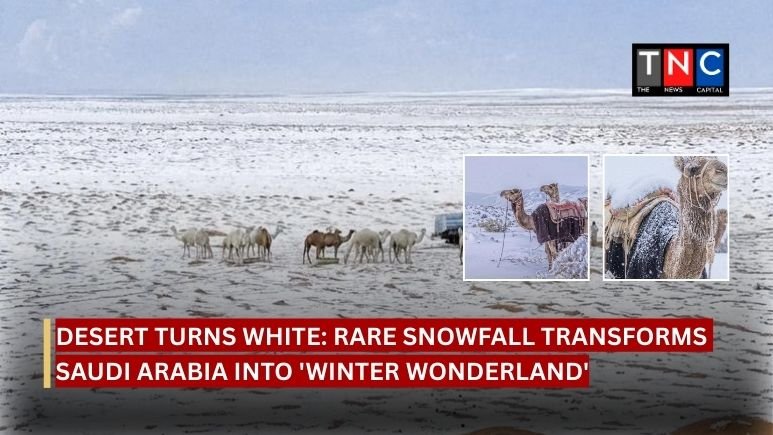

For the first time in three decades, parts of Saudi Arabia’s interior have been blanketed in thick snow, as a historic cold wave sweeps across the desert kingdom, turning golden dunes into icy vistas.
Residents of Saudi Arabia woke up to a surreal sight this week as rare and heavy snowfall covered huge areas of the northern and central regions, including the Al-Jawf, Tabuk, and Hail provinces. Starting Wednesday (December 17) and getting heavier through Monday (December 22), the weather event was triggered by a powerful cold air mass moving south from the Mediterranean, pushing temperatures in some areas to a record-low -4°C.
The snowfall was most dramatic in the northern mountains, but its reach into the desert interior of Al-Jawf has been described by meteorologists as a “once-in-a-generation” event.
- Jabal Al-Lawz: The 2,600-meter peak in Tabuk got heavy accumulation, becoming a temporary hotspot for tourists and locals who rushed to the area to ski and build snowmen.
- Central Regions: Snow also reached Al-Majmaah and Al-Ghat, just north of the capital, Riyadh. The sudden accumulation on open fields led authorities to temporarily switch schools to remote learning as a safety measure.
- Viral Sightings: Social media has been flooded with “unbelievable” footage, some users even questioning if it was AI-generated, of camels wandering through snow-dusted dunes beneath dark, dramatic clouds.
“This is unprecedented; we are so excited to see it. My friends and I are heading out to experience this winter miracle,” said Thamr Alotaibi, a Riyadh resident who traveled north to witness it.
“The snowfall in these parts is not entirely unheard of at high elevations, but the scale and depth of this system are historic,” a spokesperson for the National Centre of Meteorology said, adding that the interaction between the cold mass and rain-bearing clouds was exceptionally rare.
While the northern Tabuk region occasionally sees light dustings of snow, the current event is way more widespread. Many experts point to shifting global weather patterns and climate change as contributors to these “atmospheric anomalies,” noting the Middle East has seen an increase in flash floods and wild temperature swings over the last two years. This cold wave follows a major storm system that brought torrential rain to the UAE earlier this month.
The NCM has issued a continued “yellow warning” for parts of northern Saudi Arabia, as frost is expected to form on roads overnight. While the snow should start melting by Tuesday, temperatures are forecast to stay well below the seasonal average of 22°C for the rest of the week. Residents have been urged to avoid valleys that could see flash floods as the snow thaws.














Leave a comment