

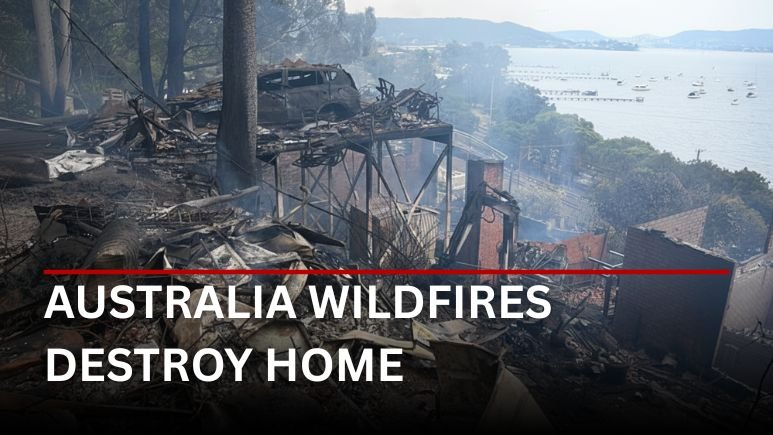

The country faces a “difficult” summer ahead as dozens of fires continue to burn out of control, destroying homes and claiming the life of a firefighter.
Australia is bracing for what could be a brutal summer. The federal government has activated disaster relief funding for New South Wales (NSW) after extreme wildfires tore through the state over the weekend, destroying at least 16 homes and scorching thousands of hectares of bushland. Prime Minister Anthony Albanese is warning that a challenging fire season lies ahead, especially after the death of a firefighter who was killed while fighting the flames.
More than 60 fires were still burning across NSW on Sunday. The Central Coast region, home to over 350,000 people, got hit the hardest. In Koolewong, just north of Sydney, fast-moving flames driven by extreme heat destroyed 12 properties. Four more homes were lost in Bulahdelah, and down in Tasmania, 19 houses burned in Dolphin Sands.
The worst news came overnight. A 59-year-old firefighter died when a tree fell on him while he was battling a blaze near Bulahdelah. He went into cardiac arrest at the scene and couldn’t be saved. He’s the first person to die in this season’s crisis, and his death has cast a shadow over everything.
The disaster assistance package, split between federal and state governments, will give immediate financial help to affected families. It also covers cleanup costs and infrastructure repairs in six hard-hit areas, including the Central Coast, Mid Coast, and Upper Hunter.
“This summer… is going to be a difficult one,” Prime Minister Albanese said, not sugarcoating the situation. He honored the firefighter who died, saying, “This terrible news is a sombre reminder of the dangers faced by emergency services personnel… We honour that bravery every day.”
“We’re not out of the woods yet,” warned Ben Millington, Deputy Commissioner of the Rural Fire Service. Even though cooler weather brought some temporary relief, the underlying conditions are still dangerous.
New South Wales is no stranger to fires. It’s one of the most fire-prone places on the planet. But officials say climate change is making things worse. After a few quieter, wetter years, the current El Niño pattern has dried everything out, creating the perfect setup for the kind of catastrophic “Black Summer” fires that happened in 2019-2020. Those fires burned an area the size of Turkey.
The fact that we’re seeing this level of destruction in early December doesn’t bode well. It suggests a long, dangerous season stretching out ahead. Authorities are telling residents to get their bushfire survival plans ready now, because temperatures in some inland towns are expected to hit over 40°C in the coming days.
Fire conditions eased a bit on Sunday, but crews are staying on high alert. Impact assessment teams are on the ground right now trying to figure out just how bad the damage is. They expect the numbers to climb as they reach areas that were previously cut off. The immediate focus is on containment and recovery before the next heatwave rolls in later this week.
Also Read / At least 25 dead as massive fire engulfs popular Goa nightclub.














Leave a comment