

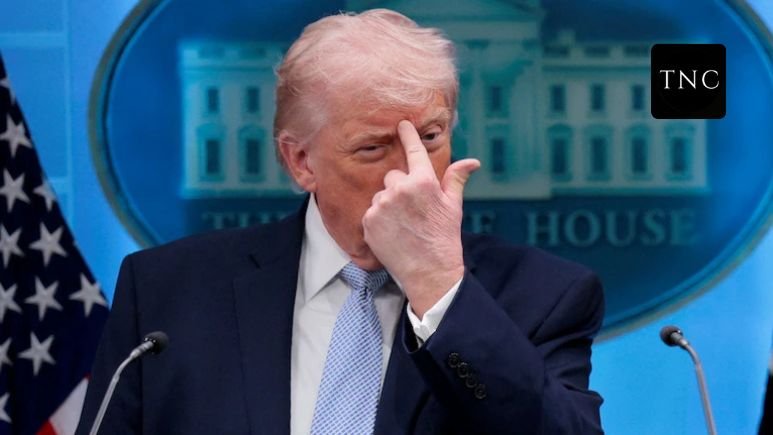

The television flickers in a diner outside Columbus, Ohio. A retired factory worker leans forward, elbows on the counter, as oil prices scroll across the screen down sharply after news of a ceasefire in the Iran conflict. “That’s good, right?” he asks no one in particular. The waitress shrugs. Two booths over, a younger man shakes his head. “Depends,” he says. “Gas is cheaper. But what did we just get into?” The room settles into a quiet unease relief tangled with suspicion, a fragile pause after weeks of rising tension.
That moment captures the political paradox now facing Republicans in the United States: even as a ceasefire between the U.S. and Iran cools the immediate threat of war, it may not cool the political fallout. The temporary truce brokered after weeks of escalating conflict has eased global markets and reduced fears of a wider war.
But inside Republican circles, a deeper चिंता persists: has the damage already been done? With midterm elections approaching, the Iran conflict has introduced economic uncertainty, voter skepticism, and internal divisions factors that could reshape electoral prospects.
The ceasefire, by most economic measures, delivered instant relief. Oil prices dropped sharply, global markets surged, and the Strait of Hormuz, a critical artery for global energy, partially reopened.
But politics rarely follows markets.
Inside the Republican Party, the conflict has exposed a fault line. Some leaders frame the ceasefire as strategic restraint, a calculated pause that prevents escalation. Others see it as a half-measure, allowing Iran breathing room without securing decisive outcomes.
This division matters because it mirrors a broader shift in voter sentiment. Polling during the conflict suggests Americans are wary of prolonged military engagement, with a majority favoring a quick end to hostilities.
That skepticism cuts directly against a core political risk: wars without clear endpoints tend to erode public trust, especially when economic consequences like inflation or fuel costs hit home.
Even within the Republican base, the mood is no longer uniformly hawkish. Some voters who once supported aggressive foreign policy are questioning the cost, both in dollars and in direction. Meanwhile, Democrats have seized on the moment, pushing to limit war powers and framing the conflict as reckless overreach.
The timing amplifies everything. Midterm elections historically punish the party in power, and advisers around former President Donald Trump have privately acknowledged that a prolonged conflict could “hobble Republicans heading into the midterms.”
There is also the optics problem. A ceasefire can look like peace or like retreat. Iran has already claimed symbolic victory, while critics argue the deal leaves key issues unresolved.
For voters, nuance fades quickly. What remains is a simpler question: was it worth it?
And then there is the volatility factor. The ceasefire itself is fragile, with leaders warning it could collapse at any moment.
That uncertainty keeps the conflict politically alive, even in pause.
The ceasefire may have stopped the missiles, but it hasn’t stopped the political consequences. For Republicans, the real battle isn’t just overseas it’s at home, where voters are weighing cost against clarity. In midterm politics, a war doesn’t have to continue to hurt you. It just has to leave doubt behind.
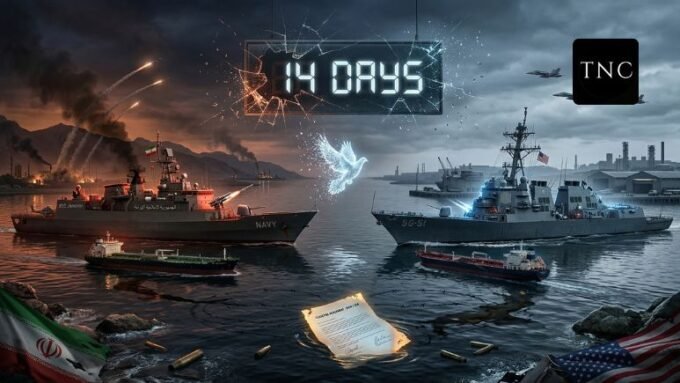
Also Read / The Fragile Peace: Inside the 14 Days That Could Reshape the Middle East.








Leave a comment