

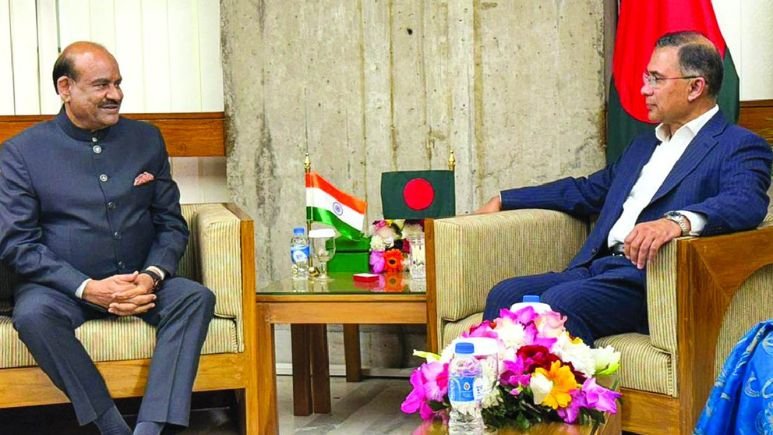

The ceiling fans hummed softly inside the Prime Minister’s Office in Dhaka as aides shuffled papers and whispered last-minute briefings. Outside, the April heat pressed against the windows. Inside, Pranay Kumar Verma leaned forward across a polished table, his tone measured but deliberate.
Across from him sat Tarique Rahman, newly in power, carrying both the weight of a political comeback and the burden of redefining his country’s foreign policy.
This was not just a courtesy call. It was a test.
For months, relations between the two neighbors had drifted through suspicion, protests, and political upheaval. Now, in this quiet room, both sides were attempting something far more difficult than confrontation: trust.
The meeting between India’s envoy and Bangladesh’s new prime minister signals more than routine diplomacy; it marks a potential turning point in a relationship strained by political upheaval and shifting power in Dhaka.
After the 2026 elections brought a new leadership to Bangladesh, both countries are cautiously exploring a reset one built on “positive, constructive, and people-centric” engagement.
At stake is not just bilateral goodwill, but regional stability in South Asia, where India and Bangladesh are deeply intertwined through trade, security, energy, and shared geography.
Diplomacy often hides its sharpest edges behind polite language. But beneath the carefully chosen words lies a strategic recalibration.
For India, the message is clear: adapt quickly to Bangladesh’s new political reality or risk losing influence in a critical neighboring state. For Bangladesh, the challenge is equally complex to assert independence without destabilizing a relationship that underpins its economy and security.
The talks focused on practical cooperation, trade, connectivity, energy, and development. Discussions included everything from public health to infrastructure, signaling a shift toward “people-centric” diplomacy rather than purely strategic alignment.
This matters because recent history has been anything but smooth.
Relations deteriorated during Bangladesh’s interim government phase, with tensions over security concerns, political rhetoric, and even diplomatic protests. The fallout exposed how fragile the partnership had become.
Yet signs of thaw have been emerging. Quiet moves fuel supplies, visa services, and security cooperation hint at a deliberate attempt to rebuild ties step by step.
The Verma Rahman meeting fits into this broader pattern: less spectacle, more substance.
Still, challenges remain. Bangladesh’s new leadership has signaled it will pursue a more balanced foreign policy, engaging multiple global powers rather than leaning heavily toward India. That means New Delhi must compete, not just cooperate.
And then there are unresolved issues: water sharing, border tensions, and political sensitivities that have lingered for decades. These are not solved in one meeting or even a dozen.
What has changed, however, is the tone.
Instead of confrontation, both sides are now speaking the language of mutual benefit.
In diplomacy, progress rarely arrives with headlines. It comes in quiet conversations, cautious optimism, and incremental steps.
The meeting in Dhaka won’t erase years of tension overnight. But it signals something more important: both India and Bangladesh are willing to try again.
The future of their relationship will not be decided by a single handshake but by whether that handshake leads to sustained action.
Also Read / Bangladesh Election Results Point to Big Political Shake-Up as Counting Drags On.










Leave a comment