


The rally ground in upper Assam is already thick with dust when Rahim Ali pushes his way toward the bamboo barricade. He isn’t here for slogans. He’s here to listen.
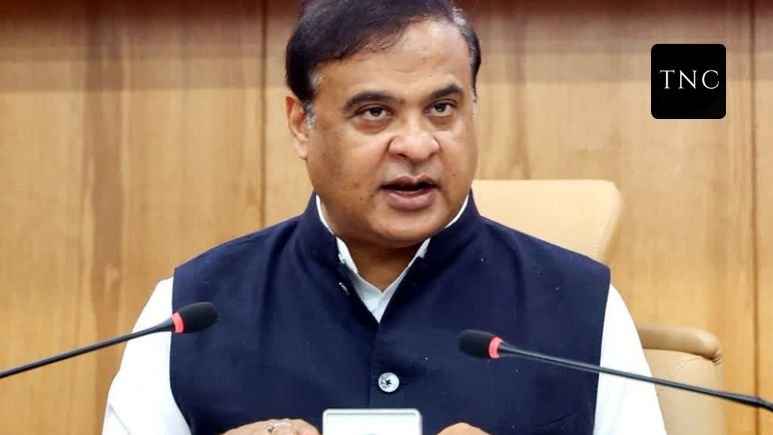
A daily-wage worker in his thirties, Rahim has never voted for the ruling party. His father didn’t either. But today, he stands quietly as loudspeakers crackle with promises of roads, schools, and something more abstract belonging. Around him, women in bright saris nod as the chief minister’s voice rises above the crowd, speaking not just of development, but of identity.
Rahim doesn’t clap. But he doesn’t walk away either.
This is the political terrain shaping Assam’s 2026 assembly election where Chief Minister Himanta Biswa Sarma is projecting a sweeping victory of 95–102 seats, while simultaneously advancing a controversial but strategic claim: that his government is fostering a “nationalist feeling” among immigrant Muslim communities.
At stake is more than electoral arithmetic. It is a redefinition of how identity, migration, and nationalism intersect in one of India’s most politically sensitive states.
Sarma’s confidence is not emerging in a vacuum. Opinion trends and political momentum suggest the ruling alliance retains a strong edge, with earlier projections also placing it well above the majority mark in the 126-seat assembly.
But the deeper story lies in how that dominance is being constructed.
For decades, Assam’s politics has revolved around a volatile mix of ethnicity, migration, and religion. The presence of Bengali-origin Muslims often labeled as “immigrant” communities has been central to electoral mobilization. Leaders like AIUDF’s Badruddin Ajmal built their base on representing these voters, turning identity into a political currency.
What Sarma is attempting now is a shift in that equation.
Instead of isolating these communities politically, his rhetoric suggests an effort to integrate them into a broader nationalist framework. Development schemes, welfare outreach, and targeted messaging are being used to reshape voting behavior moving away from what the BJP frequently criticizes as “vote-bank politics.”
This strategy runs parallel to a harder line on illegal immigration. Senior leaders, including the Union Home Minister, have drawn a sharp distinction between “indigenous Muslims” and “infiltrators,” reinforcing a dual narrative: inclusion for some, exclusion for others.
The political calculus is clear. If even a fraction of traditionally opposition-leaning Muslim voters shift allegiance or fragment the opposition’s arithmetic collapses.
Yet, the risks are just as evident.
Critics argue that such narratives walk a tightrope, potentially deepening social divisions even as they seek to reframe them. The language of nationalism, when applied unevenly, can both unify and alienate. And in a state with a long history of insurgency and ethnic tension, perception often matters as much as policy.
Meanwhile, the opposition remains fragmented, struggling to counter a campaign that blends welfare delivery with ideological messaging. The result is a political contest that feels less like a close race and more like a structural realignment.
Back at the rally, Rahim finally steps away before the speech ends. He hasn’t made up his mind but that’s the point.
Assam’s election is no longer just about who wins seats. It’s about who reshapes identity.
And if even voters like Rahim begin to hesitate, the result may already be decided.
Also Read / The MP Who Lost His Microphone: How AAP Quietly Sidelined Raghav Chadha.











Leave a comment