

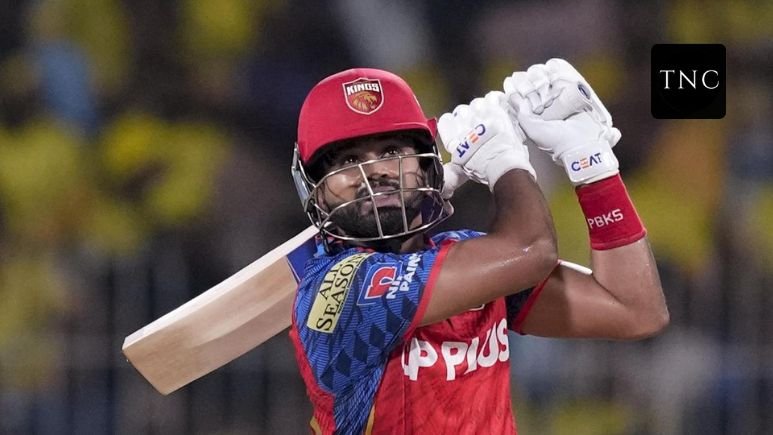

The crowd at Chepauk hadn’t quite settled when the final ball disappeared into the outfield. In the dugout, Shreyas Iyer leaned back, exhaling not in relief, but in calculation.
Punjab Kings had just chased down 210 against Chennai Super Kings, one of the most intimidating totals in the IPL. Teammates celebrated, the dressing room buzzed, and the scoreboard confirmed a statement win.
But minutes later, the mood shifted.
A match referee’s report, quiet but decisive, cut through the noise: ₹24 lakh fine. Slow over-rate. Again.
Victory had come at a cost.
The fine imposed on Punjab Kings captain Shreyas Iyer is more than a disciplinary footnote; it reveals a growing tension in modern cricket. Teams are pushing tactical boundaries to win high-pressure games, but governing bodies are tightening control to preserve the sport’s pace and structure.
In IPL 2026, where margins are razor-thin and stakes are massive, even a winning captain can find himself under scrutiny. Iyer’s case answers a broader question: how much control should leagues exert when performance and discipline collide?
Start with the facts. This wasn’t a one-off slip. It was Punjab’s second over-rate offence of the season, triggering a ₹24 lakh fine for Iyer and financial penalties for the entire playing XI.
The IPL’s code is clear: maintain the pace or pay the price. But the context matters.
Punjab Kings are not just winning they are dominating. Chasing 200-plus totals, playing aggressive cricket, and sitting near the top of the table, they represent the league’s modern identity: fearless, fast-scoring, relentless.
And yet, ironically, they are slow.
That contradiction sits at the heart of the issue.
Over-rate violations often stem from tactical delays, field adjustments, bowling changes, data-driven decisions. Teams like Punjab, loaded with match-ups and micro-strategies, stretch every second to gain an edge. The result: slower overs, longer innings, and regulatory friction.
Iyer himself has acknowledged the flaw. It is, he admitted, “the only part” the team needs to fix.
But here’s where the story deepens.
The IPL quietly changed its rules after 2025. Earlier, repeated offences could lead to captain suspensions. Now, penalties are financial and strategic fines and field restrictions removing the immediate threat of bans.
That shift signals a recalibration. The league wants discipline, but not at the cost of star power. A suspended captain hurts viewership, brand value, and team momentum.
So the punishment becomes economic, not existential.
Still, the risk hasn’t vanished. Repeat offences pile up demerit points, and the scrutiny intensifies. For a high-profile captain like Iyer, one of the most expensive players in the league the pressure is amplified.
What we’re seeing is a subtle power struggle:
- Teams maximizing performance
- The league enforcing structure
- Players caught in between
Punjab Kings are winning matches. Shreyas Iyer is leading from the front.
But in IPL 2026, success isn’t just measured in runs or wickets it’s measured in time.
And right now, even the winners are running late.
Also Read / The Look That Costs More Than a Match: Goenka, Pant, and LSG’s Unresolved Tension.












Leave a comment