

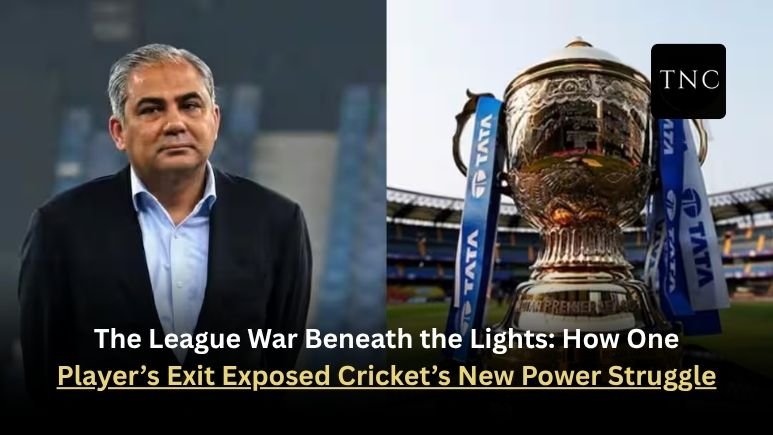

The message came late, just hours before training.
Inside the Lahore Qalandars dressing room, kit bags were already lined up, jerseys folded with military precision. Then came the update: Dasun Shanaka was out. No injury. No illness. He was boarding a different flight this time to India.
In his place, silence. A locker left half-open. A contract is suddenly meaningless.
Across the border, the Rajasthan Royals were preparing to welcome him as a last-minute replacement for an injured star. In Pakistan, it felt like something else entirely: a quiet defection.
This wasn’t just about one player switching leagues. It was about the widening fault line between two cricketing giants the Indian Premier League and the Pakistan Super League now colliding not just in scheduling, but in influence, money, and control.
When Shanaka walked away from the PSL mid-season, he became the second high-profile player to do so, following Zimbabwe pacer Blessing Muzarabani. The reaction from Mohsin Naqvi was swift and sharp: legal action, bans, and warnings.
This moment matters because it reveals a deeper truth: global T20 cricket is no longer just a sport. It’s a marketplace and not all leagues are equal.
Start with the basics. The IPL is the richest cricket league in the world. It offers higher salaries, larger audiences, and unmatched visibility. For players, especially those outside the “big three” cricket boards, it’s not just an opportunity, it’s leverage.
So when Shanaka chose the IPL over PSL, he wasn’t breaking ranks. He was following economics.
The PSL, meanwhile, is trying to evolve. It expanded to eight teams in 2026 and introduced an auction system to compete with global standards. But timing has become its biggest vulnerability. With overlapping schedules, players are forced to choose and increasingly, they are choosing India.
That’s where Naqvi’s response comes in.
His threat of bans and legal action signals frustration, but also a lack of bargaining power. Contracts can bind players on paper. They cannot compete with a league that offers more money, more exposure, and a bigger stage.
And this is where the tension sharpens:
- PSL wants loyalty.
- IPL commands preference.
The result? A tug-of-war where players are the rope.
Even geopolitics lingers in the background. Cricket between India and Pakistan has long carried political weight, and now that rivalry is spilling into franchise leagues. What used to be bilateral tension is now a commercial contest.
A single player leaving a dressing room might not seem like much.
But Shanaka’s exit tells a bigger story: in modern cricket, contracts are negotiable but power isn’t.
Right now, the IPL has it. And until that changes, players won’t just play where they’re signed. They’ll play where the game and the future feels bigger.
Also Read / The Interim Captain: How Ishan Kishan’s Sudden Rise Signals a Shift Inside Sunrisers Hyderabad.











Leave a comment