


The drinks arrived late.
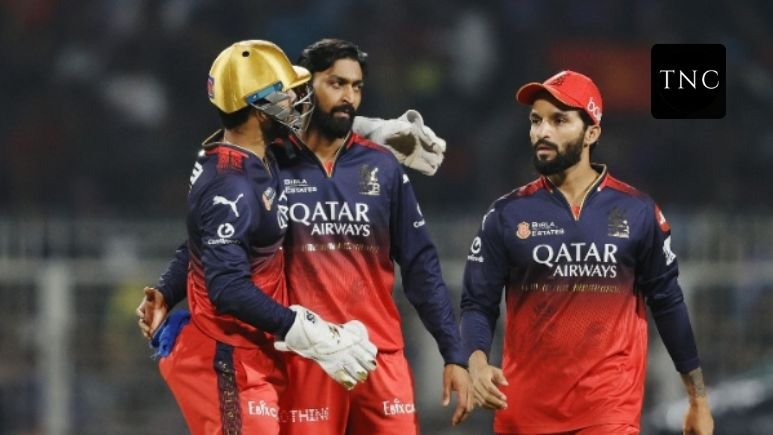
On a warm Bengaluru evening, Rajat Patidar stood near the pitch, gloves off, waiting. The scoreboard was blazing runs flowing, boundaries echoing but for a brief moment, the game paused for something far more ordinary: water.
Then it happened.
An on-field umpire casually reached for a bottle of Patidar’s bottle and took a sip. No announcement. No hesitation. Just a small, human act in the middle of a high-stakes match.
Patidar noticed. So did Dinesh Karthik, walking in with refreshments. What followed wasn’t outrage, but something sharper: disbelief, irritation, and a flash of confusion that rippled through the dugout.
The umpire, sensing the moment shift, returned the bottle almost immediately. But the subtle, symbolic was already done.
This wasn’t just about a water bottle. It was about control, timing, and authority in a league where every second, every interruption, is tightly scripted.
The incident unfolded during a strategic timeout in an Indian Premier League match between Royal Challengers Bengaluru and Chennai Super Kings a game RCB would go on to dominate, posting 250/3 and winning comfortably by 43 runs.
But amid the runs and sixes, this fleeting exchange captured something deeper: the growing friction between players and match officials over interruptions, decisions, and the rhythm of modern cricket.
In today’s IPL, nothing is truly spontaneous, not even a drinks break.
Strategic timeouts are built into the game’s commercial and tactical framework, designed to give teams a breather and broadcasters a window. But when those breaks feel mistimed or unexplained they disrupt more than momentum. They test trust.
Reports suggest the confusion began even before the bottle incident. Players, including Karthik, were already questioning why the timeout had been called at that moment. The umpire’s casual sip became a visual metaphor for that lack of clarity.
And then there’s the psychology.
Batters like Patidar operate in narrow windows of focus. A break can help but only if it feels earned, expected. When it doesn’t, irritation builds. The bottle, in that sense, wasn’t just personal property. It was part of a player’s space his routine, his control.
The reaction, described as “shocked and a little irritated,” was immediate. Not explosive, but telling. Even head coach Andy Flower, typically composed, appeared quietly displeased.
This is the modern IPL paradox:
A league engineered for spectacle, yet increasingly vulnerable to the smallest disruptions.
Because in elite sport, the margins are microscopic and so are the triggers.
A sip of water lasted seconds.
But it revealed something bigger.
In the IPL’s high-pressure ecosystem, control is everything and even the most innocent act can feel like an intrusion when the stakes are sky-high.
The game didn’t stop. The runs kept coming.
But for a brief moment, cricket showed its human edge messy, unscripted, and impossible to ignore.
Also Read / Winning Is Not Enough: How Punjab Kings’ Over-Rate Problem Is Shadowing Their Best Season.











Leave a comment