

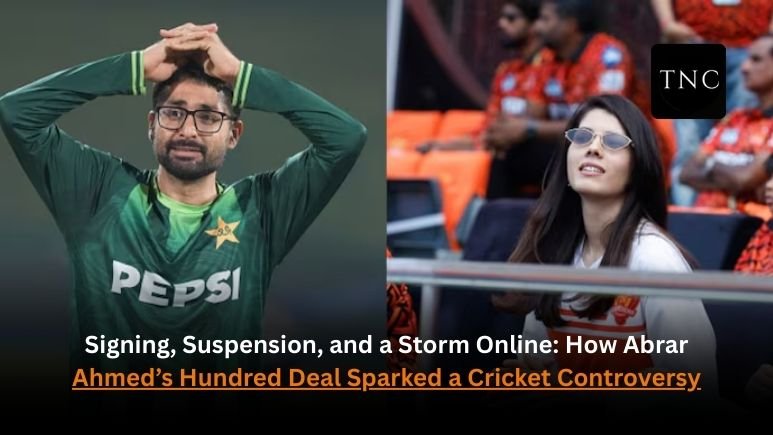

Just minutes after the auction hammer fell in a quiet London ballroom, a message flashed across social media: Sunrisers Leeds sign Abrar Ahmed.
Within seconds, cricket fans across India and Pakistan began reacting. Some celebrated the moment a talented Pakistani mystery spinner landing a lucrative contract in England’s flashy new league. Others were furious.
By the time the sun rose in South Asia, something unusual had happened. The official X (formerly Twitter) account of Sunrisers Leeds the franchise that had just signed Pakistan spinner Abrar Ahmed was suddenly inaccessible. Users trying to view it were met with a blunt message: Account suspended.
What began as a routine player signing in The Hundred had quickly turned into one of the most talked-about controversies in global franchise cricket.
The uproar surrounding Abrar Ahmed’s signing reveals how deeply politics, nationalism, and social media now intersect with modern cricket.
When Kavya Maran, the head of the Sun TV Network’s cricket operations and owner of Sunrisers Hyderabad, approved the deal through her overseas franchise Sunrisers Leeds, it created a rare moment: an Indian-owned cricket team signing an active Pakistani international player.
Within hours, online backlash intensified particularly among Indian fans and the franchise’s X account was suspended, adding another layer to an already charged situation.
The episode highlights a broader question: in a globalized sports economy, can cricket franchises truly stay separate from geopolitics?
To understand the reaction, it helps to look at cricket’s long political memory.
Since the 2008 Indian Premier League, Pakistani players have effectively been absent from the tournament due to diplomatic tensions between India and Pakistan.
That absence has shaped fan expectations. For many Indian supporters, seeing an IPL-linked ownership group sign a Pakistani player even in a foreign league felt like crossing an unwritten line.
But from a purely cricketing standpoint, the decision made sense.
Abrar Ahmed, known for his deceptive “mystery spin,” has quickly built a reputation in international T20 cricket. Sunrisers Leeds secured him for around £190,000 (roughly ₹2.3 crore) during the inaugural Hundred auction after missing out on England spinner Adil Rashid, according to team strategy discussions.
The move also broke new ground: Abrar became the first Pakistani player signed by an Indian-owned franchise in The Hundred.
Meanwhile, the league itself a fast-paced, 100-ball competition launched by the England and Wales Cricket Board has increasingly attracted global investors and IPL franchise owners.
That globalization means ownership, players, and fan bases now cross national boundaries. The business logic says cricket is becoming borderless.
The emotional reality says otherwise.
In modern cricket, a single player signing can trigger far more than a team strategy debate.
Abrar Ahmed’s contract showed how franchise leagues are trying to build a global game — one where talent moves freely across borders.
But the backlash and social media fallout reveal the deeper truth: in South Asian cricket, politics and passion still travel with the sport.
And sometimes, they arrive faster than the news itself.
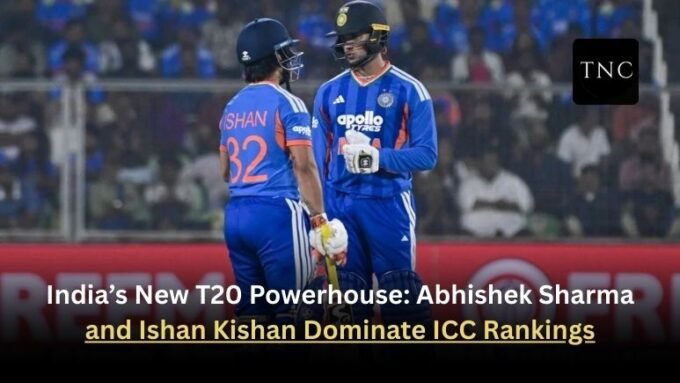
Also Read / India’s New T20 Powerhouse: Abhishek Sharma and Ishan Kishan Dominate ICC Rankings.












Leave a comment