

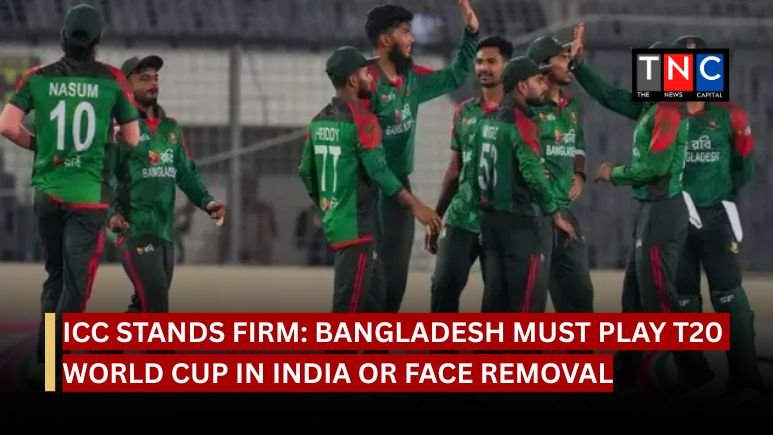

In a decisive blow to the Bangladesh Cricket Board, the International Cricket Council has rejected a formal request to relocate the team’s 2026 T20 World Cup fixtures out of India, issuing a “play or sit out” ultimatum that puts the tournament’s 20-team roster in jeopardy just weeks before the February 7 kickoff. The ICC Board voted overwhelmingly on Wednesday, January 21, 2026, to uphold the current schedule, dismissing the BCB’s plea to move their matches to co-host Sri Lanka and issuing a firm 24-hour ultimatum: if Bangladesh refuses to travel to India for its group-stage games, they will be replaced by Scotland.
The ICC’s decision followed an emergency board meeting convened via video conference to address the BCB’s “security concerns,” resulting in a lopsided vote that reflected broad international support for maintaining the original schedule.
- 14-2 Vote: The overwhelming margin demonstrates that the vast majority of ICC member boards view Bangladesh’s concerns as insufficient to justify disrupting tournament logistics weeks before the opening match.
- Independent Security Reviews: The ICC cited multiple independent security assessments including those from internationally recognized specialists which concluded there is “no credible or verifiable threat” to the Bangladesh team, media, or fans at Indian venues.
- Preserving Neutrality: The board warned that altering the schedule so close to the event without a verified risk would set a “dangerous precedent” and undermine the sanctity of global tournament planning, potentially opening the door to politically motivated venue change requests.
- Timeline Pressure: With just over two weeks until the February 7 kickoff, logistical realities make schedule changes increasingly impractical, affecting ticket sales, broadcasting arrangements, and team preparation.
The tension stems from recent controversies involving Bangladesh cricketers in Indian leagues, transforming what should be a sporting event into a geopolitical flashpoint.
- The “Mustafizur Row”: Observers note the crisis escalated after the BCCI instructed Kolkata Knight Riders to release pacer Mustafizur Rahman from the 2026 IPL squad, a decision widely seen as politically motivated.
- National Pride Dimension: The BCB has linked the IPL exclusion to “national pride” concerns, framing the World Cup venue issue as part of a broader pattern of Indian cricket authorities treating Bangladesh players unfairly.
- Political Friction: The sports dispute reflects deeper bilateral tensions between India and Bangladesh following political changes in Dhaka that have complicated the traditionally close relationship.
- BCCI Influence: The Board of Control for Cricket in India’s dominance in global cricket governance creates perceptions that ICC decisions favor Indian interests, whether justified or not.
📅 Bangladesh’s Schedule: The Matches at Stake
Bangladesh is currently placed in Group C, with their fixtures scheduled for two of India’s most iconic cricket venues in cities with significant cricket culture and infrastructure.
| Date (2026) | Opponent | Venue |
| Feb 7 | West Indies | Eden Gardens, Kolkata |
| Feb 9 | Italy | Eden Gardens, Kolkata |
| Feb 14 | England | Eden Gardens, Kolkata |
| Feb 17 | Nepal | Wankhede Stadium, Mumbai |
- Kolkata Concentration: Three of four matches at Eden Gardens reflects the venue’s massive capacity (66,000+) and importance as a cricket heartland, but also concentrates Bangladesh’s exposure in a single city.
- Nepal Rivalry: The February 17 match against Nepal carries particular significance given the regional rivalry and Nepal’s emergence as a competitive cricketing nation.
- Group C Dynamics: The group includes traditional power England, Caribbean giants West Indies, and emerging teams like Italy and Nepal, creating a competitive balance that Bangladesh’s withdrawal would disrupt.
- Ticket Sales Impact: Matches involving Bangladesh typically draw significant crowds in India due to the diaspora presence and regional cricket interest, making replacement with Scotland less commercially attractive.
If the Bangladesh government’s sports adviser, Asif Nazrul, holds firm on his stance that the team will “not bow to pressure,” the ICC is prepared to trigger an unprecedented replacement protocol.
- Scotland Ready: Scotland, as the highest-ranked team that did not originally qualify for the 20-team event, has been placed on high alert to take Bangladesh’s spot in Group C on extremely short notice.
- Qualification Controversy: Scotland’s insertion would circumvent the qualification process that other teams competed through, potentially creating resentment among nations that narrowly missed qualification through official channels.
- Preparation Challenges: Scotland would have less than two weeks to prepare for a World Cup they weren’t expecting to play in, potentially affecting competitive balance and match quality.
- Commercial Downgrade: Replacing Bangladesh (a Full Member Test nation with significant fan following) with Scotland (an Associate Member with smaller global profile) reduces commercial appeal and viewership potential.
The standoff has created unusual alliances, with traditional rivals finding common cause against perceived Indian dominance of cricket governance.
- PCB Backing: The Pakistan Cricket Board has reportedly backed Bangladesh’s stance, even offering to host the matches in Pakistan as an alternative to the India-Sri Lanka co-hosting arrangement.
- ICC Dismissal: The governing body has largely ignored Pakistan’s proposal, maintaining that the existing co-hosting agreement with India and Sri Lanka cannot be unilaterally altered.
- Shared Grievances: Pakistan’s support reflects its own difficult history with playing in India due to political tensions, creating solidarity with Bangladesh’s current situation.
- BCCI Counterweight: Both Pakistan and Bangladesh see opportunities to challenge BCCI influence in ICC governance, using the World Cup dispute as a test case for broader power dynamics.
The BCB now faces an unprecedented deadline with enormous consequences for Bangladesh cricket’s international standing and the nation’s sporting pride.
- Thursday Deadline: The BCB must confirm travel plans by Thursday, January 22, leaving less than 24 hours to resolve a crisis involving government advisers, cricket board officials, and player safety concerns.
- Government Involvement: Sports adviser Asif Nazrul’s public stance that Bangladesh will “not bow to pressure” suggests political considerations may override purely cricketing assessments.
- Player Perspective: The views of Bangladesh players themselves who have played in Indian domestic leagues and generally praised security arrangements may conflict with official government positions.
- No Middle Ground: The ICC’s firm stance eliminates compromise options like neutral venues or Sri Lanka relocations, forcing an all-or-nothing decision.
The standoff represents a significant crisis for the 10th edition of the T20 World Cup, with implications extending beyond the immediate tournament.
- Unprecedented Disruption: While teams have withdrawn from bilateral series or specific matches, a Full Member nation being removed from a World Cup weeks before the tournament would be unprecedented in modern cricket history.
- Competitive Balance Impact: Bangladesh’s absence would significantly weaken Group C, potentially affecting the competitiveness of matches and the quality of teams advancing to knockout stages.
- Future Venue Politics: How this crisis resolves will set precedents for future ICC events, particularly regarding co-hosting arrangements involving politically sensitive pairings.
- BCCI-ICC Relationship: The outcome will either validate or challenge perceptions that BCCI influence makes the ICC unable to act independently when Indian interests are involved.
Beyond sporting concerns, Bangladesh’s potential withdrawal creates significant commercial complications for the tournament’s financial stakeholders.
- Broadcasting Rights: Television networks that paid for rights expecting Bangladesh matches now face reduced value if Scotland substitutes, potentially triggering compensation discussions.
- Ticket Revenue: Fans who purchased tickets specifically for Bangladesh matches may seek refunds, creating logistical and financial challenges for tournament organizers.
- Sponsorship Impact: Tournament sponsors counting on Bangladesh’s viewership and commercial appeal face diminished returns if the team withdraws.
- Regional Markets: Bangladesh’s large population and passionate cricket following represent a significant commercial market that Scotland cannot replicate.
As the Thursday deadline approaches, multiple scenarios remain possible, each with distinct consequences for tournament integrity and international cricket politics.
- Bangladesh Capitulates: The BCB accepts ICC demands and travels to India, preserving tournament integrity but potentially facing domestic political backlash for appearing to bow to pressure.
- Bangladesh Withdraws: Asif Nazrul’s government maintains its stance, Bangladesh is replaced by Scotland, creating unprecedented World Cup disruption and deepening India-Bangladesh cricket tensions.
- Last-Minute Compromise: Despite ICC’s firm stance, backroom negotiations produce a face-saving solution perhaps enhanced security measures or neutral venue for one match that allows Bangladesh to participate.
- Legal Challenge: Bangladesh challenges the ICC decision through cricket’s dispute resolution mechanisms, though the timeline makes this impractical before the tournament begins.
The ICC’s 14-2 vote and 24-hour ultimatum represent a high-stakes game of chicken where both sides have powerful incentives not to blink the ICC cannot appear weak on tournament integrity and scheduling, while Bangladesh’s government cannot appear to subordinate national sovereignty to Indian cricket power. The Mustafizur Rahman IPL exclusion transformed what might have been a manageable security concern into a matter of national pride, creating political dimensions that make purely technical solutions difficult. The independent security assessments concluding there is “no credible threat” put Bangladesh in the awkward position of either accepting those findings and traveling to India, or rejecting international expert consensus in favor of domestic political considerations. Scotland’s standby status as replacement represents both pragmatic contingency planning and implicit threat the tournament will proceed with or without Bangladesh, eliminating any leverage Dhaka might have hoped to gain through withdrawal threats. For cricket fans, the prospect of a World Cup without Bangladesh a nation that has produced memorable performances and upsets in recent tournaments represents a diminishment of competition quality that no replacement by Scotland, however well-prepared, can fully remedy. The Thursday deadline arrives in hours, forcing a decision that will either preserve the tournament as scheduled or create the unprecedented spectacle of a Full Member Test nation being removed from cricket’s premier event weeks before the opening match, all because international cricket’s governance structures proved unable to navigate the intersection of sport, politics, and national pride that has always lurked beneath the surface of bilateral tensions between South Asian cricketing powers.
Also Read / Rohit Sharma breaks Shahid Afridi’s 15-year record for most ODI sixes.











Leave a comment