

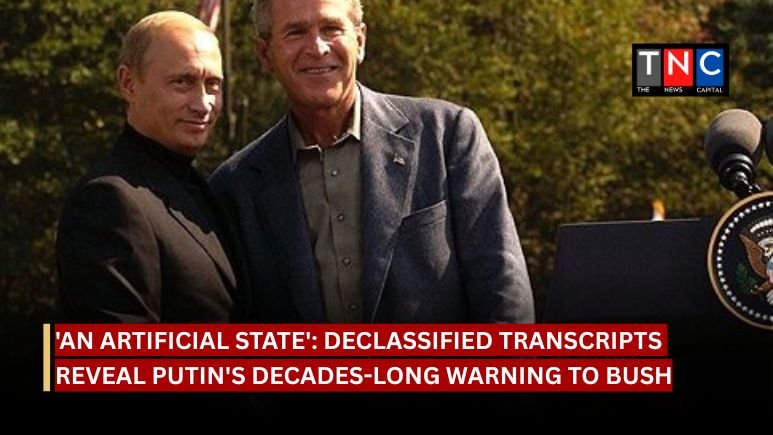

The archives don’t lie. Newly released diplomatic records show that Vladimir Putin has been making the same arguments about Ukraine for over twenty years long before tanks rolled across the border, long before the world watched cities reduced to rubble, and long before millions were forced to flee their homes.
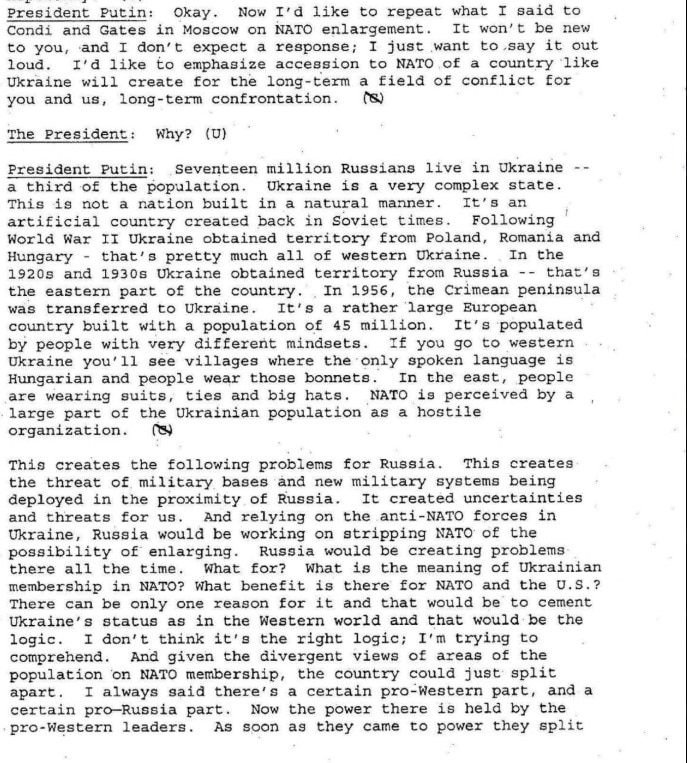
A series of bombshell disclosures from declassified U.S. diplomatic records, released on Friday (26 December 2025), have pulled back the curtain on private conversations that help explain how we got here. The documents reveal that Russian President Vladimir Putin was telling former U.S. President George W. Bush as far back as 2001 that Ukraine wasn’t a “real country” just an “artificial state” cobbled together by Soviet bureaucrats. In one chilling exchange from 2008, Putin warned Bush directly that allowing Ukraine to join NATO would push the country to the “verge of its existence.”
The transcripts, spanning meetings from 2001 through the critical 2008 Bucharest Summit, paint a picture of remarkable and troubling consistency in Putin’s thinking. Over and over, across different presidencies and different geopolitical moments, he returned to the same theme: Ukraine’s borders were accidents of history, not the natural boundaries of a legitimate nation.
Key revelations from the documents include:
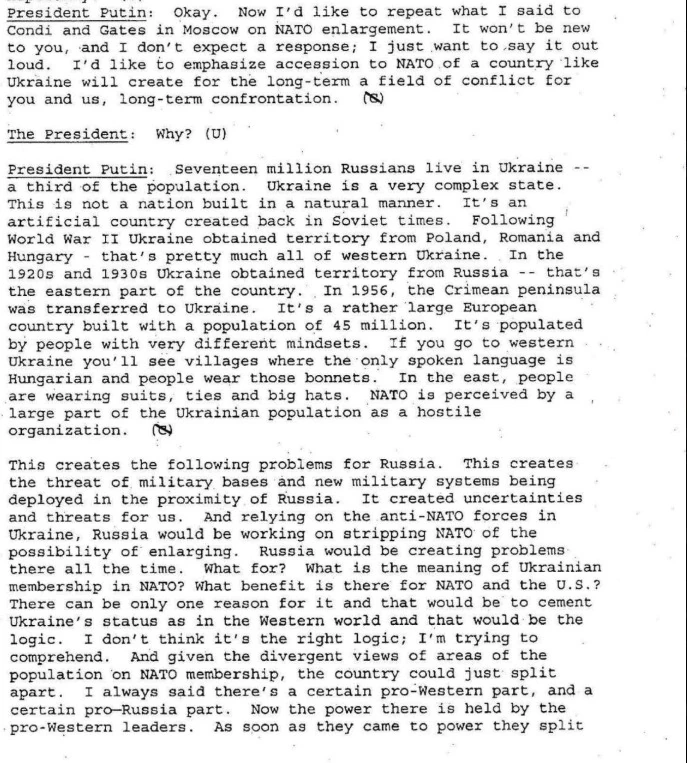
- The “Territorial Engineering” Argument: Putin insisted that Western Ukraine was pieced together from land taken from Poland, Romania, and Hungary after World War II, while the eastern and southern regions were “huge territories” essentially gifted by Russia during the Soviet era.
- The Forgotten NATO Question: In a stunning moment from June 2001, Putin asked Bush whether Russia itself could join NATO, saying, “Russia is European… I can imagine us becoming allies.” According to the transcripts, Bush simply changed the subject without answering a moment that now feels heavy with missed possibilities.
- The Hardening Tone: By 2008, Putin’s language had grown sharper and more ominous. He told Bush that one-third of Ukrainians were ethnic Russians and insisted that Western integration was being “imposed from outside” against the true wishes of the people.
The timing of this document release is striking. It comes just one week after Putin’s annual marathon press conference in Moscow on December 19, 2025, where he doubled down on his “unyielding” military objectives. His current demands that Kyiv recognize Russian control over four seized regions and Crimea echo the territorial arguments he was making in private conversations two decades ago. The rhetoric that once stayed behind closed doors has become the public justification for a war approaching its fourth year.
“This is not a nation built naturally. It is an artificial state created in Soviet times… Ukraine, in the form it currently exists, was created in the Soviet times; it received its territories from Poland, Czechoslovakia, and Romania.”
Vladimir Putin to George W. Bush, April 2008
“What we’re seeing in these transcripts is that the current crisis wasn’t inevitable, but it was predictable. The warning signs were there for anyone paying attention.”
Senior Western diplomat speaking on condition of anonymity
The 2008 Bucharest Summit emerges from these documents as a critical fork in the road what historians may someday call the moment when everything changed, or when everything became inevitable. The United States pushed hard for Ukraine and Georgia to receive a Membership Action Plan (MAP), the formal pathway to NATO membership. But Germany and France, nervous about provoking Moscow, blocked the move. The result was a compromise that satisfied no one: a vague declaration that Ukraine “will join NATO” someday, without any timeline or concrete steps to get there.
Many analysts now view this as the worst possible outcome a half-measure that encouraged Ukraine’s Western aspirations without providing the protection that NATO membership would have guaranteed. It gave Kyiv hope but not security, and it signaled Western interest but not commitment. For Putin, it may have been proof that the West was trying to pull Ukraine into its orbit while remaining too divided and hesitant to actually defend it.
With millions of people dead, injured, or displaced, and the war showing no signs of ending as it grinds into year four, these transcripts are being studied intensely by diplomats in Washington, Brussels, and capitals across Europe. The documents make one thing painfully clear: Moscow’s current demands for a “neutral” Ukraine and territorial concessions aren’t improvised responses to recent events. They’re the same positions Putin has held for more than twenty years.
The declassified records suggest that for the Kremlin, this conflict has always been about something larger than borders or security guarantees. It’s about “correcting” what they see as historical mistakes from the chaotic dissolution of the Soviet Union about reasserting control over territories they believe never should have been allowed to drift away in the first place.
As peace talks remain frozen and the human cost continues to mount, these conversations from another era serve as a sobering reminder: the roots of this tragedy run deeper than most people realized, and they were visible to anyone willing to look.
Also Read / US and Ukraine Present Updated Peace Plan as Pressure Builds for a Path to End the Russia War.





Leave a comment