

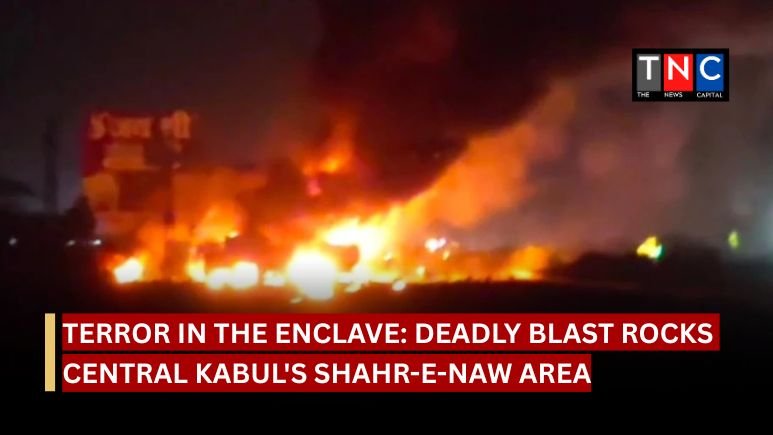

In a major breach of security in one of Kabul’s most fortified districts, an explosion ripped through a popular restaurant and hotel on Monday afternoon, targeting a site frequented by foreigners and leaving multiple casualties. The attack, which killed at least one security guard and injured several others including foreign nationals, has raised fresh concerns about the resurgence of militant activity in the Afghan capital and undermines Taliban claims of having pacified the city since the 2021 U.S. withdrawal.
A powerful explosion targeted a hotel and restaurant in Kabul’s upscale Shahr-e-Naw district on Monday afternoon, January 19, 2026, striking at the heart of an area previously considered one of the city’s most secure enclaves.
- Location and Timing: The blast occurred on Gulfaroshi Street in Police District 4, a central hub for restaurants and hospitals, during afternoon hours when the area was crowded with civilians and workers.
- Primary Target: The explosion specifically targeted a hotel and an adjacent Chinese restaurant, facilities known to cater to foreign nationals and international workers in the capital.
- The Casualties: Taliban Interior Ministry spokesperson Abdul Mateen Qani confirmed that “a number of people were killed and injured.” Reports indicate at least one Afghan security guard lost his life, while at least two Chinese nationals were seriously wounded and rushed to a nearby hospital.
- Scene of Devastation: Eyewitnesses described a “deafening” blast that shattered windows across the street and caused severe structural damage to the restaurant. Firefighters were seen clearing debris as police cordoned off the entire fortified enclave.
Kabul police spokesman Khalid Zadran stated that investigations are currently underway to determine the exact nature of the explosive device and how it was deployed in one of the city’s most heavily guarded areas.
- Blast Mechanism: Authorities are working to determine whether the explosion was caused by a suicide bomber who penetrated security or a planted improvised explosive device (IED) that evaded detection.
- No Immediate Claim: While no group has officially claimed responsibility as of Monday evening, security analysts point to the ISIL-K (ISIS-K) affiliate as the most likely perpetrator.
- ISIS-K Pattern: The Islamic State’s Afghanistan affiliate has a history of targeting foreign interests and hotels in Kabul to undermine the Taliban’s claims of stability and control, making this attack consistent with their strategic objectives.
- Security Breach Questions: The successful attack in a high-security area raises serious questions about Taliban security capabilities and potential intelligence failures or insider assistance.
The Shahr-e-Naw area’s significance makes it both a valuable target for militants and an embarrassing security failure for the Taliban administration attempting to demonstrate control.
- International Hub: Shahr-e-Naw is home to numerous international guest houses, NGO offices, and businesses that form the backbone of remaining foreign presence in Afghanistan.
- Fortified District: The area features multiple security checkpoints, blast walls, and controlled access points designed to protect the concentration of foreign nationals and high-value targets.
- Symbolic Value: Successful attacks in Shahr-e-Naw send a powerful message that even the most protected areas of the capital remain vulnerable to militant strikes.
- Economic Impact: Each attack in the district drives away potential foreign investors and international organizations considering operations in Afghanistan.
The targeting of Chinese nationals represents a sensitive blow to the Taliban’s efforts to court foreign investment, particularly from Beijing, which has emerged as one of the few potential economic partners for the isolated regime.
- Chinese Interests: China has significant economic interests in Afghanistan, including mineral extraction rights and Belt and Road Initiative connectivity projects that require Chinese workers and managers on the ground.
- Diplomatic Complications: The injury of Chinese nationals complicates Taliban efforts to build trust with Beijing and demonstrate they can protect Chinese investments and personnel.
- Pattern of Targeting: This is not the first attack on Chinese interests in Afghanistan, with ISIS-K previously striking Chinese facilities to both undermine the Taliban and deter Beijing’s engagement.
- Investment Climate: Each attack on foreign nationals, particularly Chinese workers, makes it harder for the Taliban to attract the foreign investment desperately needed to rebuild Afghanistan’s shattered economy.
The Shahr-e-Naw Incident: Key Details
| Feature | Details of the Shahr-e-Naw Incident |
| Location | Gulfaroshi Street, Police District 4, Kabul |
| Primary Target | Chinese-frequented Hotel/Restaurant |
| Confirmed Fatalities | Multiple (including 1 Security Guard) |
| Injured | Multiple (including 2 Chinese Nationals) |
| Security Level | High-security fortified enclave |
| Time of Attack | Monday afternoon (crowded period) |
| Investigation Status | Ongoing; bomb type undetermined |
| Responsibility Claim | None (as of Monday evening) |
Since the 2021 withdrawal of U.S. forces and Taliban takeover, the regime has claimed to have largely pacified the capital, but this incident highlights the persistent threat of urban warfare and the limits of Taliban security capabilities.
- ISIS-K Resilience: Despite Taliban claims of defeating ISIS-K, the group has demonstrated continued capability to conduct sophisticated attacks in the heavily guarded capital.
- Intelligence Gaps: The successful penetration of Shahr-e-Naw’s security perimeter suggests either intelligence failures about planned attacks or potential infiltration of security forces.
- Resource Constraints: The Taliban’s security forces lack the advanced surveillance technology, intelligence networks, and training that international forces previously employed to prevent such attacks.
- Credibility Crisis: Each successful attack in Kabul undermines Taliban claims that Afghanistan is now stable and safe, complicating efforts to gain international recognition and legitimacy.
The attack carries significance beyond the immediate casualties, affecting Afghanistan’s relationship with potential international partners and the security calculus of remaining foreign entities.
- Foreign Withdrawal Pressure: Each attack increases pressure on the few remaining international organizations and businesses to withdraw staff from Afghanistan entirely.
- Recognition Obstacles: Taliban efforts to gain international recognition as Afghanistan’s legitimate government face setbacks when they cannot demonstrate basic security provision in the capital.
- Humanitarian Access: Attacks on secure areas where international aid workers operate threaten humanitarian operations that millions of Afghans depend on for survival.
- Regional Stability: Continued insecurity in Afghanistan feeds concerns among neighboring countries about terrorism spillover and refugee flows.
The Shahr-e-Naw blast demonstrates that despite Taliban military victory over the previous government, they face an ongoing insurgency from ISIS-K and potentially other militant groups that reject their rule.
- Urban Warfare Continues: While large-scale combat has ended, precision strikes in urban areas show that militant groups retain capability to conduct operations in the heart of Taliban-controlled territory.
- Foreign Target Strategy: By specifically targeting foreign nationals and facilities frequented by international visitors, attackers maximize psychological impact while undermining Taliban efforts at international engagement.
- Security Dilemma: The Taliban faces a difficult balance between maintaining heavy security presence that might alienate the population and reducing visible security that creates vulnerabilities exploited by attacks like Monday’s blast.
- Long-term Instability: The persistence of such attacks suggests Afghanistan’s security situation remains fragile despite Taliban control, with implications for the country’s economic recovery and international reintegration.
This attack comes as Kabul attempts to project an image of safety to the global community, particularly to potential Chinese and other foreign investors the Taliban desperately needs to rebuild Afghanistan’s collapsed economy. The breach of Shahr-e-Naw’s security perimeter suggests that despite a decrease in large-scale combat since 2021, the capital remains vulnerable to precision strikes designed to drive away the few remaining foreign stakeholders. For the Chinese nationals injured in Monday’s blast and the security guard who lost his life, the attack is a personal tragedy. For the Taliban regime, it represents a political and security failure that complicates efforts to demonstrate they can govern effectively and protect foreign interests. And for ISIS-K, assuming they were responsible, it’s another successful operation demonstrating that the group retains both capability and intent to conduct spectacular attacks in Afghanistan’s most protected spaces, undermining Taliban claims of stability and deterring the international engagement that might offer Afghanistan a path toward economic recovery and political normalization.
Also Read / Pakistan Airstrikes in Afghanistan Kill Civilians as Tensions Rise and Regional Risks Increase.













Leave a comment