

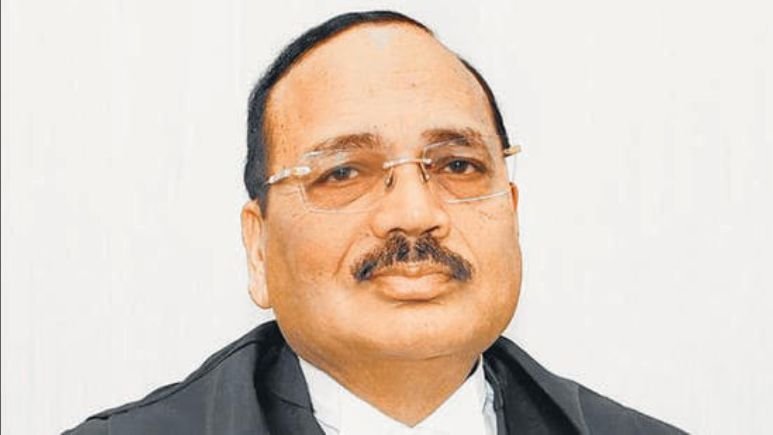

Justice Surya Kant took oath Monday as India’s 53rd Chief Justice, pledging to tackle a backlog of more than 90,000 pending cases during his 15-month tenure.
President Droupadi Murmu administered the oath at Rashtrapati Bhavan. Prime Minister Narendra Modi, Vice President C P Radhakrishnan, and senior Cabinet ministers attended the ceremony.
Justice Kant succeeds Justice B R Gavai, who retired Sunday at age 65. The new Chief Justice will serve until February 9, 2027, when he turns 65.
In an unusual gesture highlighting India’s judicial diplomacy, chief justices and judges from seven countries attended the swearing-in. Representatives came from Bhutan, Kenya, Malaysia, Brazil, Mauritius, Nepal, and Sri Lanka.
A career built from small-town beginnings
Born February 10, 1962, in Hisar, Haryana, Justice Kant rose from practicing in a small-town court to leading India’s judiciary.
He completed his law education at Maharshi Dayanand University in Rohtak and began practicing at the Punjab and Haryana High Court in 1985. He was designated Senior Advocate in 2001.
Justice Kant served as Advocate General of Haryana before his appointment to the High Court bench in 2004. He later became Chief Justice of Himachal Pradesh High Court in October 2018.
He was elevated to the Supreme Court on May 24, 2019.
During his Supreme Court tenure, Justice Kant participated in several landmark rulings on Article 370 abrogation, the Pegasus spyware case, electoral reforms, and citizenship rights.
Clearing the backlog: the top priority
Speaking informally before his oath ceremony, Justice Kant identified case backlog as his primary challenge.
“Arrears are my priority, over 90,000 cases here, and arrears pan-India,” he told journalists. The Supreme Court alone has more than 90,000 pending cases, while High Courts and lower courts face millions more.
Justice Kant said his approach would focus on systemic reduction rather than just numerical disposal. “We have identified hundreds at the Supreme Court level, and we are also asking the High Courts to flag cases that cannot progress because a point of law is pending here,” he explained.
He plans to establish more Constitution Benches to resolve longstanding legal questions that delay proceedings across the country. He specifically mentioned prioritizing cases pending for more than three decades.
His strategy includes encouraging litigants to approach High Courts before moving directly to the Supreme Court. This would allow the apex court to function more effectively as a constitutional court rather than handling routine matters.
Focus on alternative dispute resolution
Justice Kant emphasized that mediation will play a key role in reducing judicial burden.
“Mediation will also be implemented effectively to reduce the burden of millions of cases,” he said, referring to the recently enacted Mediation Act.
He supports expanding alternative dispute resolution mechanisms at all judicial levels. This approach aims to resolve disputes outside formal court proceedings, freeing judges to focus on complex constitutional and criminal matters.
Justice Kant also stressed strengthening institutional processes in district courts and High Courts. He believes maintaining a clear hierarchy among courts is essential to prevent unnecessary direct petitions to the Supreme Court.
Landmark rulings during Supreme Court tenure
Justice Kant’s six years on the Supreme Court bench included participation in several significant cases.
He was part of the bench examining the constitutional validity of Article 370 abrogation, which removed Jammu and Kashmir’s special status. The case remains one of the most politically sensitive constitutional questions in recent decades.
In the Pegasus spyware controversy, Justice Kant served on the bench that appointed an expert committee to investigate allegations of government surveillance. The bench famously stated that the state cannot claim a “free pass” under national security cover.
He contributed to the bench that kept the colonial-era sedition law in abeyance, directing that no new cases be registered under it until the government completes a review.
Justice Kant was part of the seven-judge bench that overturned the 1967 Aligarh Muslim University verdict, reopening questions about the institution’s minority status.
He also participated in the bench examining gubernatorial powers in dealing with state bills, a case with potential implications across multiple states.
On electoral transparency, Justice Kant nudged the Election Commission to disclose details of 6.5 million voters excluded from draft electoral rolls in Bihar. The case challenged the poll panel’s decision to undertake intensive revision of voter lists in the election-bound state.
He upheld the One Rank One Pension scheme for defense forces, calling it constitutionally valid. He continues hearing petitions from women officers in armed forces seeking parity in permanent commission.
Technology and judicial appointments
Six Supreme Court vacancies are expected during Justice Kant’s tenure. He has emphasized the importance of filling vacancies promptly across all court levels.
On technology, Justice Kant supports its introduction in judicial processes but with caution. He believes artificial intelligence should serve only as a supportive tool, not replace human decision-making in legal matters.
“Justice is not locked away in legal commentaries or textbooks; it is a sleeping force which judges must breathe life into and awaken,” he said in an earlier statement, emphasizing the irreplaceable human element in judicial reasoning.
Institutional roles beyond the bench
Justice Kant holds several key institutional positions. He serves as Visitor of the National University of Study and Research in Law, Ranchi.
As ex-officio Executive Chairman of the National Legal Services Authority since May 2025, he oversees efforts to provide free legal aid to marginalized communities. He previously served on NALSA’s Governing Body from 2007 to 2011.
These roles place him at the intersection of legal education, access to justice, and judicial administration.
The challenges ahead
Justice Kant assumes office during a period of intense public scrutiny of judicial processes. Rising case filings, debates over judicial reforms, and questions about court efficiency dominate public discourse.
Legal scholars note his record includes significant observations on using domestic jurisprudence rather than relying excessively on foreign precedents. His approach to constitutional benches, case management, and technology adoption will likely shape Supreme Court functioning during his tenure.
The backlog problem extends far beyond the Supreme Court. High Courts collectively face millions of pending cases. District and subordinate courts struggle with even larger numbers.
Justice Kant said one of his first steps would be engaging with all High Courts to identify problems affecting lower court functioning. This systemic approach recognizes that Supreme Court efficiency alone cannot solve India’s access to justice crisis.
First words as Chief Justice
Immediately after taking his oath in Hindi, Justice Kant set the tone for his tenure with a powerful statement.
“Let justice protect the last citizen, for only then does it truly belong to all,” he said, emphasizing his commitment to ensuring the judicial system serves every Indian, not just those with resources to navigate it.
This focus on protecting ordinary citizens aligns with his stated priorities around reducing case backlog and improving access to justice through mediation and institutional strengthening.
What comes next?
Justice Kant’s 15-month tenure, while relatively short, offers an opportunity to implement structural changes that could benefit the judiciary long-term.
His focus on Constitution Benches could resolve longstanding legal questions that currently block progress on thousands of cases. His emphasis on mediation and alternative dispute resolution could provide relief to overburdened courts.
Whether he can make meaningful progress on the massive case backlog remains to be seen. Previous Chief Justices have struggled with the same challenge, as new case filings often outpace disposals.
His engagement with High Courts and focus on lower court functioning suggests he understands that lasting reform requires systemic change, not just Supreme Court-level interventions.
The coming months will test whether Justice Kant’s vision for a more efficient, accessible judiciary can translate into tangible improvements for millions of Indians awaiting justice.
By the numbers
Tenure length: 15 months (until February 9, 2027)
Age at appointment: 63 years
Supreme Court cases pending: Over 90,000
Years as Supreme Court judge: 6 (since May 2019)
Year designated Senior Advocate: 2001
Years practicing law: 40+ years
Expected vacancies during tenure: 6
Countries represented at oath ceremony: 7
Foreign judicial dignitaries attending: Multiple chief justices and judges
Retirement age for judges: 65 years
Justice Surya Kant’s appointment as India’s 53rd Chief Justice represents both continuity and an opportunity for reform. His stated priorities of reducing case backlog, strengthening mediation, and improving court administration address long-recognized challenges.
Whether his 15 months in office produce lasting change or become another brief chapter in India’s ongoing struggle with judicial efficiency will depend on his ability to implement systemic reforms while managing the Supreme Court’s daily workload. For now, India’s judiciary has a new leader who understands its challenges from four decades of experience and who has pledged to ensure justice reaches “the last citizen.














Leave a comment