

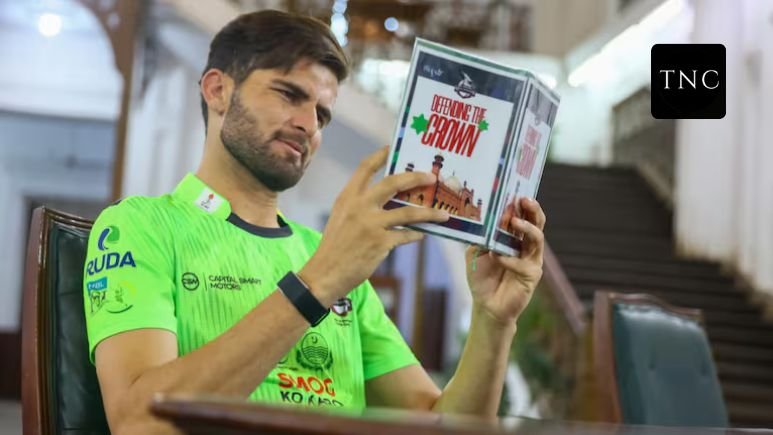

The post went up in the middle of a tense evening. Phones buzzed across Lahore and Karachi as cricket fans, some still discussing a Pakistan Super League match paused to read a different kind of update.
“I am a proud Pakistani,” wrote Shaheen Afridi, praising his country’s leadership for helping broker peace in the Middle East. Within minutes, the replies flooded in not with applause, but with accusation.
“Where was this voice before?” one fan asked.
“Selective outrage,” another wrote.
The cricket star had stepped into geopolitics and the internet wasn’t letting him walk back out.
The backlash against Afridi’s ceasefire post is not just about a tweet. It reflects a deeper tension: how public figures navigate national pride, political messaging, and global crises in an age where audiences demand consistency.
Afridi praised Pakistan’s leadership for mediating a temporary ceasefire between the United States and Iran a fragile truce brokered amid rising global fears of a wider war.
But the reaction exposed something more uncomfortable: fans increasingly see athletes not just as entertainers, but as moral voices and they expect those voices to be coherent, not convenient.
The timing matters.
The ceasefire itself came after days of escalating conflict that threatened oil routes and regional stability, with Pakistan playing a key diplomatic role in pushing both sides toward a temporary pause.
In that context, Afridi’s message followed a familiar script celebrate peace, praise leadership, project unity. It was patriotic, polished, and politically safe.
But audiences today don’t consume statements in isolation. They compare. They archive. They remember.
Critics pointed out what they saw as inconsistency: silence on other conflicts, selective empathy, or alignment with official narratives rather than independent conviction. The phrase “double standard” began trending not because of what Afridi said but because of what he hadn’t said before.
This is the new reality for athletes.
Cricket, especially in South Asia, has never been just a sport. It sits at the intersection of nationalism, identity, and politics. Players are not merely representatives of teams they are extensions of the state’s emotional and symbolic power.
When they speak, they are heard as more than individuals. And when they stay silent, that silence is also interpreted.
Afridi’s post collided with that expectation. It highlighted a growing gap between institutional messaging and public perception. Governments may frame diplomacy as victory; fans increasingly filter it through skepticism.
There is also a broader shift at play. Social media has flattened hierarchies. A fan with a smartphone now challenges a national icon in real time. Authority is no longer assumed; it is negotiated, post by post.
And in that negotiation, consistency has become currency.
In the age of digital scrutiny, neutrality is fragile and selective voice is costly. For modern athletes, the game is no longer confined to the field; every statement is a stance, and every silence is a statement.
Also Read / The Draft That Went Live: How a 2 a.m. Tweet Exposed Pakistan’s Secret Peace Gamble.






Leave a comment