

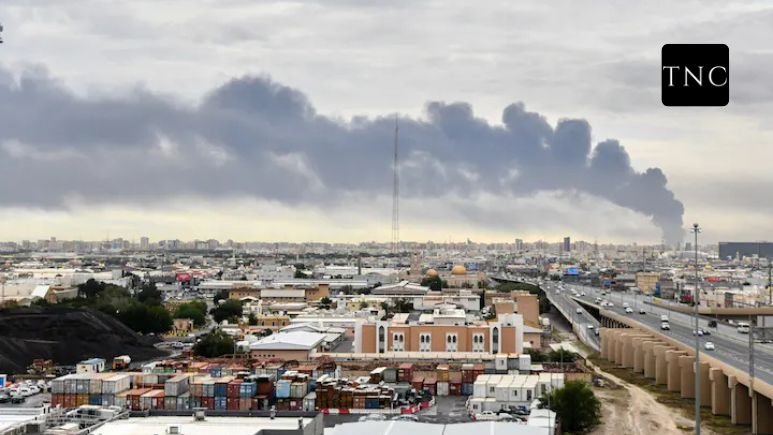

Iranian drones struck fuel storage tanks at Kuwait International Airport on Wednesday, igniting a large fire in the latest and most direct assault yet on one of the Gulf’s key civilian aviation hubs, as Tehran simultaneously launched attacks across the breadth of the region hitting a tanker off Qatar, triggering alerts in Bahrain, and forcing Saudi air defences into action for the third consecutive day.
Fuel Tanks Ablaze at Kuwait Airport
Kuwait’s Civil Aviation Authority confirmed that Kuwait International Airport had been targeted in a drone attack that struck fuel storage tanks belonging to the Kuwait Aviation Fueling Company, leading to a large fire at the site. Emergency teams were immediately deployed to bring the situation under control.
Abdullah Al Rajhi, official spokesman of the General Directorate of Civil Aviation, described the strike as a “blatant assault” on the airport, attributing the attack to Iran and the armed factions it supports. Preliminary reports indicated that the damage was limited to material losses, with no casualties reported.
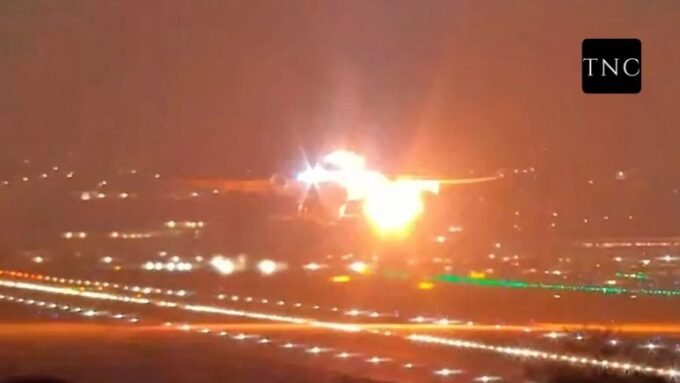
The attack did not occur in isolation. The airport is largely closed to commercial flights and has now come under attack multiple times since the regional war began on February 28. On March 14, civil aviation authorities confirmed that a drone attack with “several” aerial vehicles had struck the airport’s radar system. Drones had also hit fuel tanks at the airport on March 8, and an earlier attack on a passenger terminal left several people mildly wounded.
A Coordinated Wave Across the Gulf
Wednesday’s strikes were not confined to Kuwait. In what security analysts described as one of the most geographically spread single-day attack patterns of the conflict, Iran targeted multiple countries and assets simultaneously.
A tanker was struck in waters approximately 17 nautical miles north of Doha off the coast of Qatar. The UK Maritime Trade Operations agency confirmed receiving a report of the incident, describing projectile damage to the vessel’s port side hull above the waterline. The crew were reported safe, with no environmental impact detected.
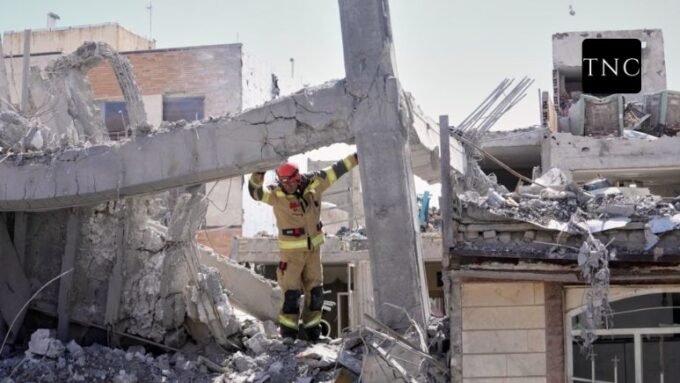
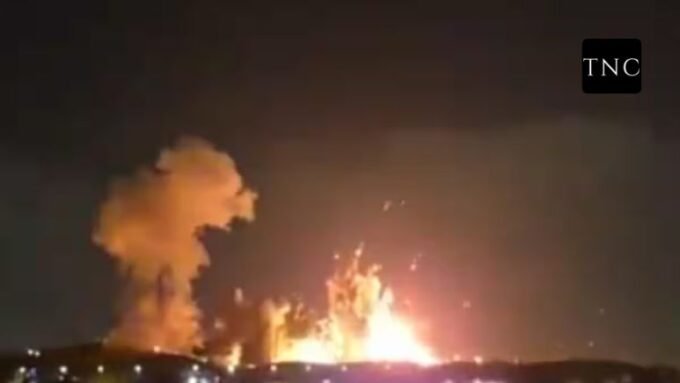
Bahrain’s interior ministry said a fire broke out at a business facility as a result of what it called “Iranian aggression.” Saudi Arabia’s defence ministry confirmed that several drones were intercepted and destroyed during a new wave of attacks.
In Israel, air raid sirens sounded across large sections of the country’s central region after the military reported responding to incoming Iranian missiles, though no immediate damage or casualties were reported.
Iran’s Widening Strategic Logic
Iran’s Islamic Revolutionary Guard Corps stated in a communique carried by state broadcaster IRIB that it had launched missiles and drones at military bases hosting U.S. forces in Kuwait, Jordan, and Bahrain, as well as at targets in Israel. The IRGC has consistently framed its Gulf strikes as retaliation aimed exclusively at U.S. military assets, even as the attacks have repeatedly struck civilian infrastructure airports, desalination plants, oil tankers, and now aviation fuel depots.
Understanding why Iran keeps hitting Kuwait requires appreciating the strategic calculation at work. Kuwait hosts major U.S. military installations, including Ali Al Salem Air Base and Camp Arifjan, making it both a military target and a logistical pressure point. But the repeated targeting of the country’s sole international airport goes beyond pure military logic; it aims to raise the human and economic cost of hosting American forces high enough that regional host governments feel compelled to push Washington toward an exit.
The Cascading Effect on Aviation and Energy
Major airlines have suspended flights to the Gulf or sharply cut back services due to fuel shortages and security risks linked to the war. The combined effect of attacks on aviation fuel infrastructure, the virtual closure of the Strait of Hormuz, and the disruption of refinery operations across the Gulf has created a fuel supply crunch that is now affecting not just regional travel but global logistics chains.
The economic consequences are measured in barrels and flight schedules, but also in something harder to quantify: confidence. Every attack on Kuwait’s airport sends a message to airlines, insurers, and cargo operators that the Gulf’s commercial infrastructure is no longer reliably safe. Rebuilding that confidence, analysts warn, will take far longer than any ceasefire.
A War Still Searching for a Way Out
Wednesday’s attacks came as Iran, for the first time, acknowledged that Washington had been in direct contact about a possible ceasefire. With more than 3,000 lives already lost, U.S. President Donald Trump suggested the war could be over within two weeks even as he moved to bring thousands more troops to the region and continued threatening to destroy Iran’s energy infrastructure if a deal was not reached.
The U.S. has presented Iran with a 15-point ceasefire plan, which includes a demand for the Strait of Hormuz to be reopened. Iran’s own five-point counterproposal includes a condition that it retain sovereignty over the waterway, a condition the United States has been unwilling to accept in any formal sense, even as Trump hinted Tuesday that American forces may step back from policing the strait regardless.
For Kuwait, the gap between diplomatic frameworks and burning fuel tanks is not abstract. It is measured in the glow of fires visible from the capital, in the silence of an airport that once served millions, and in a population that has now spent over a month living within range of Iranian drones that carry no reliable warning before they strike.










Leave a comment