


The crisis that shattered Indore’s reputation as India’s cleanest city has now been officially declared what residents already knew it was: an epidemic. National health experts have descended on the city, armed with specialized equipment and scientific protocols, racing to identify exactly what bacterial nightmare turned ordinary tap water into a deadly threat that’s claimed at least six lives and possibly many more.
The district administration in Indore, Madhya Pradesh, escalated its emergency response on Monday (January 5, 2026), as 142 people remain hospitalized following the catastrophic contamination of the city’s drinking water supply in the Bhagirathpura neighborhood. While the official death toll stubbornly remains at six, local residents and opposition political leaders continue to insist the actual figure is as high as 16 a discrepancy fueling anger and distrust. A high-level team from the Indian Council of Medical Research’s National Institute of Research in Bacterial Infections (ICMR-NIRBI) and the National Centre for Disease Control (NCDC) arrived in the city today, bringing sophisticated laboratory capabilities to conduct specialized bacterial culture tests aimed at identifying the specific pathogens responsible for the outbreak.
The crisis has ripped away the veneer of success from India’s perennial “cleanest city,” exposing infrastructure failures that residents now realize may have been lurking beneath their feet for years.
The current state of the emergency:
- Hospitalization Numbers: District Collector Shivam Verma confirmed that of the roughly 210 patients admitted during the initial weekend surge, many have been discharged after treatment, leaving 142 currently under medical care. Approximately 32 patients remain in critical condition in Intensive Care Units (ICUs), their bodies still battling the severe dehydration and organ stress caused by relentless vomiting and diarrhea.
- The Infrastructure Nightmare: Detailed inspections by the Indore Municipal Corporation (IMC) have revealed a design flaw so egregious it seems almost intentional in its negligence. Investigators discovered that a police outpost toilet’s waste line was draining directly into a pit located above a main drinking water pipeline. The setup essentially guaranteed that sewage would eventually contaminate the water supply it was never a question of if, only when.
- Massive Public Health Screening: Health teams have now screened more than 48,400 people across the affected zones in a door-to-door operation unprecedented in scale for Indore. Out of these, nearly 2,800 individuals have reported symptoms consistent with acute gastroenteritis severe vomiting, diarrhea, abdominal cramps, and dehydration. The actual number affected is likely higher, as many people with milder symptoms may not have reported them.
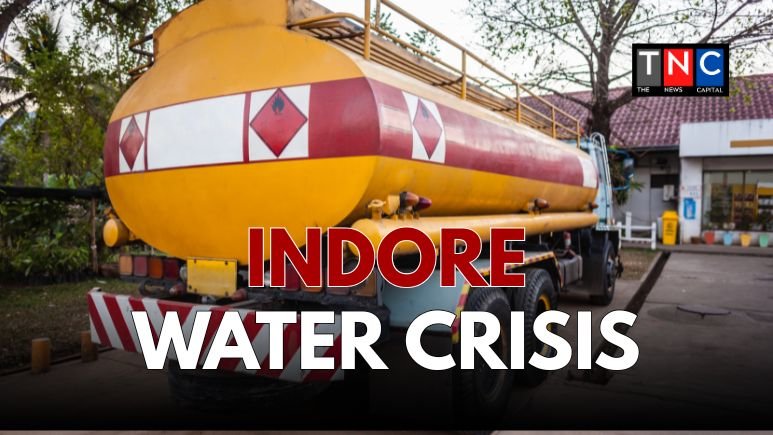
- Water Supply Suspended Indefinitely: The piped Narmada water supply to Bhagirathpura remains completely shut down. The administration is providing water exclusively through tanker trucks while crews work to flush the entire contaminated network with high-concentration chlorine solutions a process that will take days or potentially weeks to complete safely.
The political fallout from the tragedy has been swift and severe. Chief Minister Mohan Yadav, facing intense public pressure and recognizing that his government’s credibility hangs in the balance, personally intervened to order the removal of the city’s top civic leadership for what he termed “grave negligence”:
Administrative heads have rolled:
- Dilip Kumar Yadav, Indore Municipal Commissioner and the man ultimately responsible for the city’s water infrastructure, was immediately removed from his post and transferred to a state-level position a lateral move that critics say amounts to a promotion disguised as punishment.
- Rohit Sissoniya (Additional Commissioner) and Sanjeev Shrivastava (Superintendent Engineer) have been placed under formal suspension, their careers potentially over, their reputations destroyed by the disaster that occurred on their watch.
The Madhya Pradesh High Court, responding to a status report filed on Friday, has taken an unusually aggressive stance, mandating that all private and government hospitals must provide entirely free treatment to everyone affected by the contaminated water. Collector Verma has personally ordered the immediate refund of any deposits, consultation fees, or treatment costs already paid by families of the sick a recognition that victims shouldn’t bear any financial burden for a crisis created by government failures.
“We have divided Bhagirathpura into 32 beats to manage the crisis at a micro-level. ICMR specialists from Kolkata are now using advanced scientific methods to pinpoint the bacterial strains. Clean water supply via Narmada pipes will only resume once experts certify the lines as fully decontaminated,” District Collector Shivam Verma stated during a press briefing, his careful bureaucratic language unable to mask the severity of the situation.
“Safe drinking water turned fatal overnight because of someone’s negligence during the construction of a police toilet. This is not just an accident; it is culpable homicide,” said Ramesh Verma, a local Bhagirathpura resident whose words capture the raw anger felt by a community that trusted their government to provide the most basic necessity safe water.
“My wife is still in the ICU. My children were sick for days. And now they tell us experts are coming to figure out what poisoned us? They should have figured that out before we started dying,” said Anil Patel, standing outside MY Hospital where his wife remains hospitalized, his exhaustion evident.
The arrival of ICMR specialists signals that authorities suspect the contamination may involve more than just the common E. coli and fecal coliform bacteria initially identified in laboratory reports from MGM Medical College. The deployment of national-level experts with specialized equipment suggests investigators are looking for more dangerous pathogens possibly including Vibrio cholerae, the bacterium that causes cholera, or other potentially epidemic-causing organisms that require sophisticated identification techniques.
This escalation from a local water contamination incident to a formal epidemic investigation with national health authorities involved represents a significant shift in how seriously the crisis is being treated and how worried officials actually are behind their carefully worded public statements.
As the city remains on high alert, the administration has launched what it’s calling a city-wide “leakage audit” essentially an emergency inspection of Indore’s entire water infrastructure to be completed within seven days. The goal is to identify other potential contamination points before they cause additional outbreaks, a recognition that Bhagirathpura may not be an isolated case but rather the first catastrophic failure in a system riddled with vulnerabilities.
For now, the standing order for all Indore residents remains stark and medieval: boil all tap water for at least 15 minutes before any use, including drinking, cooking, or even brushing teeth. It’s advice you’d expect to hear in a village without infrastructure, not in India’s “cleanest city” with its eight consecutive Swachh Survekshan awards proudly displayed in government offices.
The bitter reality is setting in: those awards, that reputation, the self-congratulation none of it meant anything if the basic infrastructure wasn’t maintained, if warning signs were ignored, if complaints about foul-smelling water were dismissed as minor nuisances rather than treated as potential emergencies.
One hundred forty-two people remain hospitalized. Thirty-two are fighting for their lives. Nearly 2,800 have reported symptoms. Six are officially confirmed dead, with residents claiming the real number is nearly three times higher. And now national experts are involved, bringing specialized equipment to identify bacterial threats that local facilities couldn’t properly analyze.
Indore’s transformation from success story to cautionary tale is complete. The city that was supposed to show India how urban sanitation should work has instead demonstrated how quickly infrastructure failures can turn deadly and how the gap between official claims and ground reality can literally cost lives.
The investigation continues, the sick receive treatment, and the residents of Bhagirathpura boil their water and wonder: if this could happen in India’s cleanest city, what’s happening in places that don’t win awards?
Also Read / India’s ‘Cleanest City’ in Crisis: Indore Water Contamination Toll Rises to 6; Top Officials Shunted.













Leave a comment