

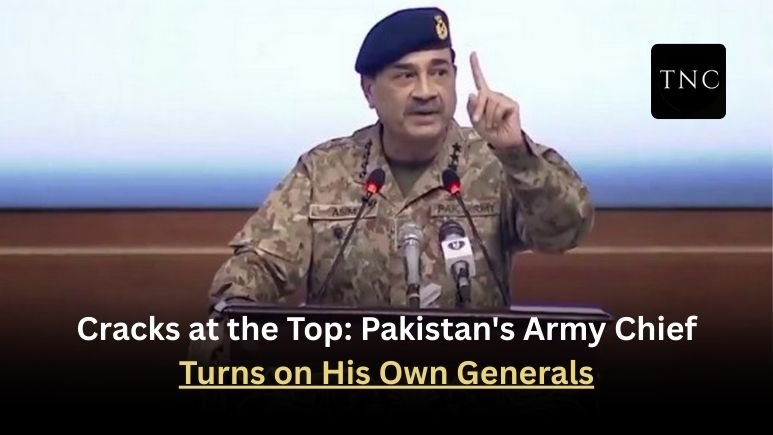

The room at Rawalpindi’s General Headquarters was unusually still. Maps flickered on digital screened zones spreading across the western frontier, each one marking another failed interception, another missed warning. Field Marshal Asim Munir leaned forward, voice cutting through the silence. Where was the intelligence? Why were troops blindsided again? No one answered. Outside, the war with Afghanistan was no longer a border problem. It was bleeding inward.
Munir’s reported outburst at his own commanders is more than a moment of internal dissent; it is a window into a deeper crisis inside Pakistan’s military establishment. As fighting with Afghanistan escalates into open conflict, the inability to neutralize key militant threats often described as “enemy number one” has exposed cracks in intelligence, strategy, and command cohesion. The question is no longer just about battlefield outcomes. It is about whether Pakistan’s military doctrine itself is failing under pressure.
For years, Pakistan’s security strategy relied on a delicate balancing act: managing militant groups, influencing Afghanistan’s internal dynamics, and maintaining strategic depth along the border. That balance is now collapsing.
Recent events tell the story. Cross-border attacks by groups like the Tehrik-i-Taliban Pakistan (TTP) have intensified, catching Pakistani forces off guard and revealing what Munir himself reportedly called a “massive intelligence failure.” The pattern is consistent large-scale assaults planned across the border, executed with coordination, and detected too late.
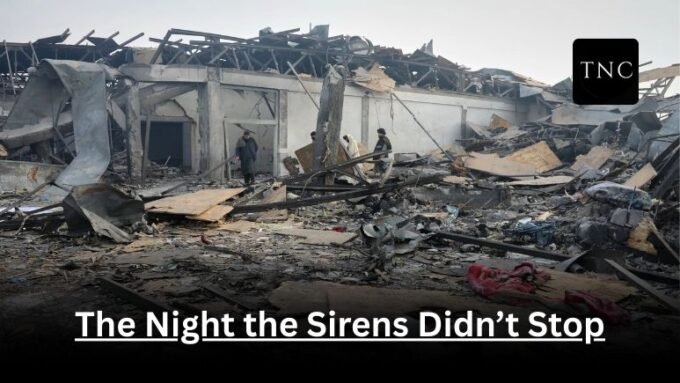
The war with Afghanistan has only magnified those weaknesses. What began as retaliatory airstrikes has spiraled into a broader conflict, with both sides accusing each other of harboring militants and targeting civilians. The consequences have been severe: hundreds killed in strikes, cities destabilized, and diplomatic channels collapsing.
Inside Pakistan’s military, frustration is turning inward. Munir’s criticism of senior commanders signals more than anger; it suggests a breakdown in trust between leadership and intelligence arms like the ISI and Military Intelligence. When an army chief publicly questions his own system’s competence, it reflects systemic strain, not isolated failure.
There is also a strategic contradiction at play. Pakistan has long accused Afghanistan of sheltering militants, yet its own policies over decades have been criticized for enabling similar networks. Now, those same networks operate beyond Islamabad’s control, turning the frontier into a two-way threat.
Even more troubling is the shift in tone. Analysts often view ultimatums and public warnings as signs of weakness, not strength, an indication that diplomacy has failed and military leverage is uncertain. When threats replace strategy, it usually means the options are narrowing.
The result is a military caught between external war and internal accountability. The enemy is no longer just across the border. It is embedded in intelligence gaps, strategic miscalculations, and years of unresolved policy contradictions.
What happened in that silent room in Rawalpindi matters because it reveals a hard truth: Pakistan’s biggest challenge may not be defeating its enemies, but understanding why it keeps missing them.
In modern warfare, failure isn’t just measured in lost battles. It’s measured in questions no one in the room can answer.
Also Read / The Blast That Shook Kabul 835 civilians killed, over 1,300 injured.













Leave a comment