

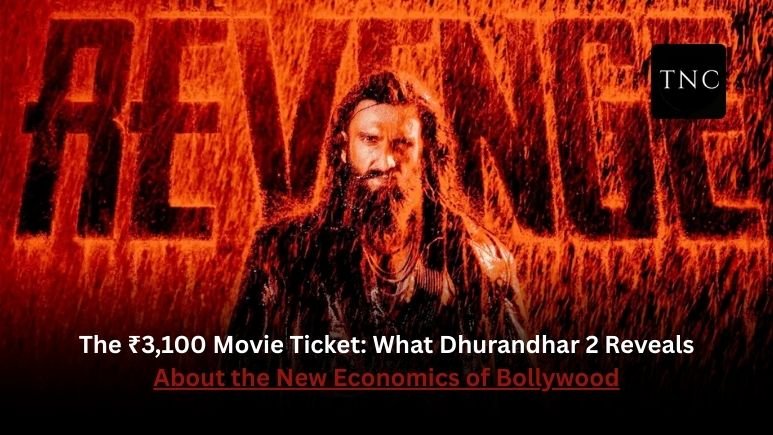

At 10:15 p.m., inside a glittering multiplex in Borivali’s Sky City Mall, a young couple stared at their phone screen in disbelief. The price blinked back at them: ₹3,100 for a single movie ticket.
For most people in Mumbai, that’s a week’s worth of streaming subscriptions or a small family dinner. Yet within minutes, the seat vanished. Someone had bought it.
The film drawing that kind of money is Dhurandhar: The Revenge, the sequel to the 2025 blockbuster starring Ranveer Singh. Luxury recliner seats at the INOX Megaplex in Borivali have reached ₹2,900 to ₹3,100, the highest movie ticket price ever recorded in India. Even more surprising: many of those premium seats sold out quickly.
The headline-grabbing price isn’t just about one film or one theater. It signals something bigger: a dramatic shift in how Bollywood movies are priced, marketed, and consumed.
Blockbuster releases now function like premium events closer to concerts or IPL matches than traditional cinema outings. Studios, multiplex chains, and streaming competition have all pushed theaters to experiment with high-end experiences and dynamic pricing, betting that die-hard fans will pay almost anything for opening-night access.
The numbers tell the story.
Before the film’s release, Dhurandhar 2 already created massive buzz. Paid preview screenings were scheduled a day before the official release, and advance bookings surged nationwide. In fact, hundreds of thousands of tickets were sold before opening day, generating crores in pre-release revenue.
Premium theaters capitalized on that hype. In Mumbai’s Borivali multiplex, luxury recliner seats were priced at ₹3,100, while other high-end locations in cities like Delhi charged up to ₹2,400.
That price eclipses previous records set by major films like Pushpa 2: The Rule, which once held the title for India’s costliest ticket at around ₹3,000.
But there’s a twist: even with these sky-high prices, theaters aren’t empty. Quite the opposite. Many premium shows are nearly sold out, suggesting that audiences are willing to treat blockbuster screenings as luxury entertainment.
This trend reflects a broader transformation in the film industry:
- Event cinema: Big films are marketed as once-in-a-while experiences.
- Premium formats: Recliners, dine-in screens, and Dolby or IMAX formats justify higher prices.
- Demand-based pricing: Ticket prices rise when hype peaks.
The result is a tiered movie economy. A fan might pay ₹300 for a basic seat or ten times that for the “VIP” experience.
A ₹3,100 movie ticket would have sounded absurd a decade ago. Today, it’s reality.
Dhurandhar 2 proves that Bollywood’s biggest releases are no longer just films, they’re premium events. And as long as audiences keep buying those seats, the price of watching a blockbuster on opening night may keep climbing.
In the new Bollywood economy, hype isn’t just publicity, it’s a pricing strategy.












Leave a comment