

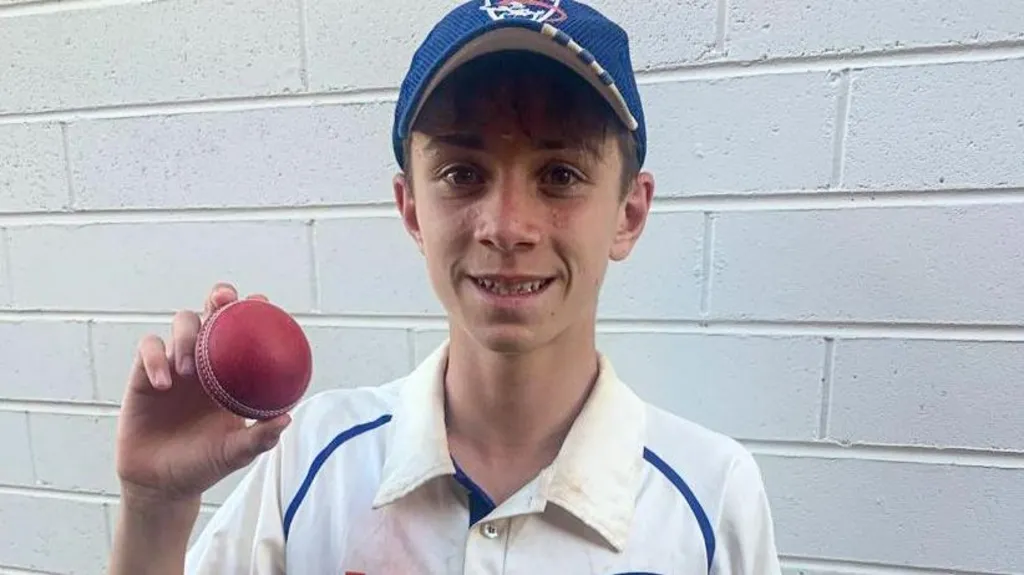

On a warm spring day in Melbourne, a local youth cricket match was shattered by tragedy. A rising star, 16-year-old Ben Austin, lost his life after a bouncer struck the unprotected area at the base of his neck a moment eerily reminiscent of the 2014 Phil Hughes tragedy. As news of the Ben Austin Melbourne cricket accident spread, the sporting world was thrown into mourning and, once again, into urgent debate about player safety, neck guards, and whether enough is being done to protect young athletes.
This blog examines the incident, explores the latest in cricket safety equipment 2025, dissects the ongoing controversy around neck guards in youth cricket, and asks what needs to change. Has cricket, as a sport, truly internalized the lessons from past heartbreak? Or are we still waiting for another wake-up call before acting decisively for the safety of teenagers on the field?
Remembering Ben Austin: A Promising Journey Cut Short
Ben Austin was no ordinary teenage cricketer. Coaches and peers recall a disciplined opening batter, passionate about his craft and a natural leader on and off the field. The fateful day saw Ben bravely facing a pace attack on a lively wicket. A short-pitched delivery a routine challenge in competitive cricket unexpectedly climbed, catching him where the helmet offered no protection.
Despite immediate medical attention and swift arrival of emergency responders, Ben succumbed to his injuries. The cricket community, both in Australia and abroad, was left reeling. Candlelight vigils, tributes on social media, and moments of silence at club games echoed the loss a loss all too familiar to those who remember cricket ball injury fatalities in recent times.
Revisiting the Phil Hughes Cricket Tragedy Comparison
For millions, the heartbreak awakened painful memories of Phil Hughes’ cricket tragedy. In 2014, Phil Hughes, a Test player for Australia, succumbed to a vertebral artery dissection after being struck by a bouncer below the helmet, exposing a critical vulnerability. His death prompted a sweeping review of helmet standards and a surge of innovation in neck protection design. Despite these efforts, adoption of enhanced guards has been uneven, especially among grassroots and youth cricketers.
The parallels between Ben’s and Phil’s deaths the age, the freak angle of the blow, the speed of the tragedy remind us that, on rare but devastating occasions, history can repeat if protective practices aren’t universally implemented.
Cricket Safety Equipment 2025: What Has Changed and What Hasn’t
Since 2014, cricket safety gear has evolved. Modern helmets meet stricter ICC standards, featuring reinforced grills and enhanced padding. In 2025, most brands offer detachable or built-in neck guards. Leading models claim to deflect glancing blows and absorb up to 80% of impact energy. So why did tragedy strike again?
The gaps:
- Not all leagues and schools make neck guards mandatory, especially at the junior level.
- Some players citing comfort, restriction of movement, or peer influence choose not to wear them.
- Enforcement in club cricket, compared to elite professional games, is far less rigorous due to cost, education, and, sometimes, complacency.
Ben Austin’s accident is a grim reminder: cricket safety equipment 2025 is only effective if it’s universally worn and enforced, not just designed.
Neck Guards in Youth Cricket: A Contentious Issue
Neck guards—soft, often foam-lined extensions that attach to the back of the helmet—can offer substantial protection against exactly the kind of injury Ben suffered. But their adoption in youth cricket is patchy for several reasons:
- Perceived discomfort: Teen players complain that the gear is hot, heavy, or restricts head movement, especially for wicketkeepers and fielders close to the bat.
- Cultural resistance: Some coaches and parents see neck guards as optional, not essential, especially if “the pros aren’t all wearing them.”
- Peer pressure: Among teenagers, there’s often an undercurrent that extra gear makes one look uncool or “soft.”
- Cost factor: For less affluent clubs or families, the cost of new, certified neck guards for all players can be prohibitive.
Yet, the data is sobering: since Phil Hughes’ passing, a handful of near-misses mirror Ben’s fate, with only gear or luck bridging the gap between a scare and a tragedy. In 2025, after Ben Austin’s death, there is no longer any moral defense for hesitation.
Cricket Ball Injury Fatalities: A Rare but Preventable Reality
Cricket remains a remarkably safe sport statistically. Serious injuries or deaths are exceedingly rare compared to rugby, American football, or even horse riding. But the handful of cricket ball injury fatalities each one a child, friend, or future star carry a heavy weight because they are so preventable.
Key risk factors for catastrophic head and neck injuries:
- Exposure to high-speed bowling without modern gear.
- Playing on hard or bouncy pitches without adequate coaching in safe technique (ducking, avoiding the bouncer).
- Reluctance among teenagers to “speak up” if equipment is broken, uncomfortable, or old.
- Inadequate medical response or lack of immediate defibrillators/first-aid at amateur grounds.
Each loss is a clarion call to do more, not just at the national organization level but at every club, league, and school that fields a youth cricket team.
Sports Safety for Teenagers: Responsibility Beyond Cricket
The Ben Austin tragedy is not just about cricket. It’s a cautionary tale for all contact and projectile-based youth sports. Sports safety for teenagers should be driven by the same principles everywhere:
- Mandate the Best Available Gear: No helmet or guard should be “optional” if there is evidence it saves lives, it must be the rule for all.
- Regular Education: Leagues must invest in recurring, practical training for parents, athletes, and coaches on gear fitting, safe technique, and emergency response.
- Enforce Compliance: Referees and umpires should have zero tolerance for missing or improper protective gear, even if it means lost playing time.
- Affordability Programs: Governing bodies and sponsors should ensure all young athletes, regardless of financial background, have access to certified and well-maintained equipment.
Moving Forward: A National Reckoning Awaits
Ben Austin’s passing has reignited calls for:
- Mandated neck guards at all levels of youth and club cricket with strict penalties for noncompliance.
- Centralized funding initiatives to supply modern gear to every registered youth player.
- Tech innovation incentives for developing lighter, more comfortable, and more effective safety equipment tailored for teenage athletes.
- Annual “Safety Days” at clubs and schools emphasizing culture change alongside technical skills.
Calls for a “Ben Austin Law” national legislation matching the push seen post-Phil Hughes are growing louder. The conversation is now, and it cannot dissipate with time or reach the “it won’t happen here” complacency.
How Parents, Coaches, and Young Players Can Lead
- Speak Up: Players should never hesitate to request new or better-fitting gear, or to refuse to play if kit is sub-standard.
- Lead by Example: Coaches and older players must model best practice wear the gear, insist on checks, and treat safety as non-negotiable.
- Know the Signs: Every team should drill for concussions, emergency scenarios, and have up-to-date contact info for local emergency medical services.
- Stay Updated: Clubs must follow the latest safety research, gear recommendations, and best practices from cricket boards and sports medicine organizations.
Final Thoughts: Honoring Tragedy With Change
The death of a young athlete is an immeasurable loss the echo felt in every family, every team, and every soul who loves sport and what it inspires. The Ben Austin Melbourne cricket accident like Phil Hughes’ before it must remind cricket that progress is only real if it’s everywhere, for everyone, all the time. As the cricketing world remembers Ben with #PlaySafeForBen trending from Melbourne to Mumbai the time for debate has ended. Universal adoption of the best safety practices, from neck guards in youth cricket to regular equipment audits, is the only fitting tribute to a life cut short, and a gift of protection to every young cricketer stepping onto the pitch in the future.














Leave a comment