

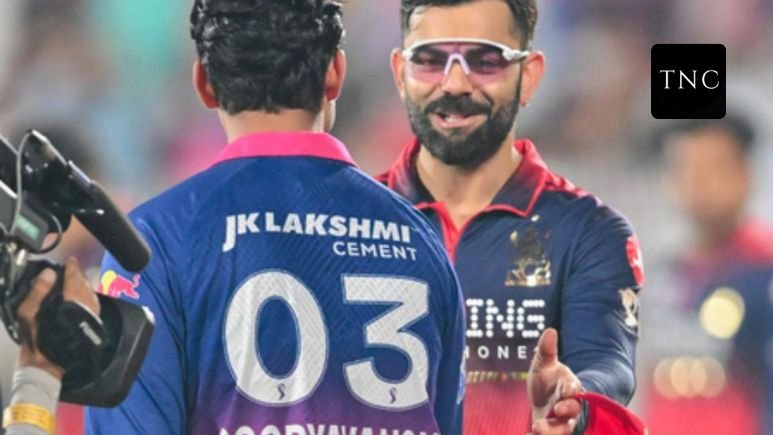

The crowd in Guwahati hadn’t quite settled when the ball disappeared again high, clean, gone. A 15-year-old, slight in build but reckless in intent, stood unfazed at the crease as seasoned bowlers searched for answers. In the stands, a few fans laughed in disbelief. Others simply shook their heads.
After the game, long after the noise had thinned, Virat Kohli walked up quietly. No speech. No cameras chasing a headline. He took the youngster’s cap, scribbled a line, and handed it back.
“Dear Vaibhav, well done.”
For Vaibhav Sooryavanshi, it was just a few words. But in the ecosystem of Indian cricket, it was something far bigger, a passing of acknowledgement from one generation to the next.
Sooryavanshi’s blistering 78 off 26 balls against Royal Challengers Bengaluru didn’t just win a match it signaled a shift. At 15, he dismantled an experienced bowling attack and helped Rajasthan chase down a 200-plus total with ease, pushing his team to the top of the standings.
Kohli’s understated message captured why this moment matters: Indian cricket is witnessing not just talent, but a new kind of fearlessness, one that doesn’t wait for age, reputation, or hierarchy.
Sooryavanshi doesn’t bat like a teenager learning the game. He bats like someone rewriting it.
He attacks early. He ignores reputations. And most strikingly, he sustains it multiple rapid-fire innings, including a 15-ball fifty, have already made him one of the most talked-about players of the 2026 IPL season.
This is not accidental. It reflects a deeper evolution in cricket:
- Compressed formats have rewired instincts. Young players grow up in T20 systems where aggression is default, not risk.
- Exposure starts earlier. By his early teens, Sooryavanshi had already faced elite competition, shrinking the psychological gap between “junior” and “pro.”
- Data-driven confidence. Modern players know matchups, zones, and probabilities reducing hesitation against big names.
Yet what makes this story compelling isn’t just the numbers. It’s the response from someone like Kohli.
For over a decade, Kohli represented intensity, discipline, and the grind of mastering international cricket. His message brief, almost minimalist message signals acceptance. The old guard is not resisting the change; it’s recognizing it.
That matters.
Because cricket, like all sports, depends on continuity. The moment a legend acknowledges a newcomer, it validates not just the player but the direction the game is heading.
A teenager hit 78 runs. A legend wrote five words.
One was a performance. The other was a signal.
Indian cricket isn’t waiting for its future anymore, it’s already here, swinging hard in the powerplay, and getting a quiet nod from those who built the past.
Also Read / Searching for Rhythm: Why Tonight’s KKR vs LSG Clash at Eden Gardens Is About More Than Points












Leave a comment