

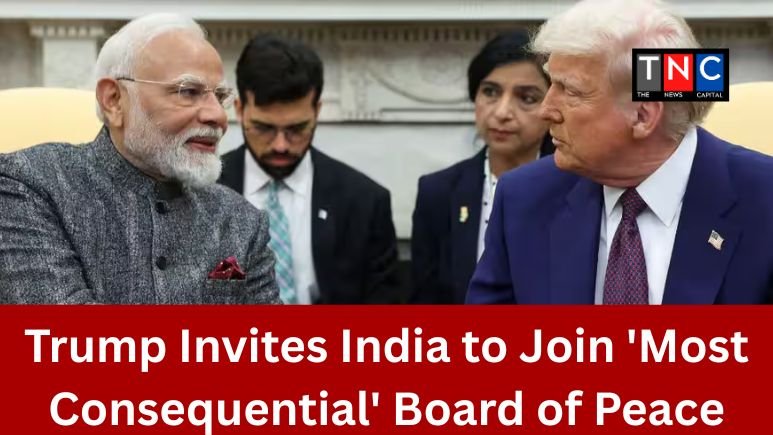

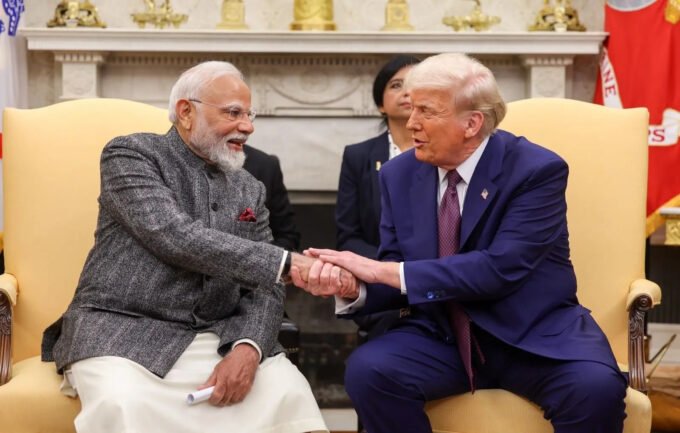
In a move that could redefine India’s role in Middle Eastern diplomacy, U.S. President Donald Trump has formally invited Prime Minister Narendra Modi to join a newly established “Board of Peace” tasked with overseeing the reconstruction and transitional governance of Gaza following a U.S.-brokered ceasefire. The United States officially invited India to become a founding member of the international body on Sunday, January 18, 2026, with the initiative marking “Phase Two” of Trump’s ambitious 20-Point Peace Plan and positioning India as a key global supervisor alongside a small group of influential nations and economic leaders.
The Board of Peace is envisioned not just as a diplomatic forum, but as a transitional governing administration with its own international charter and legal standing to manage billions in reconstruction funds, bypassing traditional UN mechanisms.
- Chairman: Donald J. Trump (serving as personal chair of the body)
- Diplomatic Leads: Marco Rubio (U.S. Secretary of State), Tony Blair (Former UK Prime Minister)
- Economic & Strategy: Ajay Banga (World Bank President), Jared Kushner, Marc Rowan (Apollo Global CEO)
- Ground Liaison: Nickolay Mladenov (High Representative for Gaza)
- Governance Function: The board will supervise the National Committee for the Administration of Gaza (NCAG), led by technocrat Ali Sha’ath, to restore public services and rebuild civil institutions.
- Legal Authority: The board will operate under its own international charter rather than UN Security Council resolutions, representing a parallel governance structure outside traditional multilateral frameworks.
- Financial Control: The body will manage billions in reconstruction funds, giving members significant influence over Gaza’s economic future and political trajectory.
While the invitation highlights India’s “global leadership,” it comes with significant financial and sovereign implications, according to a draft charter seen by Reuters that outlines a tiered membership system.
| Membership Type | Terms | Requirements |
| Standard Member | 3-Year Appointment | Diplomatic cooperation; no fee required |
| Permanent Member | Indefinite seat | $1 Billion contribution in first year to fund board activities |
- Financial Barrier: The $1 billion price tag for permanent membership represents a substantial commitment that would make India one of the largest financial contributors to Gaza reconstruction.
- Prestige vs. Cost: New Delhi faces a calculation of whether a permanent seat on Trump’s board justifies the expenditure, particularly given competing domestic development priorities.
- Influence Buying: The tiered system effectively allows wealthy nations to purchase permanent influence over Gaza’s future, raising questions about whether reconstruction serves Palestinian interests or donor priorities.
India’s Ministry of External Affairs has acknowledged receiving the invite but has yet to issue an official response, with sources indicating New Delhi is analyzing the legalities and implications of joining Trump’s unconventional framework.
- De-Hyphenated Policy: India has historically maintained a “de-hyphenated” policy, supporting a two-state solution while deepening ties with Israel. Joining a U.S.-led board could offer India a seat at the table for Middle Eastern reconstruction.
- UN Bypass Concerns: The “Nimble and Effective” approach that bypasses traditional United Nations oversight raises questions about international law, multilateralism, and whether India wants to legitimize parallel governance structures.
- Regional Balancing: Accepting the role might complicate India’s standing within the UN and with traditional partners who support Palestinian statehood through established multilateral channels.
- Timing with UAE Visit: The invitation arrives just as India hosts UAE President Sheikh Mohamed bin Zayed Al Nahyan on Monday, January 19, with the UAE expected to be a major partner in the Board of Peace framework.
Observers note that the Board of Peace invitation follows a period of aggressive U.S. trade postures toward India, suggesting the offer may serve purposes beyond Gaza reconstruction.
- Trade Tensions: The invite comes after Trump imposed 50% tariffs on some Indian exports and characterized India’s economy in harsh terms during trade disputes.
- Diplomatic Reset: Accepting the Board of Peace role could serve as a diplomatic “reset” between Modi and Trump, potentially easing trade tensions through strategic cooperation.
- Quid Pro Quo Questions: The timing raises questions about whether Board membership is implicitly linked to trade concessions or other bilateral agreements.
- Leverage Dynamics: Trump’s pattern of using non-trade issues (like the Jio IPO invitation to Pax Silica) as leverage in economic negotiations suggests the Gaza board may serve similar purposes.
India is not alone in receiving the invitation, with over 60 countries courted to join what Trump calls the “most impressive and consequential Board ever assembled.”
- Pakistan: Confirmed receipt of the invitation on Saturday; Prime Minister Shehbaz Sharif stated Islamabad will engage with the efforts, creating the unusual dynamic of India and Pakistan potentially serving together.
- Regional Players: Egypt, Jordan, Turkey all with direct stakes in Gaza’s future have been invited to participate in reconstruction governance.
- Western Allies: Canada has been invited despite current tensions over Trudeau’s resignation and Carney’s China pivot, suggesting Trump wants broad Western representation.
- Latin America: Argentina’s inclusion reflects Trump’s relationship with President Javier Milei and efforts to build a global coalition beyond traditional Middle East stakeholders.
- Hungary’s Acceptance: So far, only Hungary has unequivocally accepted the invitation, reflecting Prime Minister Viktor Orbán’s close alignment with Trump’s approach to international governance.
The Board of Peace model raises fundamental questions about international law, sovereignty, and the future of multilateral governance mechanisms.
- UN Circumvention: The board’s charter operates outside UN Security Council authorization, potentially setting a precedent for major powers to bypass multilateral institutions when they prove inconvenient.
- Palestinian Agency: The governance structure appears to give limited voice to Palestinians themselves, with leadership positions held by international figures and technocrats rather than elected Palestinian representatives.
- International Law Basis: The legal foundation for a U.S.-led board to govern Gaza without UN authorization or Palestinian consent remains unclear and potentially contested.
- Precedent Concerns: Success of the Board of Peace model could encourage similar parallel governance structures in other conflicts, undermining the UN system built after World War II.
As India’s MEA deliberates, the decision involves weighing multiple strategic, financial, and diplomatic factors with long-term implications for India’s global positioning.
- Prestige Factor: A permanent seat on a Trump-led global organization offers India visibility and influence in Middle Eastern reconstruction, an area where it has historically played limited roles.
- Financial Burden: The $1 billion price tag represents significant resources that could alternatively fund domestic development or be deployed through established multilateral channels.
- Multilateral Principles: Joining a board that bypasses the UN could undermine India’s longstanding commitment to multilateralism and its bid for permanent UN Security Council membership.
- Regional Relations: The decision will be closely watched by Arab nations, Israel, and Pakistan, with implications for India’s carefully balanced Middle East relationships.
- Trump Factor: With Trump’s unpredictable approach to international commitments, India must assess whether investing $1 billion in his Board of Peace will deliver sustained influence or become a stranded asset if U.S. priorities shift.
For New Delhi, the choice involves weighing the prestige of a permanent seat on a Trump-led global organization against a $1 billion price tag, the potential erosion of the UN’s traditional peacekeeping role, and questions about whether the Board of Peace serves Palestinian reconstruction needs or Trump’s vision of Middle Eastern governance under American leadership. The invitation arrives as India seeks to strengthen ties with both Washington and regional Middle Eastern partners, but accepting may require sacrificing multilateral principles that have guided Indian foreign policy for decades. As the UAE President arrives in New Delhi on Monday, Modi faces a decision that could reshape India’s role in the Middle East or entangle it in a Trump initiative that collapses under the weight of its own ambitions before Gaza’s reconstruction even begins.
Also Read / Modi reaffirms support for ‘Gaza Peace Plan’ in call with Netanyahu.










Leave a comment