

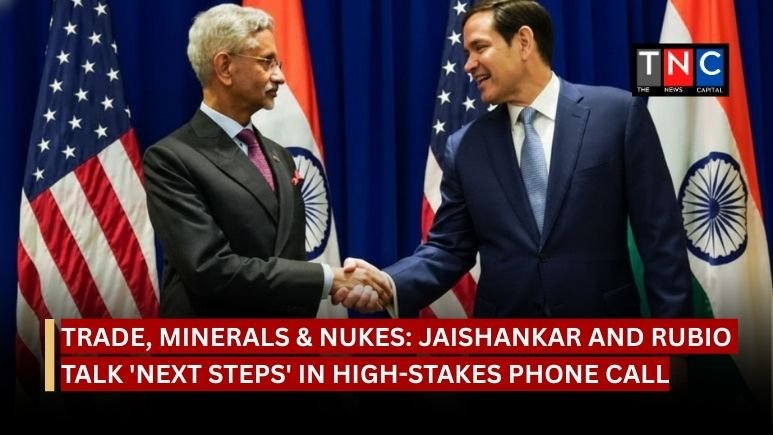

In a move to thaw the frostiest period in India-U.S. relations in decades, External Affairs Minister S. Jaishankar and U.S. Secretary of State Marco Rubio held a “positive” telephonic conversation on Tuesday, signaling a roadmap for trade negotiations and a potential leader-level summit next month. The discussion focused on a broad strategic agenda including trade, critical minerals, nuclear energy, and defense, as both nations attempt to move past the 50% tariffs currently impacting Indian exports to the United States.
External Affairs Minister S. Jaishankar held a pivotal phone conversation with U.S. Secretary of State Marco Rubio on Tuesday, January 13, 2026, aimed at navigating the “major downturn” in bilateral ties that has characterized the past year.
- Nuclear Breakthrough: Secretary Rubio congratulated India on the passage of the SHANTI Bill (Sustainable Harnessing and Advancement of Nuclear Energy for Transforming India), which opens the door for limited private participation in the nuclear sector. The U.S. expressed a clear desire to use this as a springboard for expanding civil nuclear cooperation.
- Pax Silica Invitation: During the exchange, Rubio and U.S. Ambassador Sergio Gor hinted that India would be invited to join Pax Silica, a strategic U.S.-led alliance focused on securing supply chains for semiconductors, advanced manufacturing, and AI.
- Energy Realignment: With the U.S. recently seizing Venezuelan oil fields and threatening 500% tariffs on Russian oil buyers, Jaishankar and Rubio discussed “energy security” as a mutual priority, with India signaling a willingness to increase purchases of U.S. energy to narrow the trade gap.
- Critical Minerals Cooperation: Both sides explored opportunities for collaboration on critical mineral supply chains, essential for clean energy transitions and advanced technology manufacturing.
While the call was described as “positive” by both sides, the fundamental disagreements that collapsed trade talks in 2025 remain on the table and require careful navigation.
| Area of Conflict | U.S. Demand | India’s Position |
| Agriculture | Greater market access for U.S. poultry and grain | Protection of domestic small-scale farmers |
| Dairy Sector | Easing of religious and phytosanitary barriers | Non-negotiable cultural and safety standards |
| Energy | Total halt of Russian oil imports | Strategic autonomy and energy affordability |
Ambassador Sergio Gor acknowledged these complexities on Monday, stating, “India is the world’s largest nation, so it’s not an easy task to get this across the finish line, but we are together.”
The Jaishankar-Rubio call coincided with President Trump’s announcement of a fresh 25% tariff on any nation doing business with Iran, but the threat appears to have minimal impact on India-U.S. negotiations.
- Minimal Exposure: Indian government sources have downplayed the threat, noting that bilateral trade with Iran is currently under $2 billion and does not feature in India’s top 50 trading partnerships.
- Strategic De-risking: The lack of friction over Iran suggests that New Delhi has successfully de-risked its trade profile to avoid “secondary sanctions” while focusing its diplomatic capital on the larger U.S. trade pact.
- Diplomatic Flexibility: India’s reduced economic exposure to Iran provides negotiating room to focus on more substantive bilateral issues with Washington.
The most tangible outcome of the call appears to be the scheduling of concrete “next steps” that could accelerate the negotiation process in coming weeks.
- Technical-Level Talks: Ambassador Gor confirmed that a technical-level call on trade would occur on Wednesday, January 14, to work through specific sectoral issues.
- High-Level Meeting: Officials hinted at a possible high-level meeting next month, potentially a face-to-face encounter between Jaishankar and Rubio, or even a broader summit involving Prime Minister Modi and President Trump.
- Timeline Acceleration: The rapid scheduling of follow-up discussions suggests both sides are eager to demonstrate progress and move beyond the confrontational rhetoric of 2025.
- Strategic Reset: The conversation represents an attempt by both administrations to reset relations that had been characterized by the Trump administration’s “dead economy” rhetoric and aggressive tariff measures.
The Jaishankar-Rubio conversation marks a potential turning point in a relationship that had deteriorated dramatically following Trump’s 50% tariff imposition and harsh economic characterizations of India. The willingness of both sides to engage on multiple strategic fronts, from nuclear energy to critical minerals to defense cooperation, suggests recognition that the bilateral relationship extends far beyond trade disputes. Whether this positive tone translates into concrete agreements on the thorny agricultural and energy issues that have stymied previous negotiations remains to be seen, but the scheduling of technical talks and potential leader-level summits indicates both capitals understand the stakes of allowing the relationship to continue drifting.
Also Read / Jaishankar meets Netanyahu in Jerusalem to deepen strategic ties and push for FTA.










Leave a comment