


The bodycam footage shows it in real time. A police constable raises his shield as a glass bottle arcs through the sodium-lit darkness and shatters against his helmet. He stumbles backward. Another officer pulls him behind a barricade as rocks clatter off metal shields like hail on a tin roof. In the background, a voice shouts something unintelligible. Then the camera jerks sideways as the constable wearing it takes a stone to the shoulder. The timestamp reads 11:43 PM, January 6. By dawn, six officers would be hospitalized, 13 people would be arrested, and a Delhi courtroom would become the latest battleground in a fight over what actually happened that night near the Faiz-e-Elahi mosque.
What began as a routine anti-encroachment drive in central Delhi exploded into street violence fueled by a viral rumor, leaving authorities scrambling to separate fact from fiction in a case now involving attempted murder charges, allegations of custodial abuse, and a digital manhunt for influencers accused of spreading lies. The Turkman Gate clashes reveal how quickly misinformation can turn bureaucratic procedure into bloodshed, and how the aftermath in courtrooms and police stations often proves messier than the violence itself.
A Delhi court sent eight more people to judicial custody Friday for their role in the January 6-7 violence. Judicial Magistrate First Class Sayesha Chaddha ordered them held until January 21 after reviewing evidence that placed them at the scene when the mob attacked security forces. The accused, Afaan, Adil, Shahnawaz, Amir Hamza, Ubadullah, Atharr, and two men both named Mohammad Imran, bring the total arrests to 13, including one juvenile.
Delhi Police have escalated the case. They added Section 109 of the Bharatiya Nyaya Sanhita, the provision for attempt to murder, to the charges. Six officers were injured seriously enough to require medical treatment, including the local station house officer. Authorities submitted bodycam footage and CCTV recordings showing the accused hurling projectiles at police lines during the demolition drive.
But the case has complications. Lawyers for five other accused, remanded to custody earlier, allege their clients were beaten by jail officials after arrest. The court issued a notice to the jail superintendent demanding medical records before the next hearing on January 13. The allegations add a layer of controversy to a case already drowning in contested narratives.
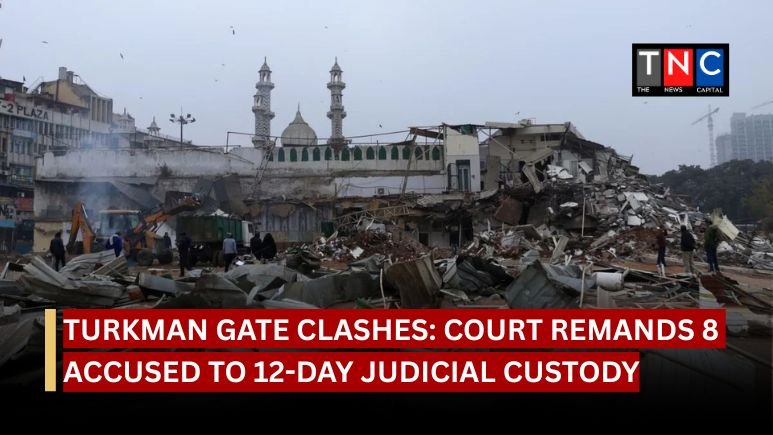
The violence itself started with a lie. Police say a social media post falsely claimed the Faiz-e-Elahi mosque was being demolished. The post spread fast. Within hours, 150 to 200 people gathered near the site and began pelting stones and bottles at Municipal Corporation of Delhi workers and their security detail. The reality was more mundane. The MCD was clearing 36,000 square feet of encroached land under a court order. Deputy Commissioner Vivek Kumar clarified that demolition crews took down a banquet hall, a diagnostic center, two boundary walls, and a room for Hajj pilgrims. The mosque was never touched.
The gap between rumor and reality didn’t stop the violence. It fueled it.
Authorities are now conducting a digital autopsy. A Special Investigation Team is reviewing footage from 32 police bodycams and local CCTV cameras to identify remaining suspects. Officers have seized mobile phones containing what they describe as “instigating messages.” The investigation has expanded to include social media influencers accused of amplifying the false demolition claim. One influencer, Aimen Rizvi, says she’s willing to cooperate but hasn’t received an official summons.
Heavy police and paramilitary forces remain deployed around Turkman Gate, especially during Friday prayers, to prevent fresh violence. The area remains tense. Trust remains thin.
A single false post turned a demolition drive into a riot and a riot into a legal quagmire where police bodycams tell one story, defense lawyers tell another, and the truth sits somewhere in 32 hours of footage nobody has fully reviewed yet. The Turkman Gate case won’t be resolved by determining who threw which stone. It will hinge on whether Delhi’s courts can untangle what happened after the arrests as much as what happened before them, and whether anyone can be held accountable for the lie that started it all.
Also Read / Split Verdict: Supreme Court Denies Bail to Umar Khalid and Sharjeel Imam; 5 Others Granted Relief.













Leave a comment