

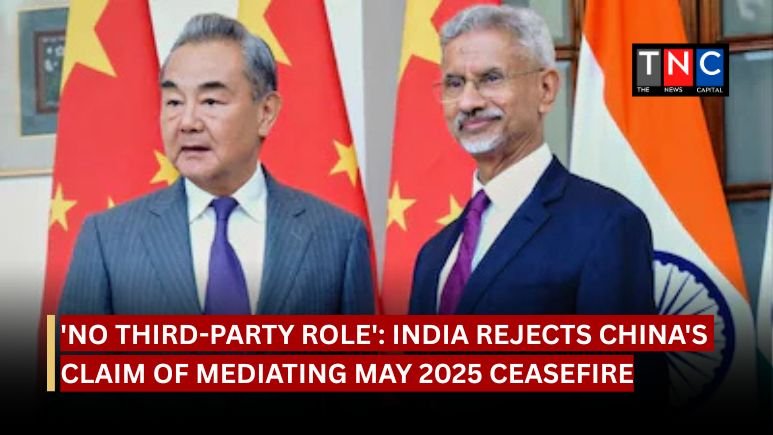

New Delhi has dismissed a “bizarre” claim by Beijing that it brokered the truce during the May 2025 military confrontation with Pakistan, reiterating that the ceasefire was a purely bilateral understanding reached between military commanders.
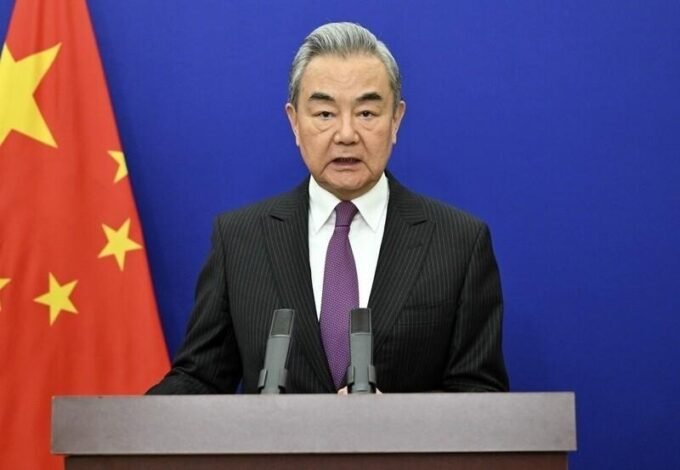
The Indian government has firmly rejected recent claims by Chinese Foreign Minister Wang Yi that Beijing played a mediating role in de-escalating the May 2025 India–Pakistan conflict. Speaking at a foreign policy symposium in Beijing on Tuesday (December 30, 2025), Wang listed the “tensions between Pakistan and India” alongside Myanmar and the Middle East as hotspots where China had adopted an “objective and just stance” to build peace. Sources in New Delhi have called the claim a fabrication, insisting the ceasefire was worked out directly through military-to-military channels.
The conflict, which lasted from May 7 to 10, 2025, was triggered by a devastating terror attack in the Pahalgam valley on April 22 that killed 26 people.
- Operation Sindoor: In response, India launched “Operation Sindoor,” conducting precision strikes against terror infrastructure and later military installations in Pakistan-occupied Kashmir and Pakistan proper.
- The Ceasefire: India has consistently said the four-day war ended after Pakistan’s Director General of Military Operations reached out to his Indian counterpart. The Ministry of External Affairs noted the “specific date, time, and wording” of the truce were worked out during a phone call at 15:35 hours on May 10, 2025.
- The “Live Lab” Accusation: Far from acting as a mediator, Indian military officials have accused China of using the May conflict as a “live lab” to test the performance of Chinese-made military hardware supplied to Islamabad, which accounts for over 81% of Pakistan’s defense imports.
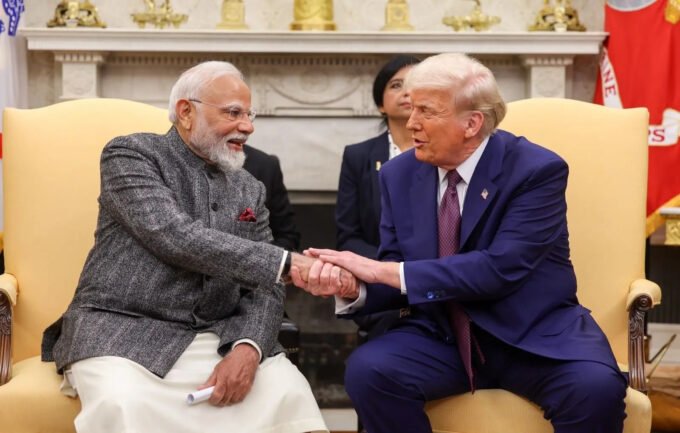
China’s claim follows a similar narrative pushed by U.S. President Donald Trump, who’s repeatedly taken credit for stopping a “nuclear war” between the two neighbors. While both Washington and Beijing are now competing for the title of “peacemaker,” the MEA has stuck to its decades-long policy that all issues with Pakistan must be resolved bilaterally, without outside interference.
“Whatever issues we have with any of our neighbors, we have always adopted a bilateral approach… India has been clear that there is no place for third-party intervention,” a senior diplomatic source told reporters Wednesday.
In a statement earlier this month, External Affairs Minister Dr. S. Jaishankar reaffirmed that the resolution of the May standoff came from India’s “relentless counter-strikes” forcing a ceasefire request from Islamabad, rather than diplomatic pressure from global capitals.
The diplomatic spat over the “peacemaker” tag comes as India faces a dual-front challenge. While tensions with Pakistan have largely shifted to a tense ceasefire, the Line of Actual Control with China remains a site of strategic mistrust despite recent disengagement efforts at legacy standoff sites. Analysts suggest China’s recent claim is an attempt to boost its image as a responsible global mediator following its success in the Iran–Saudi Arabia rapprochement.
As 2025 draws to a close, the Indian Army continues to mark the success of Operation Sindoor, noting that nine major terrorist camps were destroyed during the four-day campaign. Meanwhile, Pakistan has extended its ban on Indian aircraft using its airspace until January 23, 2026, signaling that while the guns are silent, the diplomatic frost runs deep.
Also Read / Gunfire Falls Silent: Thailand and Cambodia Agree to ‘Immediate’ Ceasefire.









Leave a comment