

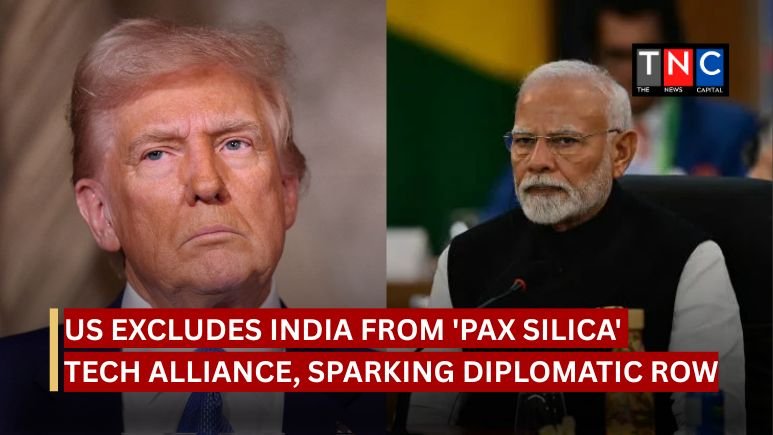

Washington’s decision to leave New Delhi out of its new high-tech supply chain coalition has drawn sharp criticism from the Indian opposition and raised questions about the limits of the strategic partnership under President Trump.
The United States has left India out of “Pax Silica,” a major new strategic initiative focused on securing global supply chains for semiconductors, critical minerals, and artificial intelligence. Details of the inaugural summit emerged Tuesday (16 December), and while it included nine advanced industrial nations, India wasn’t among them. Analysts say this highlights growing friction between the Trump administration and the Modi government over trade and technology standards.
The new group brings together the US, Japan, South Korea, the Netherlands, the UK, Israel, the UAE, Singapore, and Australia. Its stated goal is to build a “secure, prosperous, and innovation-driven silicon supply chain” that’s independent of “coercive” foreign influence, which is pretty clearly a dig at China.
Despite India’s active membership in the Quad and its recent push to become a global semiconductor hub, it didn’t get an invite. Experts think the exclusion comes down to two things: India’s still relatively new to high-end chip manufacturing compared to established players like Taiwan and South Korea, and there’s an ongoing trade deadlock with Washington. Reports suggest India’s reluctance to open its agricultural markets to US exports might have been the deciding factor.
The snub stings even more because the UAE and Singapore, countries India has close ties with, made the cut. The US State Department described the group as nations “hosting the world’s most advanced technology companies,” basically implying India’s tech ecosystem isn’t yet seen as a core part of this particular security setup.
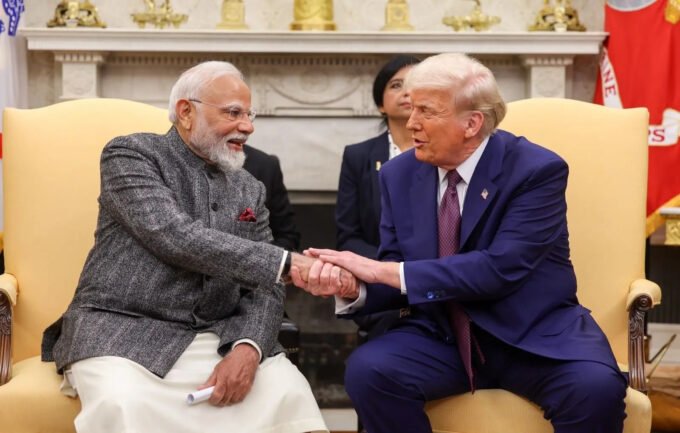
“Given the sharp downturn in Trump-Modi ties since May… it is perhaps not very surprising that India has not been included,” said Congress leader Jairam Ramesh, who criticized the government for losing ground in Washington despite Prime Minister Modi’s supposedly “warm” personal relationship with Donald Trump.
“Pax Silica aims to reduce coercive dependencies… and ensure aligned nations can develop and deploy transformative technologies at scale,” a US State Department spokesperson said, framing the alliance as a “positive-sum partnership” rather than something meant to shut countries out.
The timing is awkward for India-US relations. The Trump administration recently threatened severe tariffs on Indian goods, which pushed New Delhi to submit a “final trade offer” this week that includes removing duties on US almonds, apples, and walnuts. India remains a key partner in the Indo-Pacific strategy to counter China, but the “Pax Silica” snub suggests Washington is increasingly separating its high-tech security inner circle from its broader geopolitical alliances.
Indian diplomats will likely push for inclusion in future rounds of the initiative, pointing to the country’s potential as a massive market for AI and electronics. But right now, immediate attention is on the ongoing trade negotiations, where New Delhi is scrambling to avoid a full-blown tariff war before the new US administration takes an even harder line.
Also Read / PM Modi arrives in Jordan to kick off ‘historic’ three-nation tour.









Leave a comment