

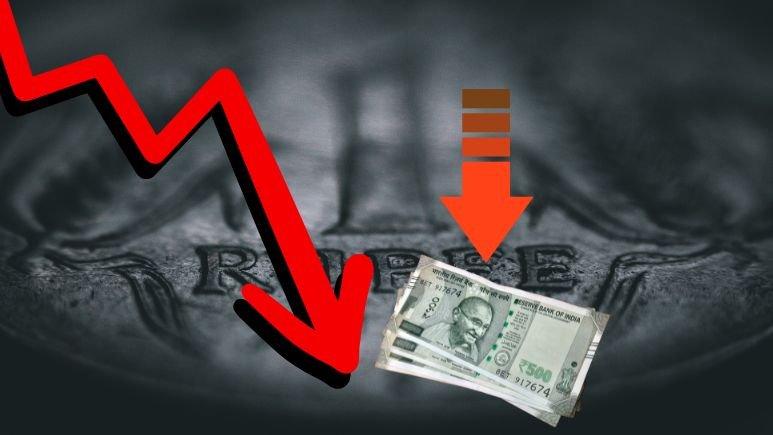

The Indian currency has plunged to an all-time low, breaching the psychological 90-rupee barrier as trade uncertainties and relentless foreign outflows batter investor confidence.
The Indian rupee slumped to a historic low on Wednesday (December 3), crossing the crucial 90 per US dollar mark for the first time ever. The currency touched an intraday low of 90.13, extending its slide for the sixth consecutive session amid persistent foreign capital outflows and deepening uncertainty over a trade deal with the United States.
Several factors have converged to push the rupee into uncharted territory. Foreign portfolio investors (FPIs) have pulled approximately $16.5 billion from Indian equities since late August, creating a severe shortage of dollars in the domestic market.
Simultaneously, a widening trade deficit which hit a record $41.7 billion in October has fueled importer demand for the greenback. The central bank’s intervention has been described by traders as “mild,” with the Reserve Bank of India (RBI) seemingly allowing the currency to find a new equilibrium rather than aggressively defending the 89.80 level as it had in previous weeks.
“The rupee depreciation will halt and even reverse when the India-US trade deal materialises,” said Dr. VK Vijayakumar, Chief Investment Strategist at Geojit Investments. “A lot, however, will depend on the details of the tariffs to be imposed on India as part of the deal.”
“Markets now want concrete numbers rather than broad assurances, leading to accelerated selling in the rupee over the past few weeks,” noted Jateen Trivedi, VP Research Analyst at LKP Securities.
The rupee’s collapse makes it one of the worst-performing Asian currencies of 2025, having fallen over 5% this year. The slide is exacerbated by a broader global trend where investors are flocking to the safety of the US dollar amid geopolitical tensions and the looming threat of new tariffs under the US administration.
The depreciation poses immediate risks for the Indian economy, potentially driving up inflation by making imports crucially crude oil and electronics more expensive. It also increases the repayment burden for companies with foreign debt. Analysts warn that without a decisive intervention from the RBI or a breakthrough in US trade talks, speculative pressure could push the currency toward the 91 mark in the near term. All eyes are now on the RBI’s upcoming Monetary Policy Committee (MPC) announcement on Friday, where the central bank is expected to address the currency’s volatility.
Also Read / Rupee plunges to 89.71 against dollar in steepest single-day crash since May.












Leave a comment