

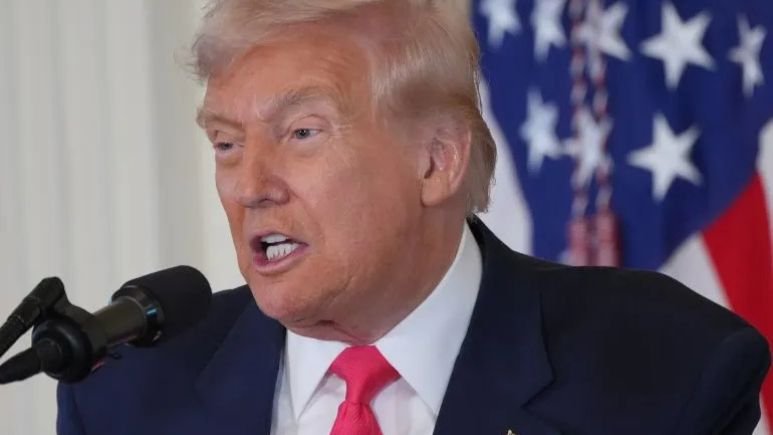

The Trump administration conducted parallel diplomatic meetings Tuesday with Russian and Ukrainian officials, claiming only “a few delicate” issues remain before finalizing a peace plan to end Moscow’s war against Ukraine.
Army Secretary Dan Driscoll met with Russian negotiators in Abu Dhabi while preparing for separate talks with Ukrainian officials. President Donald Trump said he would dispatch special envoy Steve Witkoff to Moscow to meet with President Vladimir Putin.
“Over the past week, my team has made tremendous progress with respect to ending the War between Russia and Ukraine,” Trump wrote on Truth Social. He added he hopes to meet with Putin and Ukrainian President Volodymyr Zelenskyy “ONLY when the deal to end this War is FINAL or, in its final stages.”
A US official told NBC News that “the Ukrainians have agreed to the peace deal,” with “some minor details to be sorted out.” However, Ukraine has not publicly confirmed accepting any agreement.
The diplomatic flurry follows weekend talks in Geneva where US and Ukrainian negotiators revised Trump’s controversial 28-point peace plan that many European allies viewed as heavily favoring Russia.
The revised proposal
The initial peace plan, which leaked last week, included provisions that Zelenskyy had previously rejected. It called for Ukraine to surrender territory not currently occupied by Russia, cap its military at 600,000 troops, and abandon NATO membership aspirations.
After intense negotiations in Geneva involving Driscoll, Secretary of State Marco Rubio, Witkoff, and Trump’s son-in-law Jared Kushner, the plan underwent significant revisions.
Ukrainian National Security Secretary Rustem Umerov said Tuesday that “our delegations reached a common understanding on the core terms of the agreement discussed in Geneva.”
Trump acknowledged the changes, saying the plan “has been fine-tuned, with additional input from both sides.”
However, key details remain unclear. Trump told reporters aboard Air Force One that remaining disagreements involve “standard things” but that “people are starting to realize it’s a good deal for both parties.”
He suggested some sticking points center on territory, saying: “Trying to clean up the border, you can’t go through the middle of the house. You can’t go through the middle of a highway.”
Russia’s uncertain position
While Ukraine appears willing to advance negotiations, Russia’s stance remains ambiguous.
Russian Foreign Minister Sergey Lavrov warned Tuesday that Moscow expects any agreement to reflect understandings reached between Trump and Putin during their August summit in Anchorage, Alaska.
“If the spirit and letter of Anchorage is erased in terms of the key understandings we have established, then, of course, it will be a fundamentally different situation,” Lavrov said.
The Kremlin said it had not yet received an official copy of the revised proposal. Spokesman Dmitry Peskov told reporters: “We still have nothing to say. We understand that negotiations between the Americans and the Ukrainians are ongoing.”
Putin said Monday the original 28-point plan “could form the basis for a final peace settlement.” But that statement came before the Geneva revisions.
A US official told CBS News that Putin believes he will take Ukraine’s Donetsk region “one way or the other” through either negotiation or battlefield victory. Russian forces continue advancing toward the logistics hub of Pokrovsk, which some view as a “gateway” to Ukraine’s industrial Donbas region.
Continued violence amid diplomacy
Even as peace talks progressed, Russia launched overnight missile strikes on Kyiv Tuesday that killed at least seven people and disrupted power and heating systems.
The attack underscored the fragility of diplomatic efforts. French President Emmanuel Macron said “continued pressure” should be maintained on Moscow, noting “the reality is quite the opposite of a willingness for peace.”
Ukraine also intensified its own operations. Russian air defenses shot down nearly 250 Ukrainian drones overnight into Tuesday, according to Moscow’s Ministry of Defense, marking one of the largest drone assaults of the war.
Ukraine targeted Novorossiysk, a key oil export hub and Black Sea Fleet headquarters, for the second time this month. These strikes are part of an escalating campaign against Russian military and energy facilities.
The secret negotiations
The 28-point plan emerged from weeks of behind-the-scenes talks between Witkoff and his Russian counterpart Kirill Dmitriev, according to Bloomberg. These discussions excluded not only Ukraine and European allies but even some key US officials.
Dmitriev told Axios the framework aimed to address not just Ukraine but “how to restore US-Russia ties” and “address Russia’s security concerns.”
“It’s actually a much broader framework, basically saying, ‘How do we really bring, finally, lasting security to Europe, not just Ukraine,'” Dmitriev said.
The sudden presentation of the plan to Ukraine as a take-it-or-leave-it proposition sparked anger among European allies who felt blindsided. They are now preparing their own counter-proposal to present to US officials.
European concerns
European leaders have expressed alarm about the plan’s implications for regional security and international norms regarding territorial integrity.
The Coalition of the Willing, a group of Ukraine’s strongest supporters, issued a statement Tuesday supporting Trump’s peace efforts while insisting Ukraine’s borders “must not be changed by force.”
They emphasized that any solution “must fully involve Ukraine, preserve its sovereignty, be in line with the principles of the United Nations Charter.”
Some European officials recommend linking any agreement to the use of frozen Russian assets for reconstruction. The original plan proposed directing at least $100 billion of frozen Russian funds toward rebuilding Ukraine under US supervision.
Putin is unlikely to welcome financing the reconstruction of a country he devastated, analysts note, especially under American authority.
Security guarantees questioned
One of the most contentious aspects involves security guarantees for Ukraine.
The plan reportedly includes a mutual defense pact modeled on NATO’s Article 5, treating any future Russian attack on Ukraine as an attack on the “transatlantic community.”
However, critics question whether such guarantees have any credibility. The West has been reluctant to directly confront Russia militarily throughout the current war. Skeptics wonder why Ukraine should believe Western nations would suddenly find resolve to fight if Russia attacks again.
For Putin, any form of US or NATO presence in Ukraine remains “categorically unacceptable,” according to analysts. One of his primary goals is reducing Ukraine to strategic subordination, ensuring it can never act independently or constrain Russian ambitions.
Military realities
The Trump administration’s negotiations began from the premise that Russia will likely take Donetsk through military advances if not through negotiation, according to a US official.
While declining to assess whether Ukraine is losing the war in the east, the official said the trajectory of fighting points toward Russian gains. Progress around Pokrovsk represents a troubling sign for Ukraine’s defensive prospects.
Russia’s oil and gas revenues for the first ten months of 2025 are down more than 20% compared to last year. New US sanctions on Russia’s biggest oil companies officially came into force Friday, the first such measures of Trump’s second term.
Yet Russia continues pouring resources into the war effort. The question facing negotiators is whether Putin believes he’s winning enough militarily to reject diplomatic compromises.
Congressional concerns
Members of Congress from both parties have raised questions about the peace plan’s implications.
Some worry about establishing a precedent for territorial settlements negotiated during active conflicts. Others question whether security guarantees for Ukraine would obligate US military intervention in future conflicts.
The plan would require Ukraine to amend its Constitution to guarantee it won’t seek NATO membership, a provision that troubles those who view such constraints as undermining Ukrainian sovereignty.
What happens next
Witkoff is scheduled to travel to Moscow next week to meet with Putin. Jared Kushner, Trump’s son-in-law who participated in Geneva talks, may accompany him, though Trump said he was “not sure” about Kushner’s involvement.
Driscoll will meet with Ukrainian officials “later this week,” according to Kyiv. He is expected to brief them on the Abu Dhabi discussions with Russia.
Trump lifted his previous Thursday deadline for Ukraine to accept the plan. Asked whether he was imposing a new deadline, Trump said: “You know what the deadline for me is? When it’s over.”
White House press secretary Karoline Leavitt struck a cautiously optimistic tone: “There are a few delicate, but not insurmountable, details that must be sorted out and will require further talks between Ukraine, Russia, and the United States.”
The uncertain path forward
Whether these separate diplomatic tracks converge into a final agreement remains highly uncertain.
Ukraine appears willing to engage with a revised framework but insists on changes to protect its sovereignty and territorial integrity. Russia hasn’t revealed its position on the Geneva revisions but has signaled expectations that core Alaska summit understandings remain intact.
European allies worry about being sidelined while fundamental questions about continental security are negotiated primarily between Washington and Moscow.
The continued fighting even as talks progress demonstrates that neither side has abandoned military options. Russia keeps advancing in the east while Ukraine intensifies long-range strikes against Russian infrastructure.
For Trump, delivering on his campaign promise to end the war quickly has proven more complicated than anticipated. What began as a 28-point framework has evolved through revisions, but major obstacles remain.
The coming days will reveal whether the separate meetings in Moscow and Kyiv can bridge remaining gaps or whether fundamental differences will prove unbridgeable.
The stakes
At least three crucial sticking points remain unresolved, according to a Ukrainian source, though neither side has specified what those issues are publicly.
Former CIA Director Leon Panetta suggested Ukraine should indicate it won’t seek NATO membership to advance peace prospects. But such concessions touch on questions of sovereignty and national identity that go beyond tactical negotiation.
Admiral James Stavridis, former NATO Supreme Allied Commander, acknowledged the difficulty: “It’s not a perfect outcome, but it is a better one than Putin running the table and conquering Ukraine.”
That calculation frames the fundamental choice facing Ukrainian leaders: accept an imperfect deal now or risk worse terms later if Russian military advances continue.
For Trump, ending the war would represent a major foreign policy achievement. For Zelenskyy, any agreement must preserve enough Ukrainian sovereignty and territorial integrity to maintain domestic political support.
For Putin, the question is whether he believes he can gain more through continued fighting than through negotiation. The answers to these questions will determine whether the flurry of diplomatic activity this week leads to peace or merely represents another chapter in a war that has already lasted more than three years.












Leave a comment